
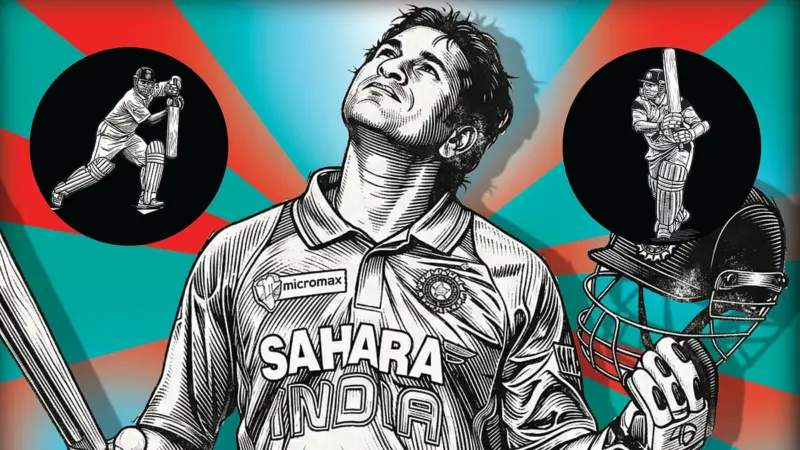

There are cricketers, and then there is Sachin Ramesh Tendulkar, a name that, for millions, became an emotion far greater than the game of Cricket itself - a larger-than-life figure.
For an entire generation of Indians growing up in the 90s and early 2000s, cricket was Sachin and Sachin was cricket. The 2003 World Cup final against the mighty Kangaroos, led by Ricky Ponting in South Africa, remains one of the most painful memories. India was chasing a daunting total of 360 against the likes of McGrath, Lee and Symonds. Hopes were sky-high, as they always were when the Little Master walked out in the middle. But in the very first over, McGrath struck. Sachin was gone, and so were the hopes of Ganguly lifting the magical trophy.
The entire country went into disbelief, and no one was accepting the fact that what they feared the most had just happened. Across living rooms, hostels, streets, markets, and crowded TV shops, a collective silence was observed. For many, belief quietly walked back to the pavilion with him.
That belief, however, was built over the years by none other than Sachin himself.
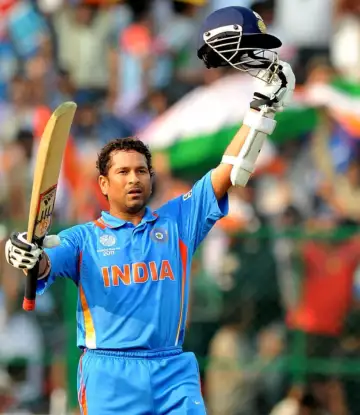
Sachin Tendulkar
While 1983 was a defining moment in Indian cricket history when Kapil's 'devils' did the unimaginable by beating the great West Indies team of Clive Lloyd, Sachin's debut in 1989 felt like a turning point of a different kind.
Even before his debut, he was the talk of the town and making headlines wherever he went. The world saw him for the first time when Srikanth-led India travelled to Pakistan for a 5-match Test series in 1989. A 16-year-old boy taking on the world's most feared bowlers was nothing short of a miracle. India had seen greats like Sunil Gavaskar and Kapil Dev, but Tendulkar brought with him something new, a sense that an Indian could be the undisputed best in the world. About his debut, the two 'W's of Pakistan - Wasim and Waqar - have both admitted how they felt sorry for him when he was walking in to bat. But soon they realised that he was a special talent.
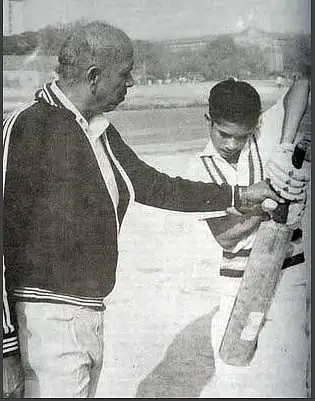
Sachin Tendulkar with his coach Ramakant Achrekar
When he entered the world of cricket, India was a nation of people who had immense potential but were low on confidence. It was a country of underdogs. In 1989, the BSE Sensex was below 1,000, India's GDP was around $270 billion, and economic liberalisation hadn't even begun.
In cricket, too, although we had Gavaskar and Kapil in the 70s and 80s, Sachin was different. They both were genuine superstars of their era, but their authority and impact on world cricket were not huge. Tendulkar became India's answer, a "revenge weapon" of sorts, showing a new generation how to beat the world's best at their own game. It was only he who made this country believe that - 'Yes, we can be the best.' Ask about it anyone growing up in that era about and the response will not be very different.
'It was a mistake': Steve Bucknor on Sachin Tendulkar LBW controversy in 2004 Brisbane TestHis battles with elite bowlers became the stuff of folklore. From handling the swing masters like Wasim and Waqar to countering pace from Donald, Walsh, Ambrose, McGrath, and famously dominating Shane Warne, Tendulkar didn't just compete; he dictated terms.
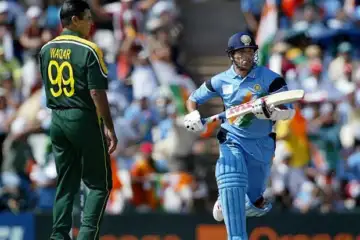
Sachin Tendulkar during 2003 World Cup match against Pakistan
Not only these, but he also faced Qadir, Bishop, Saqlain, Mushtaq, Murali, Vaas, Steyn, Pollock, Gough, Fleming, Akhtar, and Anderson. All of them are greats of the game in their own right. His successes against them proved his greatness across generations, conditions and eras.
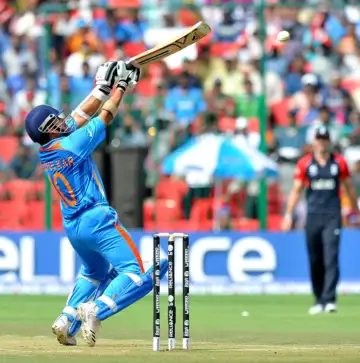
Sachinin action against England during 2011 World Cup in Bengaluru's Chinnaswamy Stadium
Opponents then and now also speak about him in the highest regard. Team meetings were dominated by the strategies to counter him. Inzamam once came up with a very unique strategy of keeping him away from the strike. It also tells how teams at one point had given up the hope of dismissing him.
When he was batting, it was motion-sculpted to perfection. The balance, precision, and timing - everything was perfect. You bowl fast, he would give it back with a 'punch through the V,' which also became his signature. The paddle sweep that he used against Shane Warne, the upper cut six against Akhtar in a high-voltage chase, talk about how good he was in innovation. He kept reinventing himself whenever he faced a new challenge. Was there a shot that was not in his armour? No. He had answers to everything.
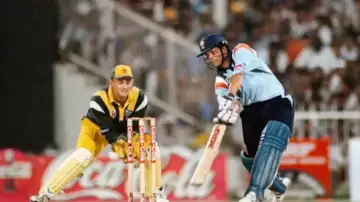
Sachin during the famous sandstorm innings in Sharjah in 1988
Every player goes through a bad phase, and it was true for Sachin. There was a time when he was getting out on a shot which was most productive for him. The first step towards course correction is acceptance of the flaw, and only greats can do that. He decided not to play that shot at all, and in the next innings, he ended up with an unbeaten double ton.
Every record is meant to be broken, and Kohli might end up with better numbers in ODIs, and Root might break his Test records. But that will not make him a lesser cricketer; in fact, it solidifies his position as the greatest ever, as it will take two modern-day greats to do what he did by himself.
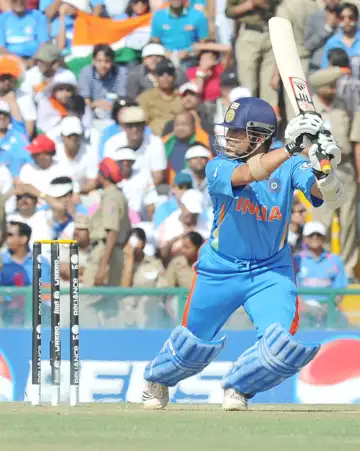
Sachin Tendulkar
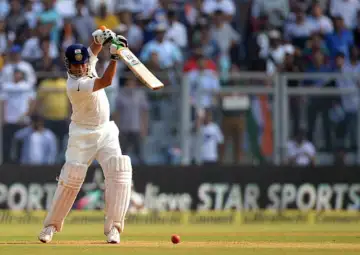
Sachin Tendulkar
Not to forget his bowling, which was a surprise element. It's a well-known fact that he wanted to become a bowler and had also joined MRF Pace Foundation, where he was told by the Aussie great Dennis Lillee, who headed the academy, to focus on batting. That moment turned out to be one of cricket's greatest 'what ifs.' Just like his batting, his bowling too had all the variety. He could bowl medium pace, off spin, leg spin, had a potent googly and wrong-un.
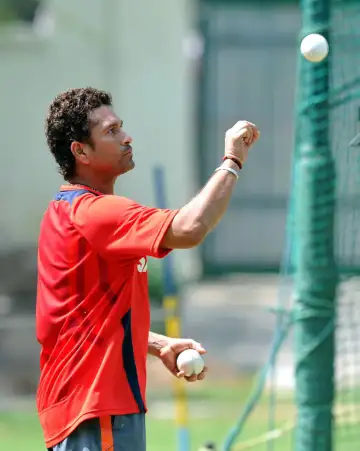
His World Cup journey mirrored the emotional journey of Indian fans. The heartbreak of 1996 at Eden Gardens, the courage of 1999 in England when he returned after his father's demise to score a century, the near-miss of 2003 in South Africa, and the disappointment of 2007 in the Caribbean, each moment deepened the connection between Tendulkar and the people.
And then came the poetic justice of 2011 when the trophy finally reached his lap.
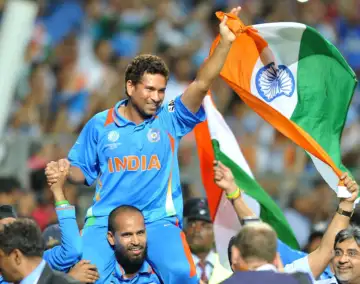
Sachin Tendulkar after India won 2011 World Cup
As India lifted the trophy, Tendulkar stood with tears in his eyes in the iconic Wankhede while the nation celebrated. India had won the biggest trophy of the game, but that was of lesser importance for fans. Sachin being part of the Champion team was the poetic closure they had been waiting for. It was the culmination of a journey shared by a player and a billion dreams.
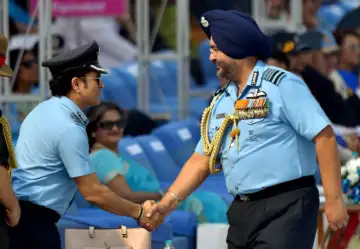
Captain of IAF, Sachin Tendulkar (L) being greeted by Air Chief Marshal BS Dhanoa during the 85th Air Force Day parade at Hindon Air Force base in Ghaziabad on Oct 8, 2017.
ing master blaster bat was never just about cricket. His impact was such that streets would empty, offices would pause, and crowds would gather outside television shops. For anyone who has not seen all that, it's difficult to imagine, let alone believe it. During those days, often fans were seen with posters saying - 'Cricket is my religion, and Sachin is my God.' In a nutshell, his presence at the crease had the power to bring life to a standstill in this cricket crazy nation.
Every century felt personal. Every failure, a personal loss. Every injury, a national concern. Every comeback, a shared celebration.
What he did on the field is legendary, but what he did off the field is an even greater thing. Maintaining his grace and humility despite having the world at his feet made him a true ambassador of the gentleman's game. While we may produce many great batters, we'll never be able to produce another Sachin.
He wasn't just a cricketer.
He was, and will always remain, hamara Sachin.