
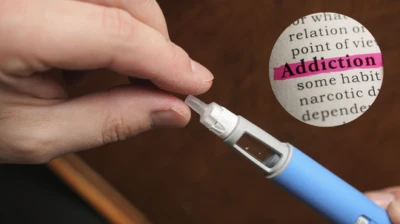
GLP-1 drugs have already made enough news and a new study shows that it could actually help you treat your addiction. GLP-1 drugs, medically used to treat diabetes and obesity could come in handy to drive away cravings for drugs too.
Researchers at Washington University School of Medicine in St Louis reported that it could prevent substance use disorder and could also treat it.
How Do GLP-1 Medicines Fight Against Addiction?
Not just the lack of will to eat food, but some people have actually reported a lack of interest in alcohol or nicotine consumption. Previously observational studies have also shown how it could lower the risk of alcohol and cannabis use disorders, opioid overdose, and alcohol related hospitalization.
The findings of the study were published in The BMJ.
Ziad Al-Aly, MD, a WashU Medicine clinical epidemiologist and Chief of the Research and Development Service at the VA Saint Louis Health Care System, who is a senior author, said, "In addiction medicine, a lot of treatments target just one thing - for example, a nicotine patch helps with smoking, but not alcohol - but there is no medication that works across addictive substances, let alone all of them. The revelation about GLP-1 medication is that it really works against all major substances, and it works uniformly, not because it acts against alcohol or opioids or nicotine specifically, but because it is likely acting against the craving itself. It blunts that craving that pulls people toward whatever they're addicted to."
Read: Doctor Explains Why Weight Loss Drugs Like Ozempic Are Truly A Medical Breakthrough
So, How Does It Work?
Researchers from Washington University School of Medicine in St. Louis analysed health records of more than 600,000 U.S. veterans with type 2 diabetes to understand whether GLP-1 medications affect substance use.
They compared people taking GLP-1 receptor agonists such as Semaglutide, Liraglutide, and Dulaglutide with those using another diabetes drug class called SGLT2 inhibitors. Researchers then followed their health records for up to three years.
The Findings
Lower risk of addiction: People taking GLP-1 drugs had a 14% lower risk of developing any substance use disorder.
- Substance-specific reductions:
- Alcohol use disorder risk fell by 18%
- Cannabis use disorder fell by 14%
- Cocaine and nicotine use disorders fell by 20%
- Opioid use disorder fell by 25%
What the real world impact shows: This meant about 7 fewer new substance use disorder diagnoses per 1,000 people taking GLP-1 medications.
Better outcomes for those already struggling with addiction: Among people who already had a substance use disorder, GLP-1 treatment was linked to fewer serious health complications.
After three years, researchers observed:
- 30% fewer emergency room visits related to substance use
- 25% fewer hospitalizations
- 40% fewer overdoses
- 50% fewer drug-related deaths
Overall, this translated to about 12 fewer serious harm events per 1,000 people using GLP-1 medications.
Read more news like this on www.healthandme.com