
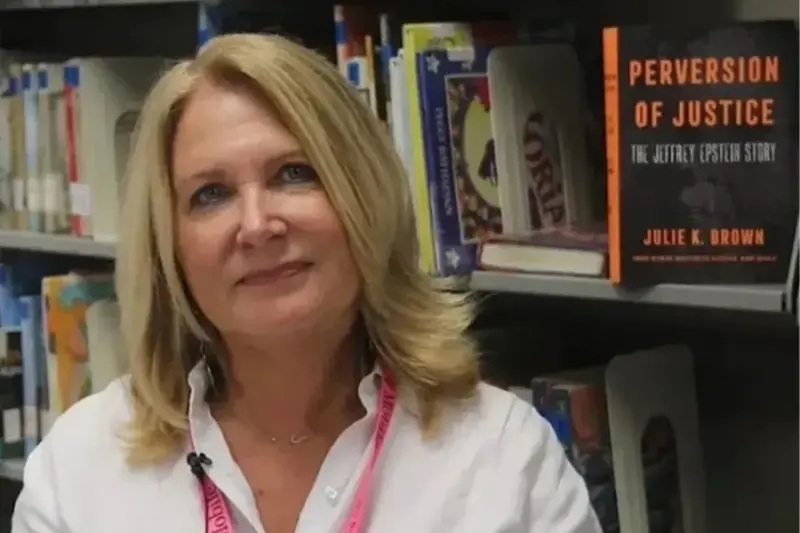

When much of the world had moved on from the troubling allegations surrounding Jeffrey Epstein, one journalist refused to let the story fade.
Through patient, rigorous reporting, Julie K Brown of the Miami Herald reopened a case many believed had been buried for good.
Her persistence would not only expose how Epstein secured a secretive non-prosecution deal but also amplify the voices of dozens of women who said they were abused. Ultimately, it was her sustained effort that forced the justice system to take another look.
Reopening a closed chapter
In November 2018, the Miami Herald published Brown's explosive series, Perversion of Justice. The investigation was the result of a year-long effort during which she tracked down more than 60 women who said they were victims of Epstein's abuse.
Brown's reporting scrutinised a controversial 2008 non-prosecution agreement brokered by then South Florida US Attorney Alexander Acosta. The deal had allowed Epstein to avoid federal prosecution despite serious allegations, fuelling long-standing concerns about preferential treatment.
Her work revealed the extent to which Epstein's powerful legal team negotiated a secret agreement that kept victims in the dark.
The fallout
The impact was swift and far-reaching.
In early 2019, a federal judge ruled that the non-prosecution agreement had violated the rights of the victims. On July 6, 2019, Epstein was arrested in New York on sex trafficking charges. Days later, on July 12, Acosta resigned as US Secretary of Labour amid mounting scrutiny.
On August 10, 2019, Epstein allegedly died by suicide in his Manhattan jail cell while awaiting trial.
While prosecutors and courts would carry the case forward, it was Brown's relentless reporting that reignited public and legal interest in the case.
Her reporting referenced in case records
Brown's name would later surface in documents related to the broader Epstein case - a stark reminder of how closely she had followed the powerful network surrounding him. But her role was clear: she was not a participant in the scandal, but the journalist who painstakingly documented it.
Her investigation stands as a testament to the power of accountability journalism. At a time when the story seemed closed, Julie K Brown reopened it - and changed its course.