
A quiet shift is taking place in the landscape of modern Indian jewellery. With the opening of her new space in Bandra, Bhavya Ramesh steps further into the role of not just a designer, but a storyteller who builds worlds through material, memory, and the intimacy of handcraft.
The move to Bandra feels intuitive rather than strategic — a natural extension of a brand rooted in exploration. Where Kala Ghoda offered the calm gravitas of heritage architecture and art history, Bandra brings a different pulse: younger, layered, restless in the best way. The new store sits within this energy, absorbing it, reshaping it, and offering something equally tactile in return.
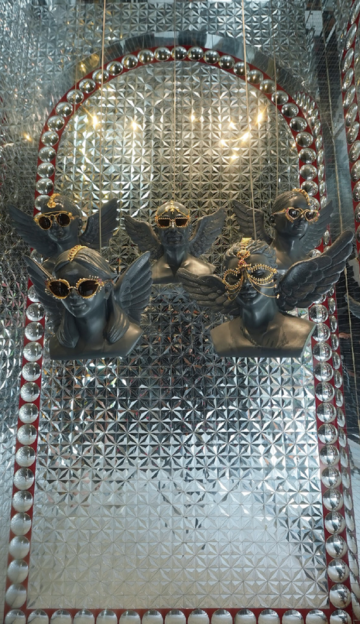
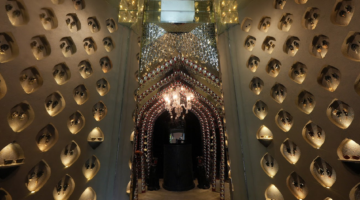
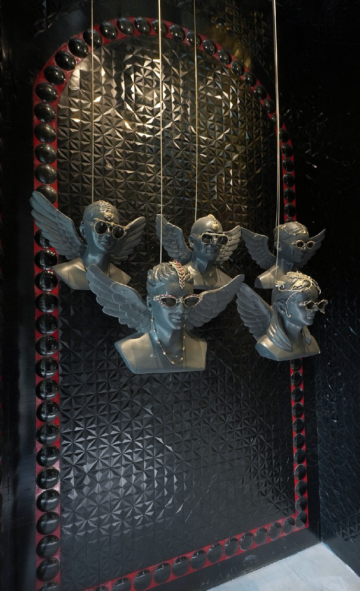
What makes this space significant is not scale, but authorship. The entire store has been conceived and built in-house — not as a retail format, but as an installation of ideas. Mirror fragments placed one shard at a time reimagine the Sheesh Mahal tradition, turning light into a moving participant within the space. Jaipur arches speak of origin, floating cupids and miniature fountains recall Bandra’s Catholic heritage, and a sculpted wall of ears quietly acknowledges the peculiar poetry of Mumbai’s public art.
Every detail feels like a conversation between cities, craft lineages, and personal instinct.
The opening also signals a new phase in Bhavya Ramesh’s material exploration — pearls approached not as symbols of prim refinement, but as forms with irregular temperament. Their uneven contours, unexpected arrangements, and tactile presence reflect a willingness to challenge beauty rather than perfect it.
The artisans behind the work remain central — not as invisible hands, but as collaborators whose skills shape both jewellery and space. The brand’s studio-led production model, rooted in Jaipur, places process at the forefront: slow, transparent, intimate. Growth here is not measured by expansion, but by the deepening of language — architectural, cultural, material.
Bandra is not an end point. It is a chapter — one that precedes the upcoming Khan Market space in Delhi, which will carry the same ethos of site-responsive design. Each location becomes its own interpretation, never a replica, each speaking in its own dialect of craft and contemporary sensibility.
In Bhavya’s own words, “It still feels unreal. A space I once imagined now exists for people to walk into.”
The sentiment captures the essence of the Bandra flagship — a dream shaped by hand, a thought turned into architecture, a continuing conversation between tradition and possibility.