





At a global retail technology fair, I saw something that reframed how I think about checkout. A vendor was using RFID to scan an entire refrigerated aisle - instantly identifying expired products without a human touching a single item.
This wasn't just faster checkout. It was RFID doing something it was never designed to do. It stopped being the final step of a selling transaction and started looking like a real time intelligence layer - one that is changing the way customers shop and how their journey unfolds in the store.
Retail has always been shaped by small moments done well. What's changing is where those moments are being redefined - and checkout is quickly becoming one of the most important of them.
Not because it's broken, but because what checkout can do is expanding rapidly. And retailers are already turning it into a source of real-time insight that shapes the entire shopping journey.
From Transaction to Intelligence
For decades, checkout has been defined by one thing: completing a transaction. But that definition is evolving.
Advances in AI, computer vision, and real-time decisioning are transforming checkout into an intelligent layer - where customer intent, inventory signals, and business outcomes converge in real time.
This shift is especially relevant in complex retail environments such as home improvement, where basket variability is high and accuracy at checkout has a direct impact on both customer experience and operational efficiency.
At the same time, global retailers are increasingly rethinking this moment, recognizing that checkout can no longer remain a passive endpoint.
While digital journeys have become increasingly personalized and data-driven, the final step within the in-store transaction -has often remained under-leveraged.
That is beginning to change.
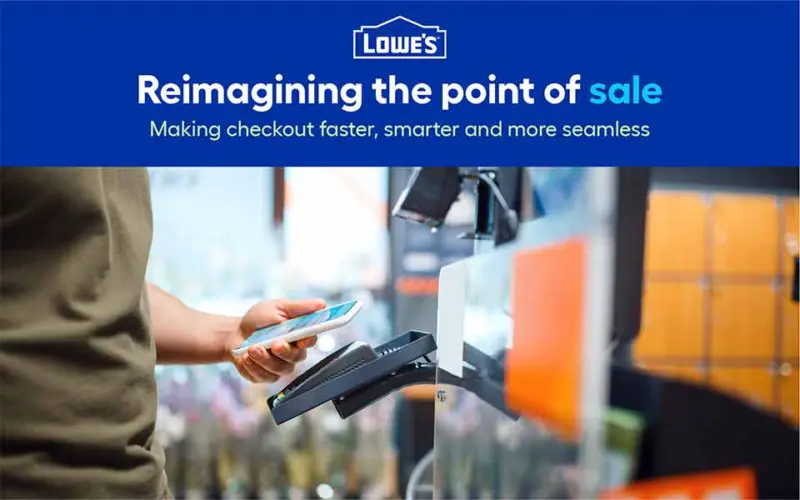
Modern checkout systems can identify items instantly and reduce friction without adding complexity, making the experience faster and more seamless for customers. In doing so, they also create smarter, more responsive retail environments at the point of purchase.
Closing the Omnichannel Loop
Over the past decade, retailers have invested heavily in omnichannel ecosystems - creating more personalized digital journeys, evolving loyalty programs, and more connected customer experiences across channels. Yet, the physical transaction has often remained disconnected from this context.
Smart checkout platforms, integrated with loyalty, CRM, and digital cart systems, can bring this continuity into the moment that matters most. Relevant context-like saved preferences, loyalty benefits, or digital baskets - can help make checkout faster, more personalized, and more seamless.
The impact is immediate: more relevant offers, seamless recognition, and a stronger connection between intent and purchase.
This is not just a better experience - it is the completion of a loop the industry has been building toward for years.
Precision Where It Matters
As checkout systems grow more intelligent, they are also becoming a more precise tool for improving operational visibility and decision-making in real time.
The shift is not toward more friction or more surveillance - but toward better signal.
AI-driven systems can verify items in real time and detect inconsistencies with enough precision to act - without adding friction or disrupting the checkout experience.
At scale, this visibility becomes a strategic asset, helping retailers better understand purchasing behavior, improve operational responsiveness, and gain deeper insight into what happens at the moment a transaction is completed.
A Defining Platform Decision
What makes this moment significant is that checkout's architectural trajectory is being set now.
The decisions retailers make today on platform design, AI readiness, and data strategy - will determine whether checkout becomes a source of compounding advantage or a constraint on future innovation.
Increasingly, these capabilities are being built and scaled through global capability centers (GCCs), where engineering, data science, and product teams are driving innovation at enterprise scale.
Across the industry, forward-looking retailers are rethinking checkout - not as infrastructure to maintain, but as a platform to build upon.
Because the checkout imperative is not about fixing what exists.
It is about reimagining the one moment in retail where every signal matters - and turning it into a source of lasting advantage.
By Deepak Bajpai | Sr. Director of Technology, Lowe's India
Disclaimer
This content is a community contribution. The views and data expressed are solely those of the author and do not reflect the official position or endorsement of nasscom.
That the contents of third-party articles/blogs published here on the website, and the interpretation of all information in the article/blogs such as data, maps, numbers, opinions etc. displayed in the article/blogs and views or the opinions expressed within the content are solely of the author's; and do not reflect the opinions and beliefs of NASSCOM or its affiliates in any manner. NASSCOM does not take any liability w.r.t. content in any manner and will not be liable in any manner whatsoever for any kind of liability arising out of any act, error or omission. The contents of third-party article/blogs published, are provided solely as convenience; and the presence of these articles/blogs should not, under any circumstances, be considered as an endorsement of the contents by NASSCOM in any manner; and if you chose to access these articles/blogs , you do so at your own risk.