
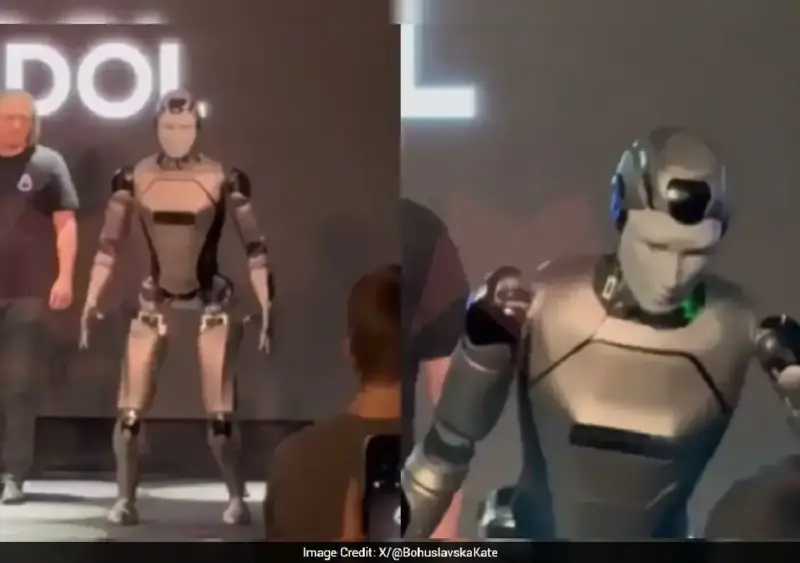

A newly released video by Humanoid, a UK-based robotics firm, has gone viral for reasons unusual in today's tech hype cycle — it is slow, repetitive and, at first glance, almost boring.
Yet, experts say this very dullness makes it one of the most honest demonstrations so far of what autonomous humanoid robots can actually do in real-world conditions.
Unlike flashy videos of robots dancing, making cocktails or performing rehearsed routines, the machines shown in Humanoid's video move cautiously, shuffle awkwardly and take an extraordinary amount of time to complete simple tasks. According to the company, this is because the robots are operating fully autonomously, without teleoperation or pre-programmed sequences.
Their movements appear hesitant because the robots are improvising every action in real time — calculating balance, grip strength and object fragility millisecond by millisecond.
The video showcases Humanoid's conceptual system called KinetIQ, a layered AI-and-hardware framework designed to coordinate humanoid robots and wheeled warehouse robots as a single, distributed system.
In one sequence, a humanoid robot in a kitchen relays spoken instructions to warehouse robots, which then attempt to place a glass bottle of oil and a packet of cocoa powder into a paper bag. The task looks painfully slow, but the company stresses that the robots are 'off-rails' — solving the problem from scratch without scripted behaviour.
Observers note that the most telling detail is not what the robots achieve, but how. The fact that Humanoid allowed a human to stand next to the robots during a fully autonomous demo suggests internal confidence around safety — a non-trivial milestone in robotics development.
At the same time, the video offers a sobering counterpoint to grand claims by tech giants such as Tesla and Hyundai about rapidly deploying humanoid robots across factories.
Industry analysts say the takeaway is simple: when robots look impressive, they are often choreographed or human-controlled. When they look clumsy and slow, they are likely doing real autonomy.
In that sense, Humanoid's unglamorous video may be one of the clearest signals yet of where humanoid robotics truly stands — promising, fragile, and very far from replacing humans anytime soon.