
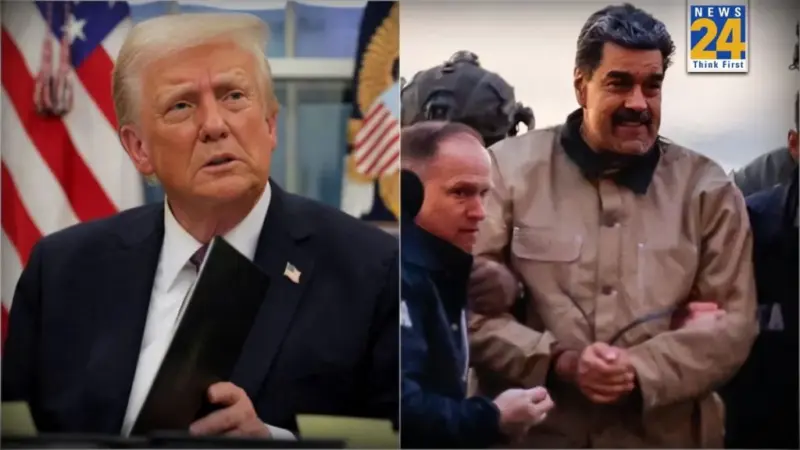

In a dramatic escalation of US-Venezuela tensions, fresh claims suggest that Washington has moved swiftly to take control of Venezuela's oil earnings.
And has diverted hundreds of millions of dollars and stashing the funds overseas. According to the narrative, this operation unfolded less than a month after Venezuelan President Nicolás Maduro was allegedly abducted. And it is marking what critics describe as a calculated and aggressive play for economic dominance.
Rather than being used for the welfare of Venezuela or its people. US is using the seized money as a tool to strengthen American leverage on the global stage. And the strategy, it seems, does not stop at confiscation, it extends to concealment.
How Much Oil Revenue Did the US Take From Venezuela?
US officials have reportedly claimed that the United States facilitated the sale of Venezuelan crude oil worth approximately $500 million. Instead of transferring this revenue to Venezuela or even keeping it within the US financial system, the Trump administration allegedly chose to move the funds to a third country.
The destination, according to these claims, was a Gulf nation, where the money was deposited rather than brought back to American banks. This decision, observers argue, reflects a deeper geopolitical calculation rather than a routine financial transaction.
Why Qatar Was Chosen as the Financial Safe Haven
Placing Venezuela's oil earnings in a Qatari bank account is seen not just as a political maneuver, but as a strategic safeguard. Venezuela is burdened with nearly $170 billion (around ₹14 lakh crore) in debt owed to international bondholders, oil companies, and other creditors.
Had the funds been held in US banks, creditors could have swiftly pursued legal action to seize them. Qatar, viewed as a relatively neutral financial space, offers a buffer,
where US court orders do not automatically apply. This, in turn, allows Washington to retain effective control over the money.
Under this arrangement, Venezuela reportedly cannot access its own oil revenue without US approval. The funds would only be released if Caracas agrees to American conditions, leaving ultimate authority firmly in Washington's hands.
A Strategy the US Has Used Before
This approach is not without precedent. After the 2003 invasion of Iraq, the United States implemented a similar system. While Iraqi oil continued to be sold, the proceeds were deposited in the Federal Reserve Bank of New York.
As a result, Iraq has had to seek US permission to spend revenue generated from its own natural resources, a model critics say has now been adapted for Venezuela.
Venezuela's Role in Protecting the US Dollar
The broader context adds another layer to the story. In 2024, the long-standing "oil-for-dollar" arrangement between the US and Saudi Arabia reportedly came to an end. Which is reportedly weakening the dollar's position in global energy markets. Meanwhile, countries like China and Russia, along with BRICS nations, are pushing for trade in local currencies or alternative systems.
Against this backdrop, Venezuela, home to the world's largest proven oil reserves, becomes strategically vital. Keeping Venezuelan oil transactions firmly within the dollar system is seen as crucial for preserving the dollar's global dominance.
By routing transactions through Qatar, the US can allegedly ensure that Venezuelan oil continues to be sold exclusively in dollars. And it will prevent the country from drifting toward the BRICS economic bloc.