
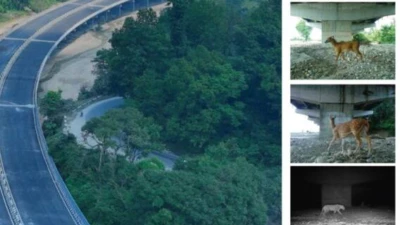

 As India accelerates its highway expansion, the Delhi-Dehradun Expressway is emerging as a striking example of how development and conservation can go hand in hand.
Set to be inaugurated by Prime Minister Narendra Modi today, on April 14, 2026, the project is drawing attention not only for improving connectivity but also for its innovative approach to protecting wildlife. (Image Source: ANI)
The Delhi-Dehradun Economic Corridor, particularly the Ganeshpur-Asharodi stretch, has been carefully designed to accommodate both vehicles and wildlife. A detailed study conducted by the Wildlife Institute of India recorded over 40,000 images showing animals navigating these underpasses. (Image Source: ANI)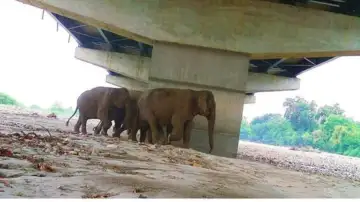
One of the most striking findings was the presence of elephants using the corridor. The study documented 60 instances of elephants safely crossing through the underpasses. (Image Source: Twitter/@NHAI_Official)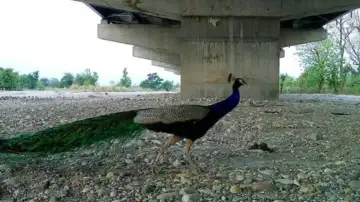
Interestingly, not all species respond to the environment in the same way. Animals such as peacocks, golden jackals and wild boar appear to have adapted to traffic noise, frequently using the underpasses. (Image Source: Twitter/@ifpost47)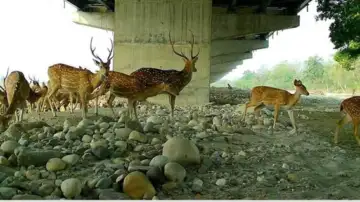
Spanning from Ganeshpur in Uttar Pradesh to Uttarakhand, the project features what is being hailed as Asia's largest elevated wildlife corridor, extending nearly 12 kilometres. Observations show that sensitive animals such as elephants and spotted deer tend to favour quieter sections of the underpasses, avoiding areas with higher noise levels. To support these species further, targeted noise-reduction measures, including strategically placed sound barriers in high-crossing zones, are expected to improve accessibility. (Image Source: Twitter/@NHAI_Official)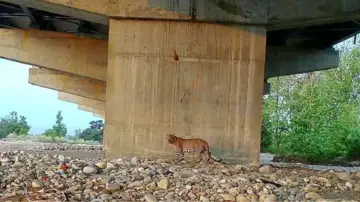
In addition to several other species, leopards have also been spotted using the corridor. By minimising human-wildlife conflict and safeguarding natural movement routes, it sets a strong benchmark for future highway development that balances progress with ecological responsibility. (Image Source: Twitter/@NHAI_Official)