
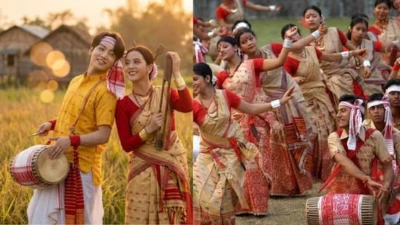

Bohag Bihu, also known as Rongali Bihu, is the most vibrant and widely celebrated festival of Assam, marking the Assamese New Year and the arrival of spring, usually around April 14th.
It ushers in a time of joy, renewal, and agricultural hope, deeply rooted in rural life and seasonal cycles. The festival spans several days filled with rituals, music, dance, and community gatherings. It reflects Assamese identity, unity, and cultural richness, blending spirituality with everyday life. From traditional songs to festive foods like pitha and laru, Bohag Bihu creates an atmosphere of renewal, gratitude, and collective happiness across villages and towns alike.
Bohag Bihu Significance
Bohag Bihu holds immense cultural, agricultural, and emotional significance for Assamese people. First, it marks the Assamese New Year, symbolising new beginnings and the transition into the spring season when nature renews itself. Agriculturally, it is closely tied to the farming calendar, as it signals the start of the sowing season and prayers for a prosperous harvest. Farmers express gratitude for past yields and seek blessings for future abundance. Culturally, it strengthens social harmony by bringing together people across communities, caste, and age groups. It also preserves Assamese identity through music, dance, and traditional customs passed down through generations. The festival fosters unity, joy, and a sense of belonging, making it not just a seasonal event but a deeply emotional celebration of life and continuity.
Baisakhi 2026: Significance And Influence Of Mesh Sankranti As Solar New Year Begins
Seven Days of Rituals (Saat Bihu)
Goru Bihu - Cattle Day
Goru Bihu is the first day of Bohag Bihu dedicated to cattle. Cows and buffaloes are bathed, smeared with turmeric, and fed fresh vegetables. Old ropes are replaced with new ones. This ritual shows gratitude to livestock for their role in farming and reflects harmony between humans and animals.
Manuh Bihu - Human Day
Manuh Bihu focuses on human renewal and respect. People wear new clothes, seek blessings from elders, and exchange the traditional gamosa. Homes are cleaned, and festive foods are prepared. It strengthens family bonds, encourages gratitude, and marks a fresh start in life with dignity, respect, and happiness.
Gosai Bihu - Prayer Day
Gosai Bihu is dedicated to worship and spirituality. Families clean prayer spaces and offer flowers, fruits, and incense to deities. Prayers are performed for peace, health, and prosperity. It highlights gratitude and faith, reminding people that blessings and success come through devotion, humility, and spiritual balance in life.
Tator Bihu - Craft Day
Tator Bihu celebrates weaving and traditional craftsmanship. Assamese women weave silk like muga, eri, and paat, showcasing cultural identity. The day promotes self-reliance, creativity, and heritage preservation. Handwoven clothes are gifted and used in celebrations, reflecting pride in indigenous skills and sustaining Assam's rich textile traditions across generations.
Nangolor Bihu - Agriculture Day
Nangolor Bihu honors farming tools and agricultural work. Farmers clean and worship ploughs, sickles, and other implements. These are decorated and blessed for a good harvest season. The ritual expresses respect for agriculture, reinforces the importance of farming, and highlights the deep connection between humans, land, and livelihood.
Jiyori / Senehi Bihu - Relationships Day
Jiyori or Senehi Bihu celebrates relationships and love. Daughters visit parental homes, and families exchange gifts and greetings. It strengthens emotional bonds and unity among relatives. Community gatherings add joy, while the ritual highlights the importance of care, affection, and family connections in maintaining harmony in society.
Sera Bihu - Closing Day
Sera Bihu is the final day of Bohag Bihu celebrations. People gather in fairs, enjoy cultural performances, and share festive meals. It reflects on completed rituals and welcomes the new year with hope. The day symbolizes unity, joy, and continuity, ending the festival with happiness and collective celebration.
Varuthini Ekadashi 2026: Check Out The Paran Timing, Rituals, And All About Breaking This Fast
Key Traditions
The traditions of Bohag Bihu are rich, colorful, and deeply expressive of Assamese culture. One of the most iconic is the Husori performance, where groups of singers visit homes, singing traditional Bihu songs accompanied by instruments like the dhol, pepa, and gogona. The energetic Bihu dance, performed by young men and women, showcases graceful movements symbolizing joy and fertility. Traditional foods such as pitha, laru, and other rice-based delicacies are prepared in every household. The exchange of gamosa remains a powerful cultural symbol of respect and identity. Community feasts, fairs, and open-air gatherings further enhance the festive spirit. Together, these traditions preserve heritage while promoting unity, happiness, and cultural pride across generations during Bohag Bihu.
Author : Vijaya Mishra