
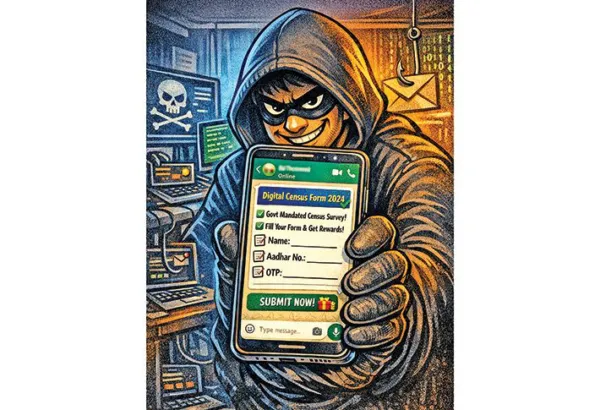

Even as Gujarat's digital census exercise has been temporarily halted due to the upcoming local self-government elections on April 26, cyber fraudsters have begun targeting citizens with fake mobile applications disguised as digital census forms.
Scammers are pushing malicious APK files through WhatsApp and other messaging platforms, claiming to be part of India's first-ever digital census drive. Authorities have issued a clear warning that no official census forms or applications will be shared via WhatsApp or unofficial links. "The digital census will be conducted only through a government-authorised application. Any link or APK file received on social media platforms should be treated as suspicious," a senior cyber official said.
Gujarat paused the census rollout, originally scheduled to begin on April 5, because government staff including teachers and administrative personnel are deployed for election duties. The national census will use official mobile applications, with nearly 3 million enumerators covering 36 states and Union Territories, over 700 sub-districts and approximately 6.4 lakh villages. Citizens can also submit their data online.
Scammers exploit the gap
Senior officials from the state cyber crime unit say fraudsters are using this window to set their traps. SP Sanjay Keshwala of the state cyber unit said scams like these follow predictable patterns. "We saw similar tactics during the LPG booking scams during the war situation, where fake APK files were circulated. Now, with the digital census approaching, scammers are using the same modus operandi," he said.
Officials identified two methods being used. In the first, victims are tricked into downloading fake apps that steal sensitive data, access banking details or take control of devices. In the second, fraudsters collect personal information under the pretext of census registration and sell it to cybercrime syndicates operating from international hubs such as Myanmar and Dubai.
Dos and don'ts
Citizens should verify any census-related communication through official government websites or local authorities, download apps only from the Google Play Store or Apple App Store, and check for official announcements before sharing personal information. Suspicious links or messages should be reported to the cybercrime helpline 1930 or local police.