






Mohali : In this article, we will be talking about Increasing Cloud Security Risk. So before understanding what are the risks let’s talk about the cloud.
What is Cloud?

Any computer comprises of 3 main things. A storage device to store your data.
Maintaining servers and server rooms is a big deal. They are huge, expensive, take months to be delivered, and need to be installed by backups. Companies usually also require physical backups of the servers in other locations. The wiring increases and when it comes to big giant companies like Google and Microsoft the servers are huge in number and tremendously big (approximately the size of the building).
Low-profit companies do not have the capability to buy and manage such servers and hence they rely on third-party services. For large companies, the problem is the maintenance of the server and proving the guarantee that it would serve their customers.
So companies started a simple solution they bought the land where real estate was cheap, installed servers on these locations, and started renting out them to other businesses. That’s what Amazon did in 2005, created a company Amazon Web Services, and started renting out their servers to everyone.
For small businesses, this was an opportunity, they could have had their own server and wouldn't have to pay millions for it. Besides using cloud services you can pay for the time you use the server. For example, you need to pay for 30 mins if you used your server for 30 mins nor more nor less. Another beautiful benefit of using Cloud is that it automatically scales users. Meaning if there are few users on one server and many on the second server it will provide the extra servers to handle the demand. When the demand decreases it would release the server for someone else to use.
Nowadays there are many cloud providers. However the three main are Amazon AWS. Google Cloud (GCP) and Microsoft Azure. AWS is the one that is being widely used.
Is Cloud Security Vulnerable?
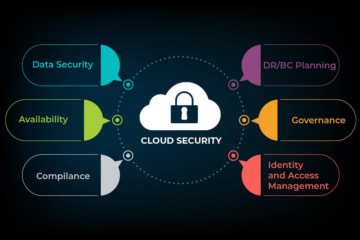
You would have been told by many cloud experts that security on the cloud is at a very high level and nothing is vulnerable. But imagine a situation where you add some extra resources at the last minute to handle loads and you forget to set up proper security rules. In such a case your cloud instance can be compromised. Security is still a shared responsibility between you and your cloud provider.
A survey states that 40% of the cloud security risks are due to improper configurations of the cloud. Unauthorized access and insecure APIs are at the top in terms of cloud security threats.
Cloud Computing Security Vulnerabilities
Alright! Now that we have learned what cloud computing is, let’s have a look at different types of cloud computing security vulnerabilities and processes to mitigate them.
- Misconfigured Cloud Storage
Cloud storage misconfiguration can quickly is one of the vulnerabilities which can cause security breaches of an organization. Different types of misconfigured are as follows:
Default settings: Default settings of the cloud comes with minimal or no security rules for the smooth functioning of the production server. Sometimes developers forget to change these settings and this could cause data breaches.
Mismatched access management: Sometimes developers leave confidential data open which do not require any authorization. This is called mismatched access management.
Prevention
Whenever using cloud computing it is a good idea to check the cloud storage security configuration twice.
- Insecure APIs
As per a survey, 61% of companies rely on API integration. They are used to make work simpler and streamline processes. However, if APIs are left insecure they can open up the source code for the world.
Some common ways to exploit insecure APIs are:
Improper authentication: Sometimes developers create improper authentications controls and as a result API keys are publicly visible to all.
Insufficient authorization: Sometimes developers think that attackers cannot find backend API calls and hence do not put appropriate authorization controls.
Prevention
Hardcoded APIs keys should be removed from the code. Moreover, SSL/TLS encryption should be implemented. Besides multi-factor authentication should also be implemented to ensure strong authentication controls.
Moreover, penetration testing is a good way to protect your API endpoints and also secure code. Moreover, it also ensures that the application is constantly being secured
- Data Breach and Data Leak.
When an attacker is able to exploit the cloud storage, he can download all the data and leak it. The exploitation of data could be due to improper authorization. Other methods of gaining access are using social engineering, exploitation of cloud-based systems or stolen credentials to compromise accounts and get the data.
Prevention
Multi-Factor Authentication: Most cloud services provide multi-factor authentication such as verification on the basis of OTP or 2FA. These have become the new standards nowadays.
Encryption Data-at-rest: Data that are not actively used but stored in storage systems are called data-at-rest. These include databases, datasets logs, metadata, etc. These data should be encrypted and decrypted whenever they are being used.
Firewall: Firewall should be set up to control all the traffic in and out of the system
- Data Loss: These cloud security risks are among those which are hard to predict and handle. Any natural calamity can cause data loss. Data loss can also happen due to data alteration, unreliable storage of data, and loss of access control.
Prevention
Backup: It is a good practice to keep a backup of data to avoid data loss. Generally, two copies of backup are created. One on another server and the second is a physical backup
Besides, the physical location of cloud servers is scattered and not on a single point. This effective way helps in the reduction of data that is being lost due to natural calamities.
- Data Loss due to End-User Actions: Companies are not aware of what their customers can do to cloud computing services. Imagine if a customer loses control of his/her assets and becomes vulnerable to breaches then the entire server could be compromised. A user with access to the internal network does not need to break through VPNs and security mechanisms to access the internal data.
Controlling over such actions requires surveillance, monitoring, escalation, analysis, and incident response.
Prevention
To prevent user actions regular penetration testing and auditing are required. This makes the companies security stronger and prone to new vulnerabilities. Companies should ensure that privileged servers and access to security mechanisms should be limited only to a minimum number of people and employees should be trained to securely handle these servers.
4 basics pillars Cloud Security
To conclude all the prevention measures discussed above there are 4 basics pillars of cloud security
- Data Protection
Security on the cloud can be improved by encrypting the data with strong encryption algorithms across all transport layers. File sharing should also be secured. Misconfigured storage systems should be properly configured along with removing hard-coded API keys. It is also a good practice to use the multi-authentication system to protect your data from being leaked.
- Implementation of policies
Most cloud provider provides strong cloud security management, one should always update their cloud servers with new patches and use automated repairs wherever possible.
- IAM-based policy
IAM policies define permissions for an action one performs not taking into consideration the operation which is performed. It is essential for one to update their IAM level for security practices. One should grant limited access to assets and APIs to only some trusted people. The basics of IAM policy also should not be ignored. These include strict password policies, timeouts, etc.
- Protections on Network
Micro-segmentation is one of the most used methods. In this workload from each other is separated and space is created to protect each server individually. Moreover Intrusion Detection Systems, Firewalls should be installed on the network to filter out the traffic and control it using Inbound and Outbound rules.
To know more about Hacktify Cyber Security ,click here : https://hacktify.in/