






The United Kingdom has enacted a landmark digital assets law that classifies cryptocurrencies and stablecoins as personal property, creating clear ownership rules and strengthening protections for users.
The Property Act (Digital Assets, etc.) became law after King Charles granted royal assent, following years of debate and case-by-case court rulings that shaped the country's earlier approach.
Clear Legal Status for Digital Assets
The law gives digital tokens the same legal status as traditional property. It defines them as items that can be owned, transferred, or recovered in legal disputes. This change creates a stable foundation for handling digital assets during insolvency or estate processes, which had been difficult under earlier case law.
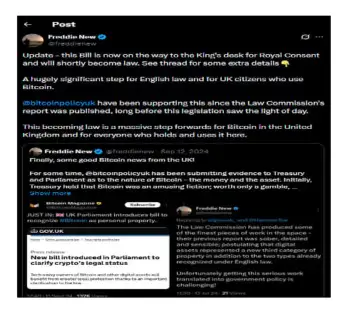
UK courts had already treated digital assets as property through individual judgments. Parliament has now added that principle into statute. This shift allows courts to rely on clear rules rather than fragmented decisions.
Advocacy group CryptoUK said the law gives stronger clarity for proving ownership. It also said it helps users recover stolen assets. The group added that the act brings better legal certainty for consumers and investors.
The UK's Growing Need for Formal Rules
Supporters say the new law ends long-standing uncertainty. Common law treated digital assets as property in many cases, yet they did not fit neatly into existing categories. The Law Commission argued in 2024 that digital assets can hold qualities of both possession and action. It said unclear rules could hinder effective dispute resolution.
The new act states that a digital item does not lose eligibility for property rights simply because it is electronic. This definition opens the door for smoother handling of cryptocurrencies, stablecoins, and related assets within the legal system.
This law arrives as the UK faces pressure to match progress made in the EU and the US. Regulators had been criticized for the slow development of a modern crypto framework. As crypto ownership expands, demand for firm legal foundations continues to rise.
Framework for a Growing Market
The UK's regulatory direction has become clearer. The country announced plans earlier this year to place crypto businesses under rules similar to those for traditional finance firms. The goal is to create safer markets and support innovation.
The government's finance authority reported that 12% of UK adults own cryptocurrency. This figure rose from 10% in the previous report. This growth reflects the expanding importance of digital assets for retail participants.
The new act also provides a base for future financial products.

Advocates say clearer ownership rules can help institutions manage assets more reliably. They also say the statute removes the uncertainties created by relying on court precedents alone. Digital assets can now move within the legal system with stronger predictability.
As the law takes effect, the UK positions itself for broader innovation across digital markets. It also seeks to balance consumer protection with the growing demand for regulated crypto activity.
Conclusion
The UK's new digital assets law gives cryptocurrencies and stablecoins formal property status and sets clear ownership rules for users. It resolves years of legal uncertainty and creates a stronger base for asset recovery and regulated growth. Users and firms can now operate with greater confidence under a unified legal framework.