
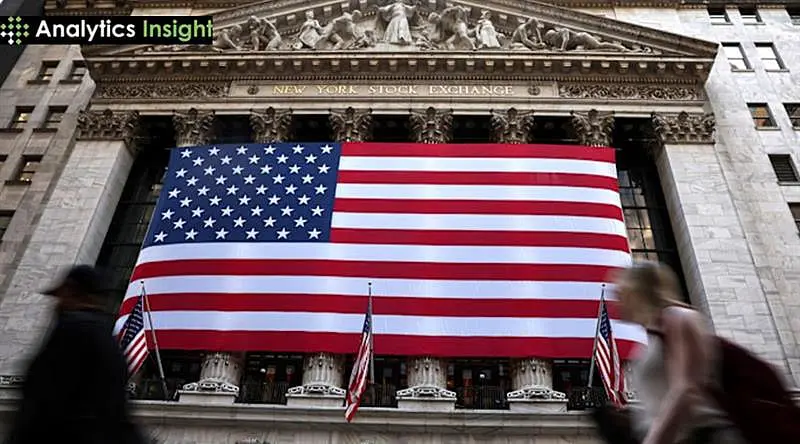

US stocks fell on Thursday after President Donald Trump's latest comments reduced expectations for a near-term easing in the Middle East conflict.
Oil prices stayed sharply higher during the session, while investors also tracked moves in private credit, semiconductors, airlines, and metals. Later in the day, equities cut earlier losses as a report said Iran is drafting a protocol with Oman to monitor traffic through the Strait of Hormuz.
Trump's Speech Weighs on Sentiment
Wall Street opened lower after Trump said military operations would intensify in the next two to three weeks. His speech reduced hopes for a quick end to the conflict and offered no clear commitment to reopening the Strait of Hormuz. That kept pressure on stocks early in the session.
Market participants focused on the risk that higher energy prices could last longer than expected. Brent crude moved above $109 a barrel, and West Texas Intermediate rose about 9% to $109.15. At one point, oil traded near $114 before giving back part of those gains later in the session.
US Stocks Fall as Hormuz Monitoring Report Emerges
Equities recovered part of their earlier drop after a report said Iran is drafting a protocol with Oman to monitor traffic through the Strait of Hormuz. That report helped calm markets after the morning selloff, although major indexes remained in negative territory by late morning.
By 10:53 a.m. At New York time, the S&P 500 was down 0.1%, the Nasdaq 100 had fallen 0.3%, and the Dow Jones Industrial Average was lower by 0.2%. In Europe, the Stoxx Europe 600 slipped 0.1%, while the MSCI World Index lost 0.4%. The move suggested that investors remained cautious even after the rebound from the session lows.
Currency markets also reflected a defensive tone. The Bloomberg Dollar Spot Index rose 0.2%. Meanwhile, the euro fell 0.4% to $1.1544, the British pound dropped 0.6% to $1.3225, and the Japanese yen weakened 0.3% to 159.32 per dollar.
Oil Surge, Bond Steadiness, and Crypto Losses Shape Trading
Oil remained the main market driver throughout the session. The rise in crude prices added pressure on sectors sensitive to fuel costs, especially airlines and travel-linked stocks. At the same time, energy shares rebounded as traders adjusted for the possibility of higher oil prices for longer.
Fixed-income markets stayed more stable than equities and commodities. The yield on the 10-year US Treasury declined two basis points to 4.29%.
Germany's 10-year yield held near 2.99%, while Britain's 10-year yield was little changed at 4.83%. The steadier tone in bonds contrasted with the sharp moves in oil and stocks.
Company-Specific Moves Add to Sector Pressure
Several company and sector stories added to the day's market pressure. Asset managers weakened after Blue Owl said it would limit redemptions from two private credit funds. That announcement pushed Blue Owl shares lower and dragged down peers, including Apollo Global, Blackstone, and Ares Management.
Airline stocks also fell as crude prices climbed. United Airlines, Delta Air Lines, and American Airlines lost ground as traders priced in the effect of higher fuel costs. Semiconductor shares came under pressure as Micron, Lam Research, and Sandisk declined.
The market also tracked trade policy developments. Metals and finished goods stocks fell as the Trump administration prepared tiered tariffs on steel and aluminum imports. Elsewhere, Globalstar shares jumped after a report said Amazon was in talks to buy the satellite company.
Corporate highlights:
Tesla shares fell, weighing on the Nasdaq 100.
Micron Technology declined amid pressure on chip stocks.
Blue Owl fell after limiting withdrawals from two private credit funds.
Apollo Global, Blackstone, and Ares Management also moved lower.
United Airlines dropped as oil prices rose.
Delta Air Lines and American Airlines also fell on fuel-cost concerns.
Exxon Mobil and Chevron gained as energy stocks advanced.
Globalstar jumped after a report linked it to Amazon takeover talks.
Trump's latest message kept markets focused on oil, the Strait of Hormuz, and the path of the conflict. Later reports helped stocks recover part of the loss, but trading remained cautious ahead of the holiday closure.