
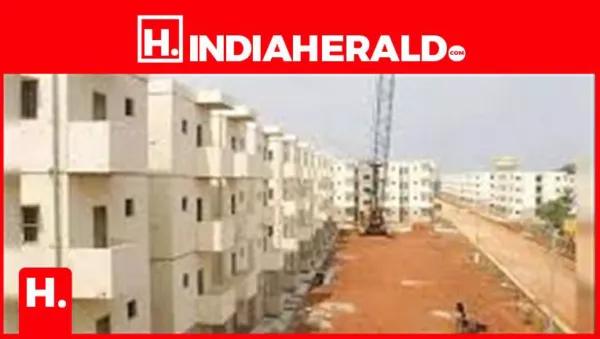

The Pradhan Mantri Awas Yojana (PMAY) continues to make strong progress in providing affordable housing to economically weaker sections across India.
In the latest update, the government has reported that over 10 lakh houses have been sanctioned, and a large number of them have already been completed.
What Is PM Awas Yojana?
The PMAY (Pradhan Mantri Awas Yojana) is a central government housing scheme launched to ensure 'Housing for All' by providing financial assistance for building or purchasing homes.
Main Objective:
- Provide pucca houses to urban and rural poor
- Improve living conditions for economically weaker sections
- Promote affordable housing across India
Latest Update on PMAY Progress
According to recent government data:
- Over 10 lakh houses sanctioned recently
- ️ More than 9 lakh houses already completed or near completion
- Rapid construction progress across multiple states
- Focus on rural and urban housing development
Key Features of PMAY Scheme
Financial Assistance
- Subsidy provided for home construction or purchase
- Interest subsidy on home loans under CLSS (Credit Linked Subsidy Scheme)
Two Main Components
1. PMAY-Urban (PMAY-U)
- For people living in cities
- Focus on affordable housing projects and slum redevelopment
2. PMAY-Gramin (PMAY-G)
- For rural households
- Direct assistance for building pucca houses
Who Benefits from PMAY?
The scheme mainly supports:
- Economically Weaker Sections (EWS)
- Low-Income Groups (LIG)
- Middle-Income Groups (MIG in urban areas)
- Rural poor households without pucca houses
How Houses Are Allocated
Selection is based on:
- Socio-Economic Caste Census (SECC) data
- Income eligibility
- Housing status (kutcha vs pucca house)
- State-level beneficiary verification
Why PMAY Is Important
✔ Reduces Homelessness
Provides permanent housing for poor families
✔ Improves Living Standards
Better sanitation, water, and electricity access
✔ Boosts Rural Economy
Creates jobs in construction and related sectors
✔ Supports women Empowerment
Many houses are registered in women's names
Impact So Far
- Millions of houses built across India
- Significant reduction in slum population in urban areas
- Improved rural housing infrastructure
- Increased home ownership among low-income groups
⚠️ Challenges Still Remaining
- Land availability issues in cities
- Delays in some state-level projects
- Rising construction costs
- Verification and beneficiary selection delays
Conclusion
The PM Awas Yojana continues to be one of India's largest housing initiatives, with over 10 lakh houses sanctioned and more than 9 lakh completed in the latest phase. The scheme is steadily moving toward its goal of providing 'Housing for All', especially for economically weaker and rural populations.
Disclaimer:
The views and opinions expressed in this article are those of the author and do not necessarily reflect the official policy or position of any agency, organization, employer, or company. All information provided is for general informational purposes only. While every effort has been made to ensure accuracy, we make no representations or warranties of any kind, express or implied, about the completeness, reliability, or suitability of the information contained herein. Readers are advised to verify facts and seek professional advice where necessary. Any reliance placed on such information is strictly at the reader's own risk.
Source: India Herald - Balasahana Suresh