
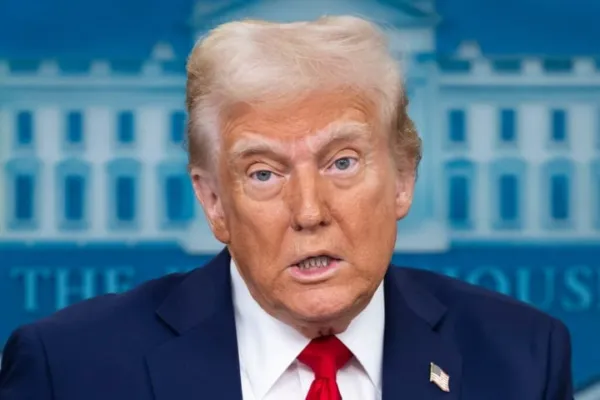

On Saturday, in a post on Truth Social, President Donald Trump issued a 48-hour ultimatum to Iran over the Strait of Hormuz, warning that failure to open the route could trigger U.S. strikes on Iranian power plants.
The threat lands as Iran’s ambassador to the U.K., Ali Mousavi, recently described a conditional transit framework for ships and crews in the Gulf, a stance detailed in maritime safety conditions.
Iran's messaging has leaned on maritime security language rather than a blanket closure, with Mousavi saying Tehran would keep working with the International Maritime Organization on safety at sea and crew protection in the Gulf. He also signaled that vessels not connected to Iran's enemies could still pass if they coordinate security and safety steps with Iranian authorities.
In the post, Trump reminded of an earlier 10-day deadline and said the clock had shifted to 48 hours, warning of severe consequences if the strait is not opened.
“Remember when I gave Iran ten days to MAKE A DEAL or OPEN UP THE HORMUZ STRAIT. Time is running out – 48 hours before all Hell will reign (sic) down on them. Glory be to GOD,” Trump wrote.
In another post, Trump also tied his Iran pressure campaign to domestic economic claims, pointing to 178,000 jobs added and a trade deficit he said fell 55% after tariffs.
How Trumps Ultimatum Could Disrupt Oil Markets
Trump's warning explicitly threatened Iran's electricity infrastructure, including a pledge to strike power plants starting with the largest, if passage is not "fully" opened without intimidation within the deadline. The demand sharpened the focus on energy logistics as a pressure point in the conflict.
The Strait of Hormuz is a narrow corridor that handles roughly one-fifth of global oil and liquefied natural gas flows, raising the stakes for any disruption. Separate reporting cited in the supplementary material said shipping has already been deterred by fears of Iranian attacks as the U.S.-Israeli war continues.
The ultimatum followed a strike on an Iranian nuclear facility and came alongside signals from the U.S. and Israel that further attacks could be possible. The same supplementary account also referenced Trump's prior strikes on Iran's Kharg Island, a key hub for Iranian oil exports, and his suggestion that escalation could follow if shipping is impeded.
Global Coalition Aims To Secure Hormuz Passage
As tensions escalate in the region, Trump has previously emphasized that nations “affected” by any potential closure of the Strait of Hormuz will collaborate with the U.S. to ensure safe passage through this vital corridor. This coalition could include countries like China, France, Japan, South Korea, and the U.K., aimed at countering the risks posed by Tehran’s military capabilities, which could still threaten maritime traffic through low-cost attacks such as drones or mines.
Trump’s recent statements build on earlier military actions, notably striking targets on Iran’s Kharg Island, which manages about 90% of Iran’s oil shipments and is crucial for the country’s export revenue. His insistence that the U.S. will escort ships through the strait if necessary highlights the strategic importance of keeping this chokepoint open amidst ongoing threats to global oil supply. ensuring safe passage.
Is Irans Response A Sign Of Weakness?
Iranian media have portrayed the channel as generally usable for commercial traffic while carving out limits for ships tied to Tehran's adversaries. That posture conflicts with Trump's insistence on immediate, unimpeded transit and a short clock.
The supplementary material also described a contrast between Trump's latest threat and remarks earlier in the week when he floated the idea of winding down the war while still rejecting a ceasefire. During a Tuesday meeting with Irish Taoiseach Micheál Martin, Trump suggested the U.S. might step back but said it was not ready to end the conflict.
Mousavi's comments were attributed to an interview published by China's Xinhua on Friday, where he discussed coordination aimed at safer passage for crews operating in the Gulf. He is also described as Iran's ambassador to the U.K., adding diplomatic weight to the maritime-security framing.
Tariffs And Jobs: A Surprising Economic Link
In his domestic-focused post, Trump credited tariffs for what he called a historic improvement in the trade deficit and paired that message with his push to prevent Iran from obtaining nuclear weapons. The combination positioned economic policy and military pressure as part of the same political argument.
“Not only were the jobs numbers GREAT yesterday, 178,000 new jobs, but the TRADE DEFICIT was down 55%, the biggest drop in history. THANK YOU MR. TARIFF! All of this and, simultaneously, getting rid of a Nuclear Iran,” Trump wrote in his Saturday’s post.
Separately, the supplementary material noted Trump has talked about building a coalition to keep the Strait of Hormuz open, safe, and free, with potential involvement from countries including China, France, Japan, South Korea, and the U.K. It also described Trump warning that even if Iran's forces are weakened, the threat of drones, mines, or missiles could still hang over the chokepoint.