
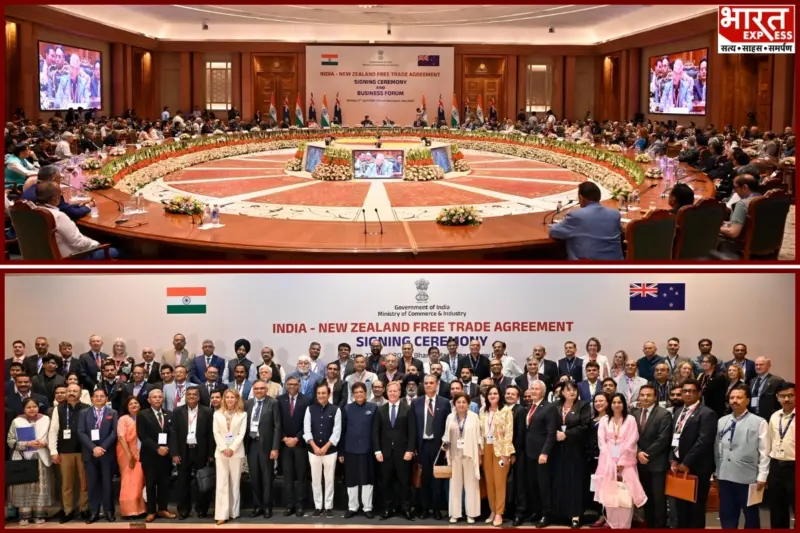

India and New Zealand on Monday signed a historic Free Trade Agreement (FTA) that eliminates tariffs on 100 per cent of India's exports to New Zealand and reduces or removes duties on 95 per cent of imports from the partner country.
Commerce Minister Piyush Goyal and his New Zealand counterpart Todd McClay formalised the agreement.
Concluded within nine months of its launch on March 16, 2025, the FTA marks a significant milestone in bilateral economic ties.
The deal grants India immediate duty-free access across all tariff lines. It replaces the existing 10 per cent tariff that New Zealand imposes on about 450 product categories. These include textiles, leather goods, ceramics, carpets, automobiles and auto components.
A major provision includes a $20 billion investment commitment by New Zealand in India over 15 years. The provision echoes similar arrangements seen in India's FTA with the European Free Trade Association.
The agreement also enhances mobility, with provisions for students and professionals.
For the first time, New Zealand has signed an annex on student mobility and post-study work visas. It allows Indian students to work up to 20 hours a week during their studies and offers extended post-study work options.
The FTA introduces a quota of 5,000 visas for skilled Indian professionals for up to three years. The visas cover sectors such as AYUSH, IT, engineering, healthcare, education and construction.
Additionally, 1,000 young Indians annually can benefit from a Working Holiday Visa with multiple entries over 12 months.
India has excluded sensitive sectors, including all dairy and farm products, from the agreement.
The pact will likely boost India's leather industry, projected to reach $50 billion by 2030. Agra, contributing around 75 per cent of India's leather footwear production and holding a GI tag, is being positioned as a global sourcing hub.
Further benefits extend to pharmaceuticals and medical devices, with faster regulatory access and recognition of international inspection standards.
The agreement also includes a dedicated chapter on Health and Traditional Medicine, marking a first for both nations.