
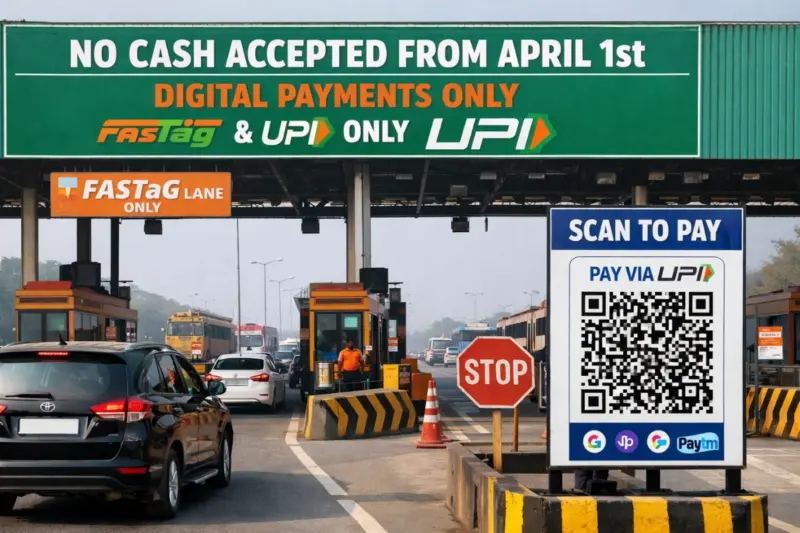

Road users across India will no longer be able to pay toll fees in cash from April 1, as the National Highways Authority of India (NHAI) moves to a fully digital toll collection system.
Under the new rule, all national highways and expressways will accept toll payments only through digital modes such as FASTag or UPI. This marks a significant shift in highway travel management.
The transition aims to improve efficiency and enhance transparency in toll collection. Officials expect that eliminating cash transactions will allow vehicles to pass through toll plazas more quickly, reducing congestion and long queues.
With faster processing at toll booths, authorities anticipate smoother traffic flow, particularly during peak hours. The move is also likely to reduce fuel consumption and vehicle emissions, contributing to environmental benefits.
Despite the advantages, the shift may pose challenges for travellers unprepared for digital payments. Vehicles without a valid FASTag or adequate balance may face penalties or be stopped at toll plazas.
In such situations, commuters will have the option to make payments using UPI by scanning QR codes installed at toll booths. However, officials cautioned that network issues could occasionally disrupt transactions and cause delays.
Travellers have been advised to ensure their FASTag is active, linked to a bank account, and sufficiently funded before travel. Keeping a functional UPI app as a backup is also recommended.
The move marks a major step in India's push towards digital infrastructure. It aims to make highway travel faster, smoother, and more efficient.