
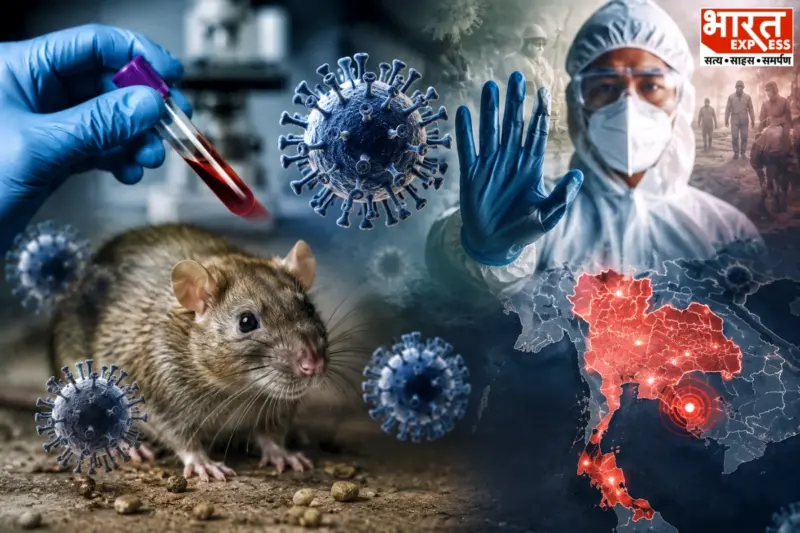

Thailand's National Communicable Disease Committee on Friday officially classified hantavirus as a 'dangerous communicable disease' amid growing international health concerns surrounding the infection.
The decision introduces stricter surveillance, rapid reporting protocols, and tighter quarantine measures across the country.
Under the revised public health mandate, authorities must report suspected infections within three hours and begin disease investigations within 12 hours.
Officials will also enforce a mandatory 42-day quarantine period for individuals identified as high-risk contacts.
The Ministry of Public Health stated that hantavirus poses a serious global threat because certain strains can spread through respiratory droplets and, in rare cases, transmit between humans.
Authorities said the classification became necessary to strengthen preparedness and prevent wider outbreaks.
The ministry has launched an intensified response strategy focusing on laboratory testing, surveillance systems, treatment readiness, and local implementation measures.
Health officials are also increasing monitoring at international entry points to detect possible imported infections quickly.
Permanent Secretary Somruek Chungsaman said provincial hospitals and public health offices must immediately communicate risks and strictly monitor suspected cases.
He urged individuals exposed to rodents or returning from high-risk regions to seek urgent medical care if they develop fever or breathing difficulties.
Hantaviruses generally spread through infected rodents, contaminated surfaces, saliva, urine, or droppings.
Human infections frequently occur in rural environments, farms, forests, and rodent-infested buildings during cleaning activities or regular exposure.