
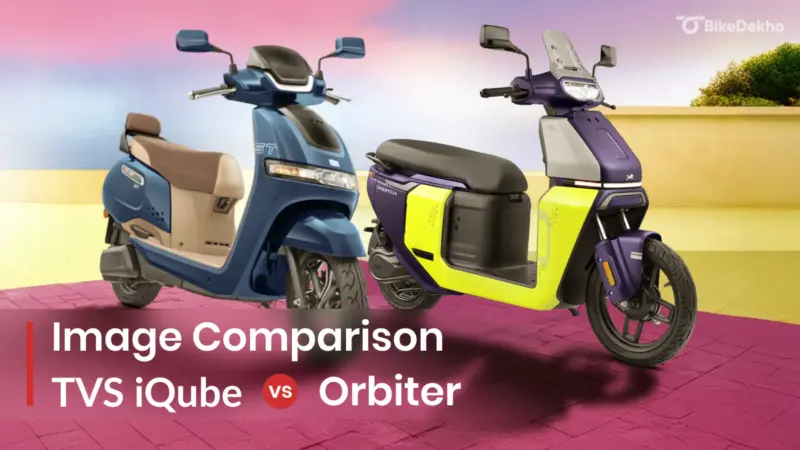

The most affordable TVS electric scooter has a lot more to offer than the base variant of the iQube!
TVS recently launched its newest electric scooter, the Orbiter.
The e-scooter comes at a price of Rs 99,900 (ex-showroom Bengaluru, including PM E-Drive scheme), making it the most affordable electric scooter from the Hosur-based manufacturer. In fact, it is Rs 2,615 less expensive than the most affordable 2.2kWh variant of the TVS iQube. We explain the differences between the two most affordable TVS electric scooters in images:
Design
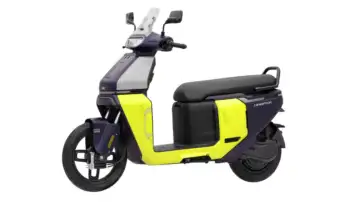
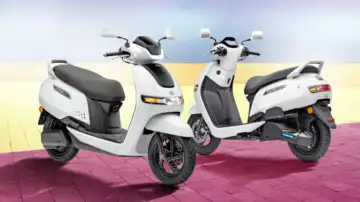
The TVS Orbiter gets a futuristic design language, which looks quite unique. It has a boxy profile overall, but the dual-tone colour schemes make the e-scooter look pretty premium. TVS has done a good job here, and small bits like the apron-mounted LED DRLs and turn-indicators look quite up market.
The TVS iQube, on the other hand, has the same tried and tested family-oriented scooter design. Even five years after its launch, the iQube's design has still remained the same. That's not necessarily a bad deal for its target audience as customers love the familiar, simple scooter design. There are a few premium bits like the metallic badging and the TVS Electric logo that lights up on the swingarm cover.
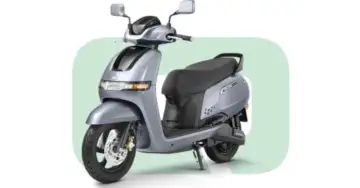
Overall, if you like a scooter with a sweet and simple design, the iQube will appeal to you. Those looking for a fresh, sleek design may find the Orbiter likeable.
Powertrain & Range
The TVS Orbiter is powered by a hub-mounted 2.1kW motor which offers a claimed top-speed of 68kmph. The scooter gets a 3.1kWh battery pack which offers a claimed range of 158km. While the top speed could've been better, the Orbiter makes up with its generous claimed range. That said, its real-world range is something we'll have to see once we test the e-scooter. There are two riding modes: Eco and City.
The iQube 2.2kWh variant, on the other hand, is powered by a 4.4kWh motor, which offers a claimed top-speed of 75kmph - decent enough for urban commutes. As the name suggests, the e-scooter is powered by a 2.2kWh battery pack which offers a claimed range of 94km.This is a big drop compared to what the TVS Orbiter has to offer, so you'll just have to plan your trips better. The iQube gets two riding modes: Eco and Power, which alter the throttle response and other performance characteristics of the scooter.
The iQube takes 2 hours and 50 minutes to charge from 0 to 80 percent, whereas the Orbiter takes 4 hours and 10 minutes. Both scooters use a 650W portable charger.A faster 950W portable charger is also available for the base iQube variant and with that, it takes 2 hours to charge the scooter from 0 to 80 percent.
Underpinnings
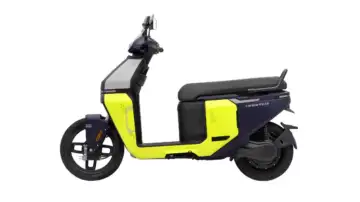
Both scooters get a telescopic fork and twin rear shock absorbers, but there are differences in other aspects of the underpinnings.The TVS Orbiter rolls on a 14-inch front and 12-inch rear alloy wheel setup. The braking setup consists of drum brakes at both ends.
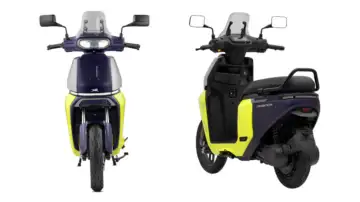
The X-shaped pattern on the blacked-out alloy wheel looks pretty funky. Also, the larger 14-inch front wheel will help the e-scooter go over bad roads more easily than a smaller 12-inch front wheel. We just wish it came with a front disc, at least as a variant. At 112kg, the kerb weight is decent for an entry-level scooter. The 169mm ground clearance should also be more than enough for urban roads.
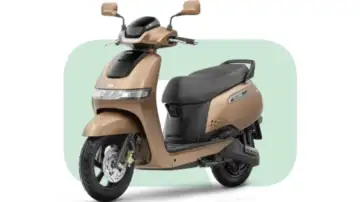
The TVS iQube, on the other hand, gets 12-inch alloy wheels at both ends. The alloy wheel design may not stand apart, but it looks premium enough. It gets a disc brake at the front and a drum at the rear, and the presence of a front disc should ensure better braking performance compared to using drums at both ends. The iQube is also a bit lighter at 110kg, and comes with a slightly lower 157mm ground clearance. That said, this is still adequate for most of its use-case.
Features
The TVS Orbiter gets a simpler colour LCD console which offers essential readouts such as speed, battery-level, time etc. It also comes with smartphone connectivity for features such as turn-by-turn navigation and call/SMS alerts. There's also a cruise control system, which is great to have but not very useful on our roads that are mostly crowded in peak hours.
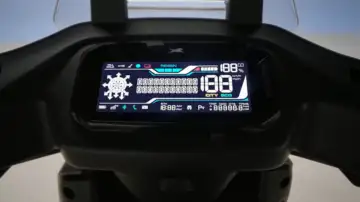
Other goodies on offer include a reverse mode, automatic hill hold assist, regenerative braking, crash/fall and tow alerts. Lastly, TVS also offers a USB charging port just below the console. There's an open glovebox on the apron where you can keep small items. More importantly, the Orbiter gets a large 34-litre underseat storage that can accommodate two half face helmets easily.
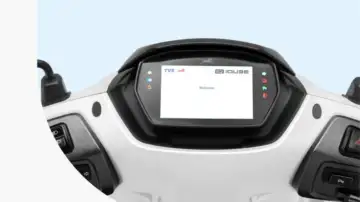
The iQube 2.2kWh variant has a more premium-looking 5-inch TFT console. It gets smartphone connectivity and related bits such as call/SMS alerts and turn-by-turn navigation. It also features the hill hold assist, crash/fall and tow alerts, regenerative braking along with geofencing. It may not have cruise control, but that's not really a deal-breaker.. Storage wise, the iQube gets a smaller 30-liter underseat storage, which is still reasonably decent for daily usage. There's no glovebox on the apron, but it gets a utility hook and an apron-mounted USB charging port..
Pricing And Verdict
Before we give a verdict on which TVS scooter is better, here's a breakdown of the prices:
Model | Price (ex-showroom, Bengaluru) |
Orbiter | Rs 99,990 |
iQube 2.2kWh | Rs 1,02,605 |
All things considered, the TVS Orbiter seems to be a more practical and value-for-money choice than the iQube, provided you're willing to overlook the lack of a front disc brake. If you want a traditional-looking e-scooter with good braking and don't mind the slightly smaller underseat storage, then the iQube makes sense.