
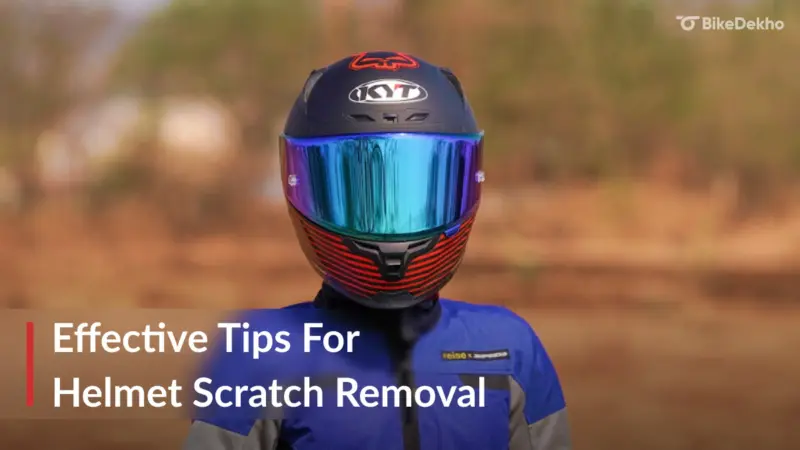

Feeling sad about the recent scratches on your helmet? These DIY tips might help you remove them
A motorcycle helmet is one piece of gear that every rider uses daily, yet it's also one of the easiest to damage.
From flying dust and small stones to careless wiping and improper storage, scratches start appearing sooner than expected. While a few marks on the visor may look harmless, they can quickly affect visibility, create glare at night and spoil the overall riding experience. Scratches on the shell may not make it useless, but they can make a helmet look old and shabby. However, you need not be saddened by a few minor scratches; with the right care and methods, many surface-level scratches can be reduced or even removed, helping your helmet stay clear, safe and good-looking for longer.
Why Helmet Scratches Shouldn't Be Taken Lightly
All the scratches on your helmet visor can be dangerous, and can affect safety. For starters, scratches scatter light. At night, oncoming headlights can create annoying glare, while daytime sun reflections can strain your eyes. This makes judging distances harder, especially on highways.Then there's durability. Repeated scratches slowly weaken the visor's surface coating. This can make a visor brittle, and cause it to break in case of a crash - well-made visors are not that easy to break but neglect can deteriorate them.
Lots of deep scratches on the shell can be a sign of a helmet that hasn't been handled properly. In some cases, it can also mean a helmet that has been dropped accidentally a few times. While a couple minor drops won't damage a helmet, frequent and/or hard falls can surely make a helmet unsafe for use.
How To Remove Minor Scratches
Always clean the area before fixing the scratches. One of the biggest mistakes riders make is trying to fix scratches on a dirty helmet. Dust particles act like sandpaper and create more damage.
Follow this step-by-step process for cleaning the area:
Use lukewarm water with mild soap.
Use a soft, damp cloth to wipe away the grime.
Never dry-wipe a dusty visor.
Pat dry gently.
Here are 5 essential tips for helmet cleaning. Once a helmet is cleaned, scratches will be clearly visible, making them easier to remove.
Effective Tips for Motorcycle Helmet Scratch Removal
Let's look at some practical and safe ways to deal with scratches:
1. Try Plastic Polish First
Plastic polish is one of the safest solutions for visor scratches. Apply a small amount on a microfiber cloth and rub gently in circular motions over the scratched area by keeping the pressure light. After a few minutes, wipe it clean and check the result. It smoothens the surface and reduces how light reflects off scratches, improving clarity.
2. Toothpaste for Minor Marks
For very fine scratches, toothpaste works as a mild abrasive. Use plain white toothpaste, not gel. Apply a small amount on a soft cloth. Rub gently for a few minutes and then wash and dry.
This works only for light scratches and should never be done aggressively, especially on coated visors.
3. Baking Soda Paste Method
Mix baking soda with a little water to form a thick paste. Rub it gently over the scratch using a microfiber cloth and then clean it off. It behaves like a polishing compound and helps reduce surface-level marks.
4. Use Dedicated Visor Repair Products
Some brands sell visor scratch-removal kits designed for polycarbonate. These are safer than random household solutions and give more consistent results. Follow the instructions properly and avoid mixing products.
5. Finish With Microfiber Polishing
After using any compound, always polish the surface with a clean microfiber cloth. This removes haze, restores shine and improves night-time visibility.
6. Treat Shell Scratches With Automotive Polish
For helmet shell scratches, mild automotive polish works well. Apply a small amount and polish lightly to restore shine and reduce the appearance of paint marks.
Avoid harsh compounds on carbon fibre or composite shells unless the manufacturer recommends them.
7. Use Wax for Cosmetic Improvement
Some scratches can't be removed but can be hidden. Wax-based fillers help blend the scratch visually with the surrounding paint. It won't fix the damage but improves how the helmet looks.
8. Never Use Sandpaper
Using sandpaper or rough pads is one of the worst mistakes. It removes coatings, distorts vision and permanently damages the visor. Always stick to soft clothes and gentle products.
When Is Replacement the Better Option?
Not every scratch deserves a repair attempt. Replace your visor if:
Headlights cause heavy glare at night.
The scratch is deep enough to catch your nail.
There are cracks or chips.
The anti-fog or UV layer is damaged.
Visors are designed to be replaceable for a reason because clear vision is critical for safety.
Common Causes of Helmet Scratches
Most scratches happen because of daily habits, not accidents.
Dry wiping dust.
Using paper towels instead of microfiber.
Placing the helmet visor-down on rough surfaces.
Keeping it near keys or tools.
Cleaning with harsh chemicals.
How To Prevent Scratches in Everyday Use
Prevention is easier than repair. Here's what helps:
Always wet the visor before wiping.
Carry a microfiber cloth.
Store the helmet in a cloth bag.
Avoid resting it face-down on hard, rough surfaces.
Rubbing rigorously on hard grime.
Keep sharp objects away.
Small changes make a big difference over time.
Is Scratch Removal Safe for Helmet Strength?
Scratch removal is safe only when done lightly on the surface.
Never use these methods for scratch removal:
Grind or sand the shell.
Apply heat.
Use industrial chemicals.
Any structural damage compromises impact protection.
DIY vs Professional Restoration
Light scratches can be handled at home. For deep cosmetic shell marks, some detailing shops offer paint correction. But for visors, replacement is usually smarter than heavy restoration.
Conclusion
Scratches are part of everyday riding, but they don't have to ruin your helmet or your visibility. Light marks can be improved with gentle polishing, while deeper damage should always be handled with safety in mind. Knowing when to fix and when to replace makes all the difference.
With proper cleaning habits, the right products and a little attention, your helmet can stay clear, comfortable and good-looking for years. After all, a well-maintained helmet doesn't just look better — it helps you ride with more confidence every single day.