




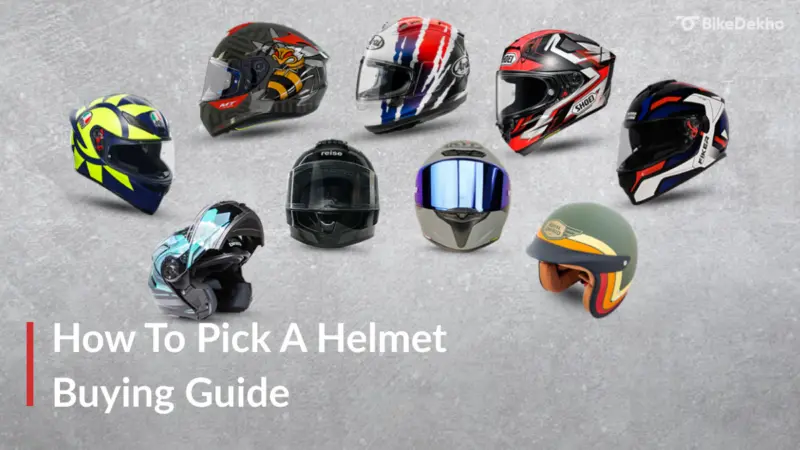

Safety certifications, size measurements, types of helmets - lots to consider before buying a helmet. We simplify helmet buying for you
Buying a new helmet is the easiest process for many - you would just go to the nearest roadside helmet vendor and buy the cheapest helmet you find. However, if you value your life, don't do that. Here's a buying guide that can help you pick the right helmet for yourself.
Helmet Certifications - ISI, ECE, & DOT
Before we go talk about different certifications, it's crucial to understand that only ISI-certified helmets can be legally sold in India. That said, before you bash away on the ISI certification, please understand that its standards are derived from older ECE standards.
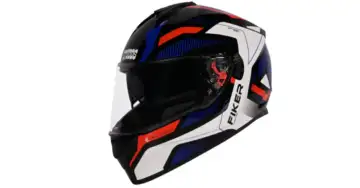
However, the newer ECE certification standards (latest one called ECE 22.06) are well beyond the ISI's, and are stricter as well. That is why the newer ECE-certified helmets are considered to be some of the safest helmets in the world. Such helmets are tested by an independent lab. On similar lines, a helmet will be ISI certified only if it has been tested by the ISI bureau.
DOT certification is considered a step under ECE; one of the main reasons for it is that it's based on an honour system. Which means a manufacturer can just claim their helmet is DOT-certified based on their own testing. There's no independent testing required for a helmet to be DOT-certified. 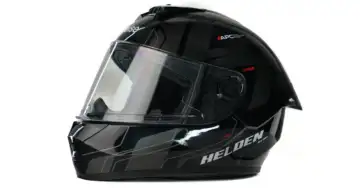
All said, we recently found out that some helmet manufacturers are misleading the buyers. While their helmets are ISI-certified, they also have stickers that say DOT-compliant and ECE-compliant. That means that these helmets are not certified for DOT or ECE, but claimed to be made to those standards. Please take a closer look at these stickers on the helmet you are buying.
Helmet Price & Budget
While a helmet is super important for your head, it shouldn't cost you an arm and a leg. You need to make a well-informed budget allocation for a helmet. Helmets are priced from Rs 1,500 in India, and go well beyond Rs 1 lakh. While you can't quantify the value of your head, or your body for that matter, you should be able to comfortably afford the helmet of your choice. Also, as helmets get more expensive, so do their visors, and other spares. You might also go through a couple visors in the helmet's lifespan. So at the end of the day, you may have to consider the cost of these as well.
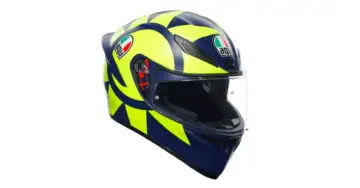
Another reason why you shouldn't overspend on a helmet is because you also need to be able to afford another one. If you were to get into a crash, the first thought in your head shouldn't be 'Oh! I crashed in my expensive helmet'. If it's your primary helmet, you would (and should) be wearing it everywhere. Neither should it become a liability while using it, nor should you be afraid of using it for any and every ride - commutes and grocery runs included. This can happen only if you buy a helmet that suits your budget.
Helmet Life
Every helmet has a lifespan that's typically between 3-5 years, after which you must discard a helmet. Yes, even if you haven't crashed in it. After it expires, the helmet loses its ability to protect your head. While it may look in a top shape, the shell as well as the inner foam liners get brittle over time, and the inner padding loses its damping qualities.
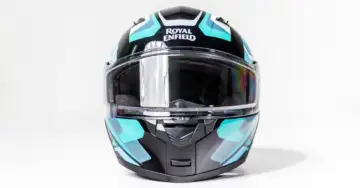
All of this means you must stop using the helmet after the period specified in the manual. This is also why it's necessary to buy a helmet that you can afford because you shouldn't feel sad about discarding a seemingly perfect helmet. There's no grey area - would you consume expired medicines? Same logic.
A lot of people will tell you to buy a really expensive helmet, just because it's safer. While there's truth to that, it should also suit your wallet. Be smart about your expenses.
Types of Helmet
Once you've locked in your budget, you need to choose the right type of helmet, depending on your riding style. The easiest and the most common type is the full-face helmet. Then you also have the ADV (adventure) helmet which can have a visor or can be visor-less (these need separate goggles). The latter, which are more-or-less motocross helmets, are primarily meant for off-roading purposes. Then there are the modular and open-face/half-face helmets, but these don't provide the best safety for your head. Our story on types of helmet can help you decide better.
Helmet shells are mainly made of either of these three components: Thermoplastic or polycarbonate, which are rather bad, fibreglass is better, and aramid or composite fibre is the best. This should be written in the specs of the helmet. In case you don't find the mention of either, there are good chances the helmet is made up of the cheapest and the worst materials.
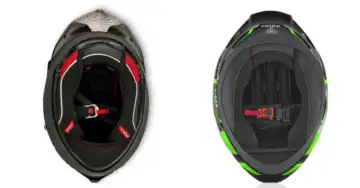
Helmets have two types of strapping mechanism. First is the micrometric buckle. One strap of the helmet has a ratchet, while the other strap has a tab, which has to be slid into the ratchet. To release, you just lift the ratchet lever. Easy-peasy and quick.
The next one is the Double-D ring mechanism which is the safest. Here you have two metal rings on one strap in which you have to double loop the other strap. While this can be a bit difficult to master, once learnt, it can be pretty quick.
Getting the Right Fit
A helmet that fits right can mean the difference between life and death, and that's not an exaggeration. While a loose fitting helmet can feel more comfortable, it can easily come off in case of a crash, and cause an otherwise avoidable injury. To put it simply, a helmet should fit snugly around your head as well as your cheeks. This is why it is advisable that you try a helmet in a shop before buying it.
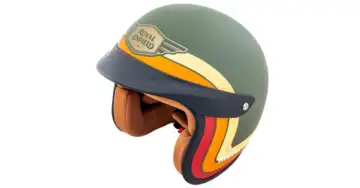
To find a right fit you need to first measure the circumference of your head. Take a tailor's measuring tape, and position it about a finger's width above the eyebrows and wind it around your head. That should give you the measurement of your crown. Almost all helmets use crown sizes as a baseline for helmet sizes. You should be able to find the correlating helmet size on each brand's website. Though, look at these as guidelines rather than the final word, so try on different sizes before you buy.
Another easy mistake is rejecting a helmet because the cheek pads squeeze your cheeks. They will always be so on a new helmet, but soften as you start using the helmet - almost like adapting to the shape of your face. The easiest way to understand if a cheek pads are too loose, is to try to nudge your index finger from the bottom and move it upwards between the pads and cheek. If it slides in easily, you need thicker pads. On the contrary, if the finger doesn't slide in at all, it would be better to look for a helmet with thinner pads.
With the entry level helmets, you might have to try different shell sizes to find a comfortably snug fit. Some expensive helmets have an option to change padding sizes (sometimes at an extra cost) alone. For example, you can get L-sized crown padding with M-sized cheek pad. Some expensive helmets also have removable liners on the padding to let you customise the fit without having to spend extra money.
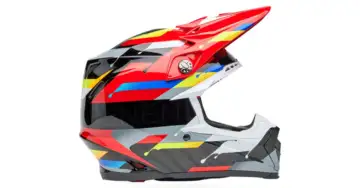
Irrespective of which helmet you are buying, it is strongly advisable that you spend some time finding the right fit. If you think a specific helmet just doesn't fit right no matter the size, check a different helmet brand or model. A perfectly fitting helmet feels light, comfortable, and gives you a good sense of safety.
To Sum It Up…
Using a helmet, or any piece of riding gear, is not a guarantee of complete safety. You can still get hurt in an accident, despite wearing a helmet, but what's more important to acknowledge is that with riding gear, the injury might not be as serious. Look at it this way - wearing proper riding gear can mean the difference between being carried away from an accident, and walking away from an accident.
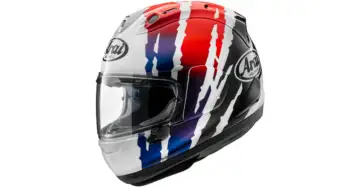
Finally, remember to strap your helmet before the ride - doesn't matter if you have a double-d ring helmet or ratchet strap. An unstrapped helmet is as good as not wearing one as it will come off easily in case of an accident. Like with the fit, it doesn't have to be tightly strapped - just comfortably snug.