


Today, on December 27, the birth anniversary of Guru Gobind Singh (Guru Gobind Singh Jayanti) is being observed. This occasion holds immense spiritual significance for Sikhs and is celebrated as Prakash Parv with respect, devotion, pride, and a spirit of surrender.
Gurpurab celebrations devotion, unity, and service
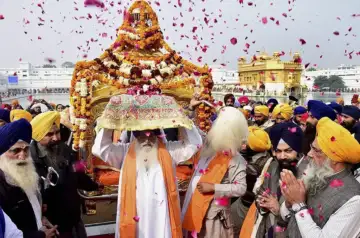
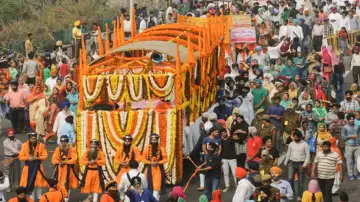
On this sacred day, the grandeur of gurdwaras across the country is truly a sight to behold. Akhand Path Sahib, kirtan, and Nagar Kirtan are organized in gurdwaras. Along with this, langar, the symbol of service and equality, is specially arranged, where everyone is served food without any discrimination. Devotees remember the teachings given by Guru Sahib Ji on this day and pledge to follow them in their lives.
Chanting the Name of Waheguru and the Consciousness of Sacrifice. Amid these religious observances and acts of service, remembering the sacrifices of Guru Gobind Singh Ji and the unparalleled martyrdom of his family becomes extremely important. That is why this sacred day is not limited to external celebrations alone, but also emphasizes inner reflection and spiritual remembrance.
The echoing kirtan in gurdwaras, the sacred flow of Akhand Path, and the service of langar connect devotees to the spirit of sacrifice and awareness that Guru Gobind Singh Ji imparted through his life and through the sacrifices of his sons. Carrying this sentiment forward, chanting the name of 'Waheguru' and remembering the immortal sacrifice made at the tender age of 13 years purifies the hearts of devotees and connects them deeply with the teachings of Guru Sahib Ji. Thus, service, meditation, and the consciousness of sacrifice together transform this sacred day into not just a festival, but an occasion of spiritual awakening.
Who Was Guru Gobind Singh?
Guru Gobind Singh Sahib was the tenth and last Guru of Sikhism. He was not only a great spiritual master but also an extraordinary warrior, poet, philosopher, and social reformer. He devoted his entire life to serving humanity, protecting righteousness, and fighting injustice. His teachings continue to inspire people to walk the path of courage, equality, and truth. On the day of Baisakhi, Guru Gobind Singh Ji established the Khalsa Panth, giving Sikhism a new and powerful identity. He taught Sikhs to always remain ready to protect faith, self-respect, and justice. His father was Guru Tegh Bahadur, and his mother was Mata Gujri.
How Is Guru Gobind Singh Jayanti Celebrated?
Guru Gobind Singh Jayanti is a deeply sacred and inspiring festival for the Sikh community. On this day, devotees participate with great faith and enthusiasm in various religious and service-oriented activities. Gurdwaras organize Akhand Path Sahib, where continuous recitation of Gurbani takes place, connecting the congregation with Guru Sahib's teachings. Through kirtan, the life, sacrifices, and sermons of Guru Gobind Singh Ji are remembered, creating a devotional atmosphere. In many places, grand Nagar Kirtans are taken out, through which devotees spread Guru Sahib's message with discipline and devotion. On this day, the teachings of Guru Gobind Singh Ji-courage, equality, service, and truth-are widely propagated. Special langars are organized in all gurdwaras, serving food to everyone without discrimination. Along with this, food, clothes, and medicines are distributed to the needy, spreading a message of compassion and service. Devotees also recite Gurbani at home and pledge to imbibe the ideals of Guru Gobind Singh Ji in their lives.
Teachings of Guru Gobind Singh Ji
'Sach kahon sun leh sabai, jin prem kiyo tin hi Prabh payo.'
Meaning: I speak the truth-listen to everyone-only those who love truly attain God. This teaching emphasizes that divine realization is achieved through genuine love.
'Manas ki jaat sabai ekai pehchanbo.'
Meaning: Recognize all of humanity as one. All human beings are equal and should be treated alike.
'Chun kar az hama heelate dar guzasht, halal ast burdan ba shamsheer dast.'
Meaning: When all peaceful means fail, it is righteous to take up the sword for justice. Guru Gobind Singh Ji teaches that force should be used only as a last resort to protect righteousness and justice.
'Deh Shiva bar mohe ihai, shubh karman te kabhun na taron.'
Meaning: O Lord, grant me this boon-that I may never refrain from performing righteous deeds.
'Chidiya naal mein baaz ladawan, Gidar ko mai sher banau, Sava laakh se ik ladavaan, Tabhi Gobind Singh naam kahavaan.'
These lines reflect immortal courage and sacrifice, symbolizing the spirit in which Sikh warriors laid down their lives but never bowed before foreign invaders. Even today, these words inspire immense bravery and valor.
Historical Contributions of Guru Gobind Singh Ji
- Established the Khalsa Panth in 1699 on the day of Baisakhi.
- Emphasized the importance of the Five K's-Kesh, Kangha, Kara, Kachha, and Kirpan.
- Raised his voice against Mughal oppression.
- Declared the Guru Granth Sahib as the eternal Guru of the Sikhs.
Prime Minister Narendra Modi Said,
On this occasion, Prime Minister Narendra Modi said that Guru Gobind Singh is a symbol of courage, compassion, and sacrifice, and that his life and teachings inspire everyone to stand for truth, justice, and righteousness, and to protect human dignity. He said that the vision of the tenth Sikh Guru, Guru Gobind Singh, has continuously guided generations toward service and selfless duty.
Prime Minister Modi wrote on the social media platform 'X',
'On the sacred occasion of the Prakash Purab of Sri Guru Gobind Singh Ji, we bow to him with reverence. He is a symbol of courage, compassion, and sacrifice. His life and teachings inspire us to stand for truth, justice, and righteousness, and to uphold human dignity.'