

*pointer-events-auto R6Vx5W_threadScrollVars scroll-mb-[calc(var(--scroll-root-safe-area-inset-bottom,0px)+var(--thread-response-height))] scroll-mt-(--header-height)" data-turn-id="895b2494-c3f6-44dc-a074-adb601d92e12" data-testid="conversation-turn-41" data-scroll-anchor="false" data-turn="user"> *pointer-events-auto [content-visibility:auto] supports-[content-visibility:autocontain-intrinsic-size:auto_100lvh] R6Vx5W_threadScrollVars scroll-mb-[calc(var(--scroll-root-safe-area-inset-bottom,0px)+var(--thread-response-height))] scroll-mt-[calc(var(--header-height)+min(200px,max(70px,20svh)))]" data-turn-id="request-69eef932-be54-83e8-9ff4-4359037986c6-10" data-testid="conversation-turn-42" data-scroll-anchor="false" data-turn="assistant">
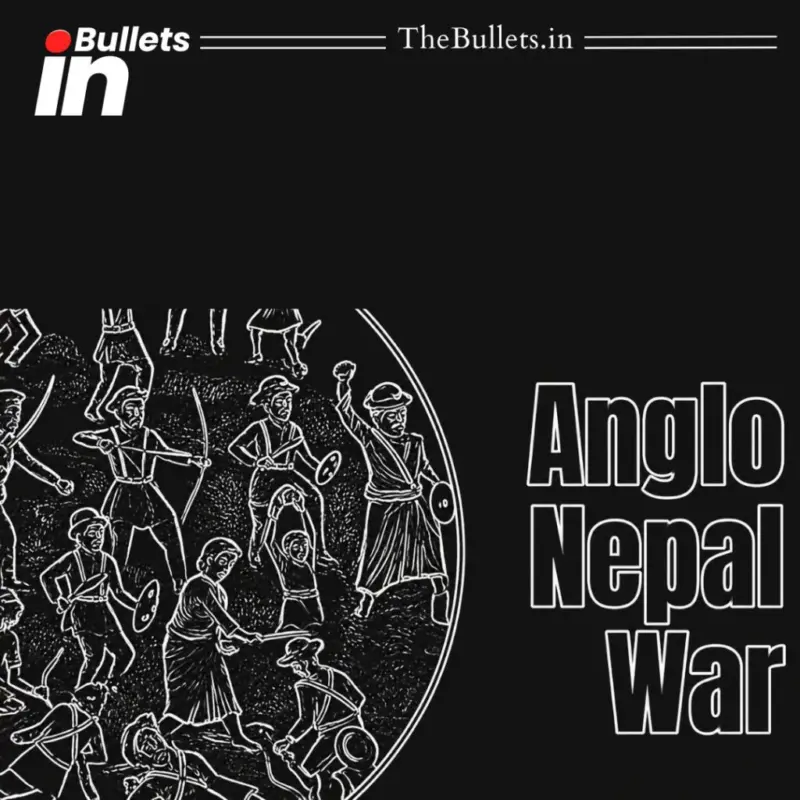
The Anglo-Nepal War (1814-1816) was fought between the British East India Company and Nepal, ending with the Treaty of Sugauli that reshaped territorial control and regional power dynamics.
BulletsIn
- The Anglo-Nepal War, also known as the Gorkha War, was fought between the British East India Company and the Kingdom of Nepal over territorial expansion and strategic interests.
- Nepal, under Prithvi Narayan Shah, had expanded rapidly across regions like Kumaon, Garhwal, and Sikkim, creating tensions with British territorial ambitions in India.
- The main causes included border disputes, economic competition over Himalayan trade routes, and security concerns of the British regarding Nepal's growing influence near Bengal.
- The immediate trigger of the war was Nepal's occupation of the Butwal region in the Terai, which was under British protection, escalating tensions into open conflict.
- Nepalese forces led by Amar Singh Thapa used hilly terrain and strong fortifications effectively, initially resisting British advances despite having smaller troop strength.
- Early British setbacks occurred in battles like Jitgadh and Jaitak, but later victories such as the Battle of Makwanpur in 1816 ensured British dominance.
- The war ended with the Treaty of Sugauli, under which Nepal ceded territories like Kumaon, Garhwal, and parts of the Terai to the British.
- The treaty also required Nepal to accept a British resident, marking the beginning of controlled diplomatic relations while ending major conflicts between Nepal and the British.