




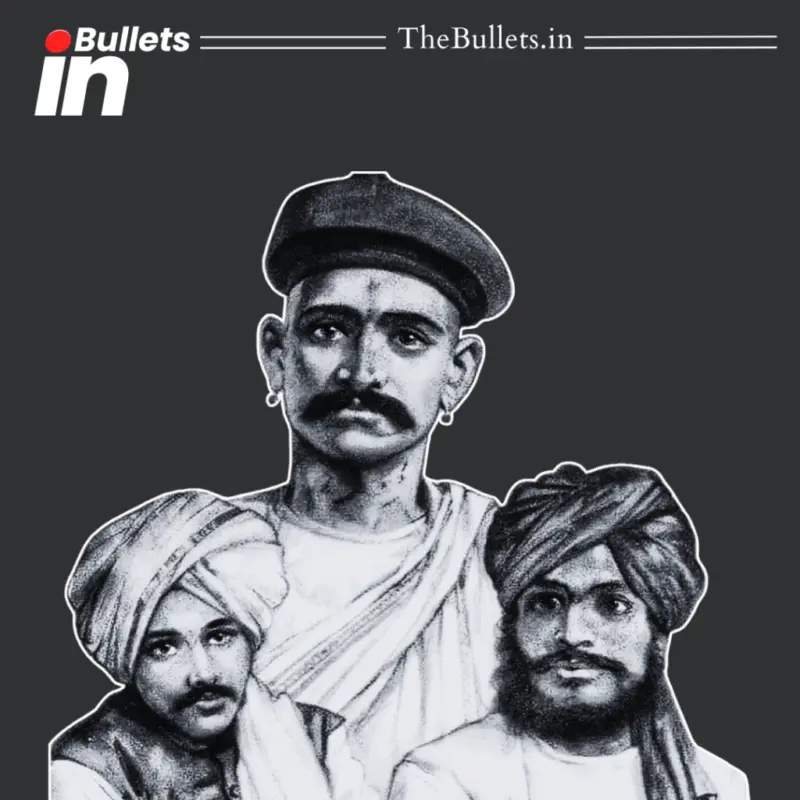

The Chapekar Brothers assassinated British plague officer Walter Charles Rand in 1897, inspiring revolutionary nationalism and intensifying anti-colonial resistance against British rule in India.
BulletsIn
- Damodar Hari Chapekar, Balkrishna Hari Chapekar and Vasudeo Hari Chapekar belonged to a Chitpavan Brahmin family from Chinchwad near Pune in Maharashtra.
- The Chapekar Brothers became prominent revolutionaries during the bubonic plague outbreak in Pune after British authorities imposed harsh and humiliating public health measures.
- British officer Walter Charles Rand headed the Special Plague Committee and enforced aggressive inspections, forced evacuations and intrusive searches across Pune city.
- Local residents strongly opposed the British administration because soldiers entered homes, insulted religious sentiments and publicly searched women during plague operations.
- On 22 June 1897, during Queen Victoria's Diamond Jubilee celebrations, the Chapekar Brothers planned and executed the assassination of Rand and Lieutenant Ayerst in Pune.
- Damodar Hari Chapekar shot Rand, while Balkrishna Hari Chapekar attacked Lieutenant Ayerst, who was accompanying the British plague commissioner during the celebrations.
- After police investigations intensified, the British administration arrested the brothers and executed Damodar in 1898, followed by Balkrishna and Vasudeo in 1899.
- The actions of the Chapekar Brothers inspired future revolutionaries and marked one of the earliest examples of aggressive nationalist resistance against British colonial rule in India.