




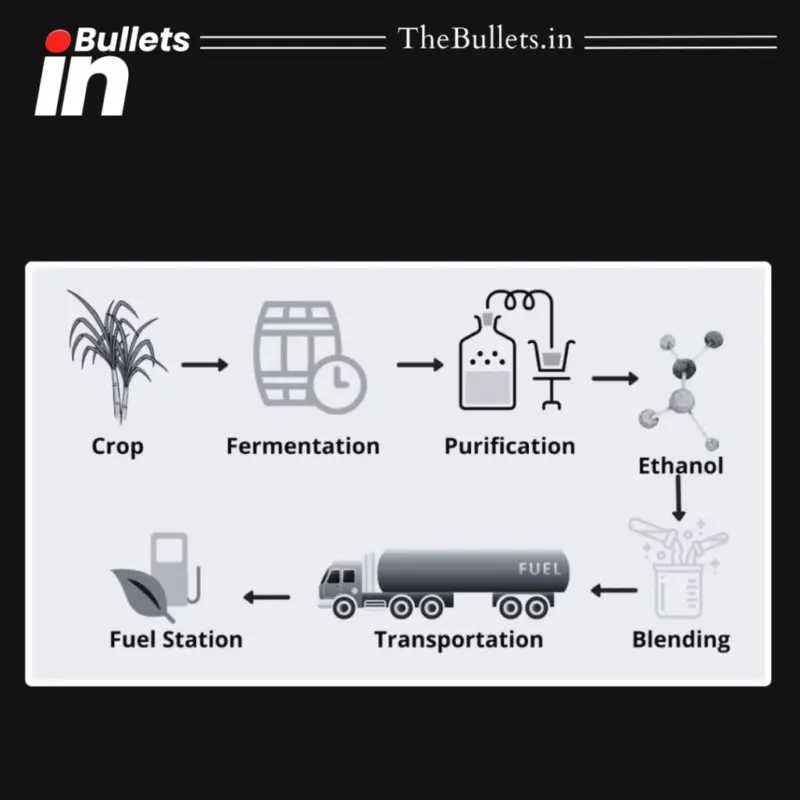

India's ethanol strategy is transforming its energy landscape by reducing oil dependence, boosting rural income, and cutting emissions, while facing concerns over food security, water use, and infrastructure gaps.
BulletsIn
- Ethanol blending in India has rapidly increased from 1.5 percent in 2013 to nearly 18 percent in 2024, reflecting a major policy shift toward alternative fuels.
- The strategy aims to reduce crude oil imports, which account for around 85 percent of India's energy needs, strengthening long-term energy security and resilience.
- Ethanol blending is projected to save over ₹30,000 crore annually in foreign exchange while reducing nearly 10 million tonnes of carbon dioxide emissions.
- The program has injected more than ₹90,000 crore into the rural economy, providing farmers with additional income sources and improving financial stability of sugar mills.
- Advanced biofuels such as second-generation ethanol use agricultural waste, helping reduce stubble burning and promoting a circular bio-economy model in India.
- However, rising demand for ethanol feedstock is creating competition with food crops, potentially impacting food security and increasing dependence on imports of essential commodities.
- Water-intensive crops like sugarcane used in ethanol production are putting pressure on groundwater resources, especially in states already facing water scarcity challenges.
- Infrastructure gaps, logistical constraints, and technological bottlenecks in second-generation ethanol plants continue to limit the full potential of India's ethanol strategy.