
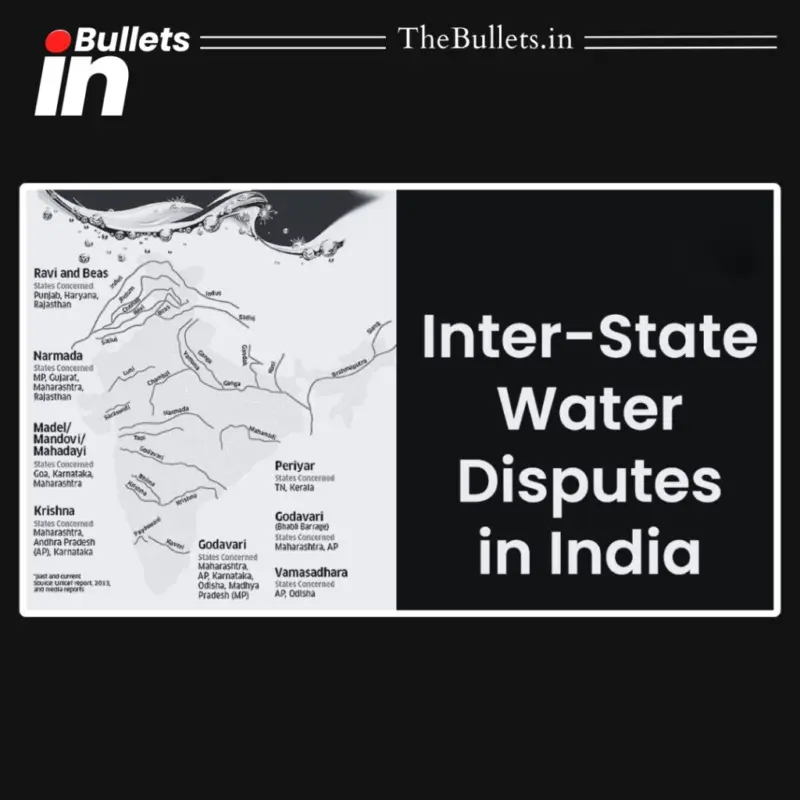

India manages inter-state river disputes under Article 262 of the Constitution, enabling tribunals to resolve conflicts between states over water sharing.
Laws enacted in 1956 provide mechanisms for adjudication, ensuring equitable distribution and limiting court intervention.
Bullets
- Inter-state water disputes arise between states over use, distribution, and control of shared river waters.
- Article 262 empowers Parliament to create laws for resolving such disputes through specialized tribunals.
- It also allows exclusion of Supreme Court and other courts from jurisdiction over these disputes.
- The Inter-State Water Disputes Act, 1956 enables the Centre to set up ad hoc tribunals.
- Tribunal decisions are final and binding on the states involved in the dispute.
- The River Boards Act, 1956 allows creation of advisory bodies to assist states on water management.
- A non-judicial mechanism is preferred to address broader public interest beyond legal property rights.
- These frameworks aim to ensure equitable sharing of water resources among states.
- Disputes often arise due to increasing demand, regional imbalance, and climatic pressures.
- Effective resolution is crucial for maintaining federal harmony and sustainable resource use.