

*pointer-events-auto R6Vx5W_threadScrollVars scroll-mb-[calc(var(--scroll-root-safe-area-inset-bottom,0px)+var(--thread-response-height))] scroll-mt-(--header-height)" data-turn-id="ec575db6-fcf3-4c80-992d-fd7e03d7340a" data-testid="conversation-turn-33" data-scroll-anchor="false" data-turn="user"> *pointer-events-auto [content-visibility:auto] supports-[content-visibility:autocontain-intrinsic-size:auto_100lvh] R6Vx5W_threadScrollVars scroll-mb-[calc(var(--scroll-root-safe-area-inset-bottom,0px)+var(--thread-response-height))] scroll-mt-[calc(var(--header-height)+min(200px,max(70px,20svh)))]" data-turn-id="request-69eef932-be54-83e8-9ff4-4359037986c6-6" data-testid="conversation-turn-34" data-scroll-anchor="false" data-turn="assistant">
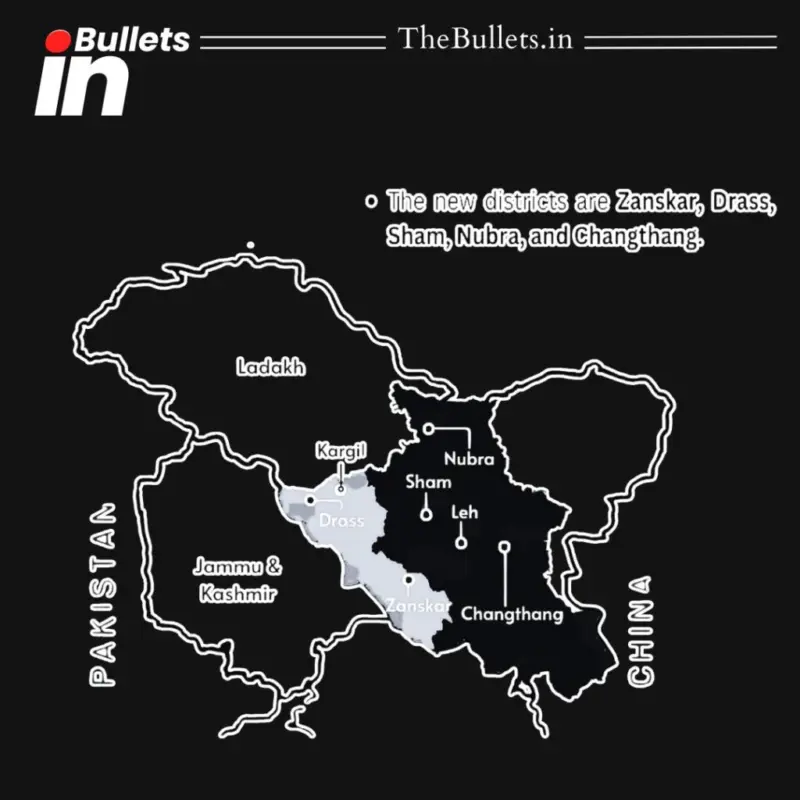
The Union Territory of Ladakh has been expanded with five new districts to improve governance, strengthen administration, and enhance service delivery in remote and strategically important border regions.
BulletsIn
- Ladakh has been reorganised with five new districts-Nubra, Sham, Changthang, Zanskar, and Drass-taking the total number of districts in the region to seven.
- The decision was approved by Lieutenant Governor Vinai Kumar Saxena to strengthen decentralised governance and improve administrative reach in remote areas.
- Earlier, Leh and Kargil were the only two districts, making governance difficult due to Ladakh's vast geographical spread and scattered population settlements.
- Ladakh spans about 86,904 square kilometres, making it India's largest Union Territory by area, but has a low population density with around 2.74 lakh people.
- The move is expected to bring administration closer to citizens, improving delivery of public services in remote and border areas with harsh terrain conditions.
- The proposal had earlier received approval from the Ministry of Home Affairs under the leadership of Amit Shah in August 2024.
- New districts are likely to boost local employment, infrastructure development, entrepreneurship, and overall socio-economic growth in the region.
- The restructuring also holds strategic importance as Ladakh shares sensitive borders with China and Pakistan, requiring stronger administrative and governance mechanisms.