





*pointer-events-auto R6Vx5W_threadScrollVars scroll-mb-[calc(var(--scroll-root-safe-area-inset-bottom,0px)+var(--thread-response-height))] scroll-mt-(--header-height)" data-turn-id="1bccd864-8d84-4d3e-8dca-ed1e2089b586" data-testid="conversation-turn-57" data-scroll-anchor="false" data-turn="user"> *pointer-events-auto [content-visibility:auto] supports-[content-visibility:autocontain-intrinsic-size:auto_100lvh] R6Vx5W_threadScrollVars scroll-mb-[calc(var(--scroll-root-safe-area-inset-bottom,0px)+var(--thread-response-height))] scroll-mt-[calc(var(--header-height)+min(200px,max(70px,20svh)))]" data-turn-id="request-69eef932-be54-83e8-9ff4-4359037986c6-50" data-testid="conversation-turn-58" data-scroll-anchor="false" data-turn="assistant">
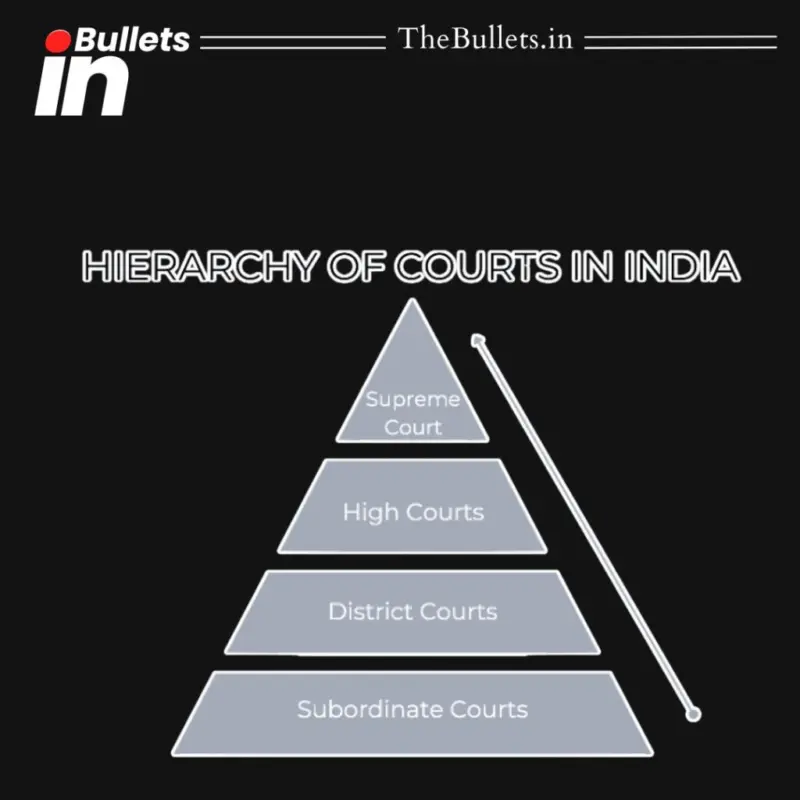
Subordinate courts form the foundation of India's judicial system, handling civil and criminal cases at local levels and ensuring accessible, efficient, and timely justice for citizens.
BulletsIn
- Subordinate courts operate under the supervision of High Courts and handle the majority of civil and criminal cases, ensuring justice delivery at district and local levels across India.
- Articles 233 to 237 of the Constitution provide the legal framework for appointment, control, and independence of subordinate courts, ensuring separation from executive influence.
- District Judges are appointed by the Governor in consultation with the High Court and serve as the highest judicial authority at the district level with both civil and criminal jurisdiction.
- The District Judge also functions as a Sessions Judge in criminal matters, with powers to award sentences including life imprisonment and capital punishment, subject to High Court confirmation.
- Below district courts, civil courts include subordinate judges and munsif courts, while criminal courts include Chief Judicial Magistrates and Judicial Magistrates with varying jurisdiction limits.
- Chief Judicial Magistrates handle criminal cases punishable up to seven years, while Judicial Magistrates deal with offences carrying imprisonment up to three years.
- Special courts like City Civil Courts, Metropolitan Magistrate Courts, and Small Causes Courts handle specific types of cases, particularly in urban areas and minor civil disputes.
- Grassroots-level institutions such as Nyaya Panchayats and Gram Kutchery resolve minor disputes locally, improving access to justice and reducing the burden on higher courts.