
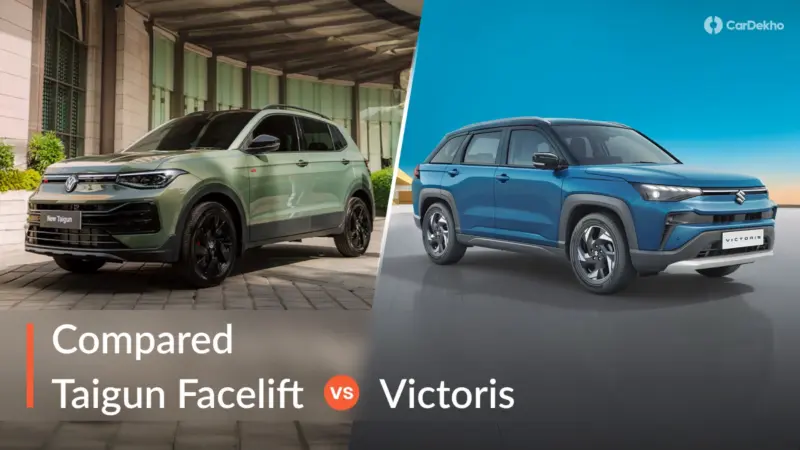

Volkswagen has launched the facelifted Taigun with updated styling, enhanced features, and a slight change in the powertrain department.
On the other hand, the Maruti Suzuki Victoris continues to attract buyers with its wide range of powertrains, feature-loaded cabin and modern design.
On paper, both SUVs bring a lot to the table, but they cater to completely different buyers. So how do they compare, and which type of buyer are you? Let's understand this by taking a closer look at their specifications, features, dimensions, and powertrains.
Price
Model | VW Taigun facelift | Maruti Victoris |
Price (ex-showroom) | From Rs 11 lakh to Rs 19.3 lakh | Rs 10.5 lakh to Rs 19.99 lakh |
- The Taigun facelift's base variant is around Rs 50,000 more expensive than that of the Victoris.
The top-spec variant of the Maruti Suzuki Victoris is more expensive by around Rs 70,000.
Let's take a look at the specifications of both these SUVs:
Dimensions
Parameter | Volkswagen Taigun facelift | Maruti Victoris | Difference |
Length | 4221 mm | 4360 mm | (-139 mm) |
Width | 1760 mm | 1795 mm | (-35 mm) |
Height | 1612 mm | 1655 mm | (-43 mm) |
Wheelbase | 2651 mm | 2600 mm | +51 mm |
- The Victoris is significantly longer than the Taigun, but has the shorter wheelbase out of the two.

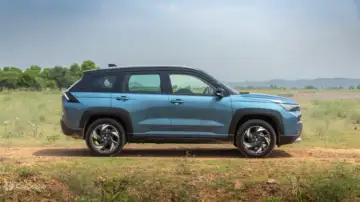
In terms of width and height, the Victoris takes the lead by a small margin.
Overall, it is the Victoris that has the better road presence, but the Taigun, which looks sharper and more modern. The facelifted Taigun gets illuminated logos at the front and back, along with many new design elements, which you can check out in this report.
Powertrain
Volkswagen Taigun facelift | Maruti Victoris | ||||
Engine | 1-litre turbo-petrol | 1.5-litre turbo-petrol | 1.5-litre mild-hybrid petrol | 1.5-litre petrol strong-hybrid | 1.5-litre petrol with CNG |
Transmission | 6-speed manual / 8-speed AT (New) | 7-speed DCT | 5-speed manual / 6-speed AT | e-CVT | 5-speed manual |
Power | 115 PS | 150 PS | 103 PS | 116 PS | 88 PS |
Torque | 178 Nm | 250 Nm | 139 Nm | 144 Nm | 122 Nm |
- The Taigun takes the turbo approach, while the Victoris focuses on fuel efficiency with mild- and strong-hybrid options.

The Taigun's more potent 1.5-litre engine makes the most output, and should be picked if you want performance.
The Victoris' strong hybrid should be your choice if efficiency, along with good city drivability, matters to you.

The Victoris also comes with a CNG option for those who want the lowest running costs.
New transmission: The Taigun facelift gets an 8-speed automatic, replacing the older 6-speed unit. This new gearbox is known to be smoother and slightly more efficient than the outgoing unit. |
Features
Feature | VW Taigun facelift | Maruti Victoris |
Auto LED Headlamps | ✅ | ✅ |
LED foglamps | ✅(part of the LED headlights) | ✅ |
LED Taillamps | ✅ | ✅ |
Wheels | 17-inch alloy wheels | 17-inch alloy wheels |
Roof Rails | ✅ | ✅ |
Height-adjustable Driver Seat | ✅ | ✅ |
Ambient Lighting | ✅ | ✅ |
Infotainment Setup | 10.1-inch touchscreen | 10.1-inch touchscreen |
Wireless Apple CarPlay/Android Auto | ✅ | ✅ |
Instrument Cluster | 10.25-inch display | 10.25-inch display |
Wireless Phone Charger | ✅ | ✅ |
Sound system | 6-speaker sound system | 8-speaker Infinity sound system with subwoofer |
Auto-dimming IRVM | ✅ | ✅ |
Cruise Control | ✅ | ✅ |
Climate Control | Single-zone | Single-zone |
Keyless entry | ✅ | ✅ |
Ventilated front seats | ✅ | ✅ |
Powered seats | Yes | Yes, driver's side only |
Sunroof | Panoramic sunroof | Panoramic sunroof |
Front and rear centre Armrest | ✅ | ✅ |
Paddle Shifter | ✅ (Automatic only) | ✅ (Automatic only) |
Powered tailgate | ❌ | ✅ |
Multi-drive Modes | ❌ | ✅ |
Cooled Glovebox | ✅ | ✅ |
Head-up display | ❌ | ✅ |
Connected Car Tech | ✅ | ✅ |
Airbags | 6 | 6 |
360-degree Camera | ❌ (Reverse only) | ✅ |
ESC (electronic stability control) | ✅ | ✅ |
Rain Sensing Wipers | ✅ | ✅ |
Front and rear sensors | ✅ | ✅ |
Rear defogger | ✅ | ✅ |
TPMS (Tyre Pressure Monitoring System) | ✅(Warning only, does not show live readings) | ✅ |
ADAS | ❌ | ✅ |
- As seen above, the Victoris offers more features than the Taigun, especially in the safety department.
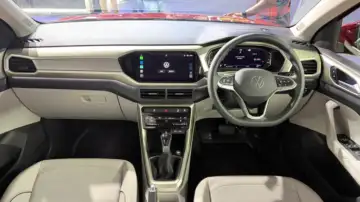

The Victoris gets a head-up display, powered tailgate, a better audio system, and multiple drive modes.
The Taigun, on the other hand, gets a co-driver's side powered seat.
In terms of safety, the Victoris offers a 360-degree camera, ADAS and a proper tyre pressure monitoring system over the Taigun.
Lost opportunity? Most SUVs in this segment come with ADAS and a 360-degree camera, and with the facelifted model, Volkswagen had an opportunity to introduce this feature on the Taigun. |
CarDekho Says
The 2026 Volkswagen Taigun facelift is the one to pick if your priority is driving performance, solid build quality, and a more engaging overall experience. Its turbo-petrol engines, especially the 1.5-litre unit, make it the enthusiast's choice in this segment, and the addition of the new 8-speed automatic with the smaller engine further improves its appeal for everyday usability.

The Maruti Suzuki Victoris, on the other hand, clearly focuses on practicality and value. With multiple powertrain options, including strong-hybrid and CNG, better fuel efficiency, and a significantly more feature-loaded package (including ADAS and a 360-degree camera), it is better suited for buyers who prioritise lower running costs, want more features and Maruti's extensive service network.
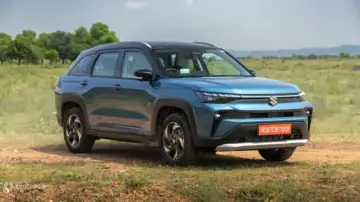
In simple terms, if you enjoy driving and want an SUV that makes you look beyond the brochure, go for the Taigun. But if you are more value-focused, want the feel-good features and versatility for the price, the Victoris makes a stronger case.
If you want to check out how the facelifted Taigun is different from the outgoing model, check out this story.
Here are some other options you can look at besides the Taigun:
Hyundai Creta: For a well-rounded and trusted SUV, with a feature-rich cabin, smooth ride quality, and several engine options to choose from.
Tata Sierra: For more road presence, more space inside the cabin, and a plethora of modern features.
Maruti Grand Vitara / Toyota Hyryder: Similar to the Victoris, but older. Mainly for buyers looking for strong fuel efficiency with hybrid tech.
Kia Seltos: One of the newer SUVs with a premium cabin, multiple powertrains and one of the best road presences in the segment.
Honda Elevate: For proven Honda reliability and Japanese engineering, offering a spacious cabin and one of the best naturally aspirated petrol engines in the segment.
Renault Duster: For its modern and rugged road presence, potent engine options and a balanced suspension setup for good ride and handling.