
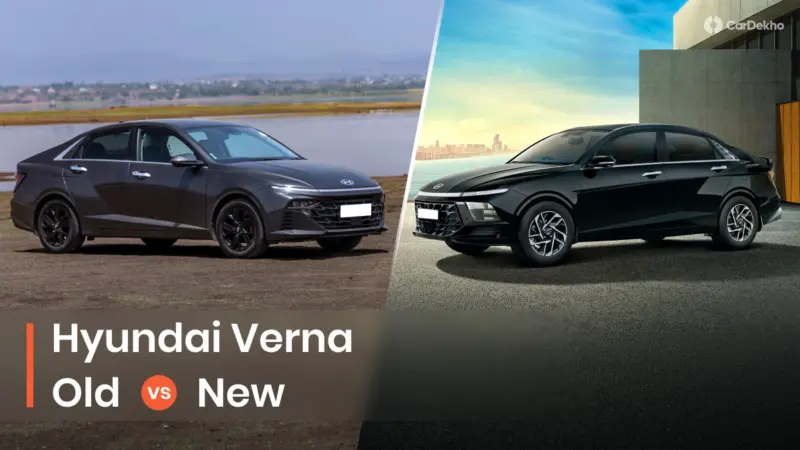

The 2026 Hyundai Verna facelift has been launched at Rs 10.98 lakh (ex-showroom). Offered in six new variants, the new Verna brings subtle design enhancements, meaningful features, safety upgrades, and proven engine options.
Is this update to the new Verna over its outgoing model really substantial? We find that out by comparing both models in detail.
Front
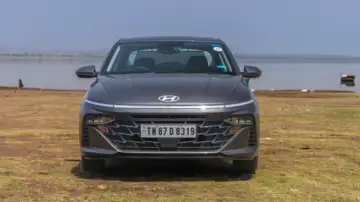
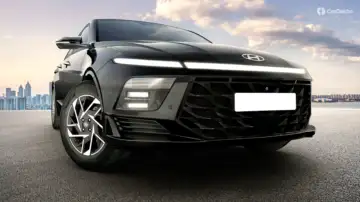
This facelift of the Hyundai Verna is a modest design revision, not a complete overhaul. One of the most significant changes you'd notice is right on its fascia. The grille, although it has a similar design, looks slightly wider now, thanks to the updated bumper elements. Another noticeable change is in the lighting cluster. The LED projector headlamps are now placed in a neat and clean glass housing along with the turn indicators, which looks more sophisticated than the earlier design. The full-width LED DRL strip looks the same as before. The Hyundai logo is placed on the bonnet.
Side
The silhouette remains largely unchanged. The new Verna carries forward the same 16-inch dual-tone alloy wheels but with a different design. The door handles get a chrome finish, and the same chrome lining can also be seen along the bottom edge of the window panels. The ORVMs are body-coloured and have turn-indicators integrated into them.
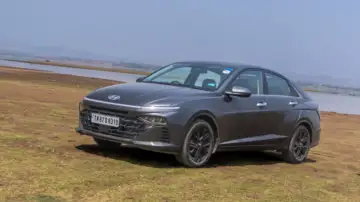
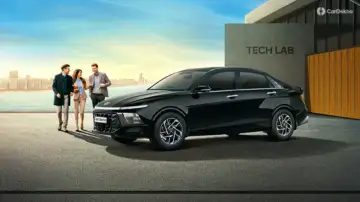
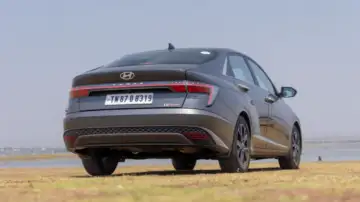
New colours: The new Verna gets two new colours, the matte-finished Titan Grey, alongside the Classy Blue. Other shades on offer are Starry Night, Atlas White, and Abyss Black colour options. The white hue can also be paired with a black roof. |
Rear
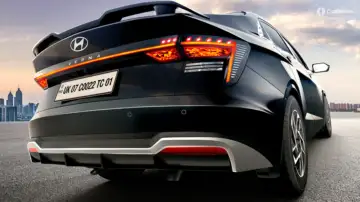
Just like the profile, the rear has no change to notice except for a slightly revised bumper. The rear diffuser gets a silver insert for a sportier look. Other than this, the connected LED taillamp with the pixel-styled elements remains just the same.
Interior
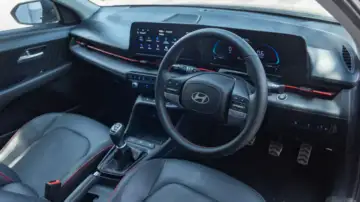
Stepping inside, you are welcomed by the same white and black dual-tone themed cabin and upmarket leatherette upholstery. The dashboard layout remains the same, however the update includes a new 10.25-inch digital driver display alongside the existing infotainment touchscreen of similar size. What has changed is the 3-spoke steering wheel, which now has the Morse code 'H' logo on it. The seating comfort in the new Verna has improved with an 8-way power-adjustable driver seat, a 4-way power-adjustable passenger seat, and rear window sunshades. The front seats get a ventilation function as before, and rear occupants also get a centre armrest.
Features & Safety
There are no other feature changes in terms of comfort, convenience and infotainment. It continues with wireless Android Auto/Apple CarPlay (via wired-to-wireless adapter), an 8-speaker Bose audio system, an electric single-pane sunroof, cruise control, multi-colour ambient lighting and auto AC with rear vents.
Hyundai has improved the safety of the new Verna by including many necessary upgrades. The new Verna now gets a 360-degree camera setup with a blind spot monitor. It also has seven airbags, as well as an in-built dashcam now. Besides, it continues with safety tech like ESC (electronic stability control), ISOFIX child seat anchorages, hill start assist, rain-sensing wipers, electronic parking brake, all-wheel discbrakes, front and rear parking sensors and a level-2 ADAS (advanced driver assistance system).
Powertrain
The new Verna has no change under its hood. Here are its engine specifications:
Engine | 1.5-litre 4-cylinder NA Petrol | 1.5-litre 4-cylinder Turbo Petrol |
Transmission* | 6-speed MT, CVT | 6-speed MT, 7-speed DCT |
Power | 115 PS | 160 PS |
Torque | 144 Nm | 253 Nm |
Price & Rivals
The new 2026 Hyundai Verna facelift has been priced from Rs 10.98 lakh to Rs 18.25 lakh (ex-showroom). It renews its rivalry with the Skoda Slavia, Volkswagen Virtus and Honda City.