




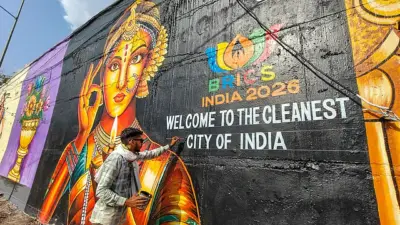

BRICS Agriculture Meeting 2026 in Indore Focuses on Food Security, Climate Resilience and Farmer Cooperation
India has placed agriculture, food security, and sustainable farming at the center of global discussions as representatives from BRICS member countries gathered in Indore for a five-day meeting aimed at strengthening cooperation in one of the world's most critical sectors.
Hosted under India’s BRICS chairmanship, the conference brings together policymakers, agricultural experts, and senior government officials to deliberate on shared challenges ranging from climate change and food supply disruptions to farmer welfare, agricultural financing, and technological innovation.
The meeting comes at a time when agriculture worldwide faces mounting pressure from extreme weather events, volatile commodity prices, population growth, and geopolitical uncertainties that continue to affect food production and trade. Against this backdrop, the BRICS grouping-comprising Brazil, Russia, India, China, South Africa, and its expanded membership-represents a significant share of global agricultural output and nearly half of the world’s population. Decisions and collaborations emerging from these discussions could therefore have implications extending far beyond the participating nations.
Indian officials have emphasized that the conference is designed not merely as a diplomatic engagement but as a practical platform for identifying collaborative solutions that can improve agricultural resilience and ensure long-term food security. By bringing together countries with diverse climatic conditions, farming systems, and technological capabilities, the meeting aims to encourage knowledge sharing and coordinated action in addressing some of the most pressing issues confronting global agriculture.
## Food Security Takes Centre Stage
Food security has emerged as one of the dominant themes of the discussions in Indore. With global demand for food projected to rise significantly over the coming decades due to population growth and urbanization, ensuring stable and sustainable production has become an increasingly urgent priority for governments worldwide.
Officials participating in the meeting have highlighted that BRICS countries collectively account for almost half of the global population, making reliable food production and equitable distribution essential not only for domestic stability but also for international markets. Any disruption in agricultural productivity within these nations can have ripple effects across global supply chains, commodity prices, and food availability.
India’s representatives have stressed that strengthening food security requires coordinated strategies involving technological innovation, improved storage infrastructure, enhanced logistics, scientific research, and sustainable farming practices. Discussions are also expected to examine methods for reducing post-harvest losses, improving crop productivity, and expanding access to modern agricultural techniques among smallholder farmers.
The emphasis on food security reflects broader concerns that climate-related disruptions, economic uncertainty, and changing consumption patterns could place additional pressure on existing production systems. Policymakers therefore view international cooperation as an essential mechanism for developing resilient agricultural frameworks capable of withstanding future shocks.
## Climate Change and Sustainable Farming Dominate Deliberations
Climate change has become one of the defining challenges facing agriculture globally, and it occupies a central place in the agenda of the Indore meeting. Rising temperatures, shifting rainfall patterns, prolonged droughts, floods, and increasingly unpredictable weather events have created significant risks for farmers across continents.
Delegates are examining ways to develop climate-resilient agricultural systems capable of adapting to these evolving conditions while maintaining productivity and protecting livelihoods. The discussions include strategies for promoting drought-resistant crop varieties, improving irrigation efficiency, strengthening water conservation measures, and expanding access to scientific research that supports climate adaptation.
Indian officials have noted that many BRICS nations experience similar environmental challenges despite their geographical diversity. By sharing research findings, technological innovations, and successful policy interventions, member countries may be able to accelerate the adoption of effective solutions and reduce duplication of effort.
Sustainability is another major focus area. Participants are considering approaches that balance increased production with environmental protection through responsible resource management, reduced chemical dependence, soil conservation, biodiversity preservation, and efficient use of natural resources.
Experts believe that sustainable farming practices will become increasingly important as governments seek to ensure food security while meeting climate commitments and preserving ecosystems for future generations.
## Farmer Welfare and Agricultural Financing Under Discussion
The welfare of farmers remains a key priority throughout the conference, reflecting recognition that long-term agricultural success depends on improving incomes, reducing vulnerability, and expanding access to institutional support.
Officials are discussing mechanisms for strengthening financial inclusion within the agricultural sector, including improved access to affordable credit, insurance products, investment opportunities, and rural infrastructure. Access to finance remains a persistent challenge for many farmers, particularly small and marginal producers who often struggle to secure the capital required for modernization and expansion.
Agricultural financing also plays a crucial role in enabling farmers to adopt new technologies, purchase quality inputs, invest in mechanization, and implement climate adaptation measures. Participants are exploring ways to mobilize both public and private investment to strengthen rural economies and encourage innovation across the sector.
Discussions also encompass social dimensions of farmer welfare, including capacity building, extension services, market access, and value-chain integration. Improving these aspects can enhance profitability while reducing risks associated with fluctuating commodity prices and changing market conditions.
The emphasis on farmer welfare reflects an understanding that resilient agricultural systems cannot be built solely through technological advancement but require policies that directly improve the livelihoods of those engaged in food production.
## India Uses BRICS Platform to Strengthen Agricultural Cooperation
Hosting the meeting under its BRICS chairmanship provides India with an opportunity to advance collaborative approaches to agricultural development while showcasing its own initiatives in digital agriculture, crop diversification, and rural development.
Officials have indicated that strengthening cooperation among BRICS members could facilitate greater exchange of research, best practices, and technological expertise. Such collaboration may extend to areas including seed development, mechanization, precision agriculture, satellite monitoring, artificial intelligence applications, and digital advisory services for farmers.
Joint Secretary Ajit Kumar Sahu of the Department of Agriculture and Farmers Welfare highlighted the importance of addressing common challenges collectively, noting that climate impacts, financing needs, and food security concerns transcend national boundaries and require coordinated responses.
India’s emphasis on international agricultural partnerships aligns with broader efforts to position the country as an active participant in shaping global discussions on sustainable development, food systems, and climate resilience.
The meeting also reinforces the growing recognition that agricultural cooperation can contribute to economic development, poverty reduction, and regional stability while supporting broader goals related to nutrition and public health.
## Technology and Innovation Seen as Critical Enablers
Modern technology is expected to feature prominently in the discussions as governments increasingly rely on digital tools to improve agricultural productivity and efficiency.
Precision farming techniques, remote sensing, artificial intelligence, data analytics, drones, satellite imagery, and smart irrigation systems are transforming agricultural practices across many regions. Delegates are examining opportunities to expand access to such innovations while ensuring they remain affordable and accessible for farmers operating at different scales.
Digital platforms that provide weather forecasts, market information, pest management advice, and financial services have demonstrated considerable potential in improving decision-making and reducing production risks. Collaborative initiatives among BRICS members could accelerate technology transfer and promote wider adoption of successful digital solutions.
Research institutions and universities also play a vital role in developing climate-resilient crop varieties and sustainable farming methods. Strengthening scientific collaboration among member countries could contribute significantly to future agricultural innovation and resilience.
Participants are expected to explore frameworks that encourage research partnerships, capacity building, and knowledge exchange while respecting national priorities and local conditions.
## A Strategic Gathering with Global Significance
Beyond agriculture itself, the Indore meeting reflects the increasing strategic importance of BRICS as a platform for addressing global development challenges through multilateral cooperation.
Food security has become closely linked with economic stability, public health, climate policy, and geopolitical considerations. Recent disruptions to international supply chains have underscored the vulnerability of interconnected food systems and highlighted the importance of resilient domestic production supported by international collaboration.
For BRICS countries, many of which possess extensive agricultural resources and large rural populations, coordinated policies can help strengthen resilience while supporting sustainable growth and poverty reduction.
Observers note that the outcomes of the meeting may influence future cooperation on agricultural trade, research partnerships, climate adaptation initiatives, and investment frameworks. Although individual policy decisions remain within national jurisdictions, collaborative dialogue can facilitate shared understanding and encourage harmonized approaches to common challenges.
As the five-day conference progresses, attention will focus on the recommendations and joint initiatives that emerge from the discussions. While implementation will require continued engagement beyond the meeting itself, the gathering in Indore represents an important opportunity for some of the world’s largest emerging economies to reaffirm their commitment to strengthening food systems and supporting millions of farmers facing an increasingly complex operating environment.
By prioritizing food security, climate resilience, farmer welfare, sustainable financing, and technological innovation, the BRICS agriculture meeting underscores the central role that international cooperation can play in addressing challenges that no single nation can solve alone. The conversations taking place in Indore are therefore not only relevant to member countries but also to broader global efforts aimed at building a more secure, sustainable, and inclusive agricultural future.