

China is set to enforce a new funeral management law that bans the use of residential apartments for storing cremated remains, a practice that has grown in recent years due to rising burial costs and shrinking cemetery space.
The move reflects broader challenges facing the country, including rapid urbanisation, demographic shifts, and increasing pressure on land resources.
The new regulation, introduced by the Chinese government, explicitly prohibits the use of "residential housing specifically for the purpose of storing cremated remains" and restricts burial activities to officially designated public cemeteries. The law also bans the construction of tombs or burial of remains in unauthorised areas, signalling a stricter approach to funeral management and land use.
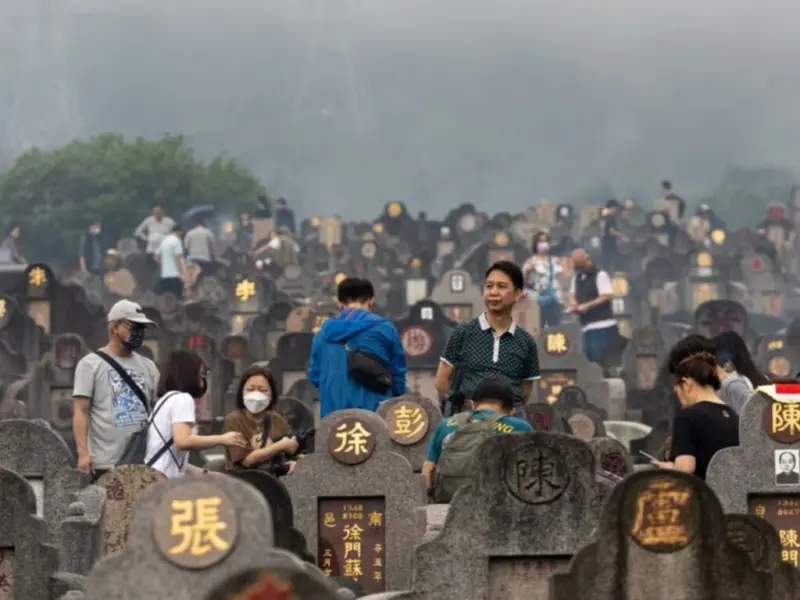
The timing of the law's implementation is particularly significant, as it comes just ahead of the traditional Qingming Festival, a major cultural event during which families across China visit ancestral graves, clean tombs, and perform rituals to honour the deceased. The festival underscores the deep cultural importance of burial practices in Chinese society, making the new regulation both sensitive and impactful.
At the centre of the issue is the growing phenomenon of so-called "bone ash apartments," known locally as "guhui fang." These are residential units repurposed as private memorial spaces where families store urns containing the ashes of deceased relatives. Often, these apartments are transformed into shrine-like environments, featuring candles, red lights, incense, and carefully arranged urns that reflect generational lineage.
The rise of this practice is closely linked to China's rapid urbanisation. As cities expand and populations grow denser, land availability for traditional cemeteries has become increasingly limited. This scarcity has driven up the cost of burial plots, making them unaffordable for many families, particularly in major urban centres.
China's funeral costs are among the highest in the world, second only to Japan, according to global surveys. The expense of securing a cemetery plot, combined with additional funeral services, has placed a significant financial burden on households. In contrast, residential property-especially amid a recent downturn in the real estate market-has become relatively more accessible.
Property prices in China have seen a notable decline in recent years, with some estimates suggesting a drop of up to 40 percent between 2021 and 2025. This decline has been partly attributed to policy measures aimed at curbing speculative investment in the housing market, including the government's stance that "properties are for living in, not for speculation."
However, this shift has had unintended consequences. As housing became more affordable, some families began purchasing or using existing apartments as long-term storage spaces for cremated remains. Unlike cemetery plots, which are typically leased for 20 years, residential properties come with usage rights extending up to 70 years, making them a more durable and cost-effective option.
This economic logic, combined with cultural considerations, has contributed to the popularity of bone ash apartments. For many families, these spaces offer a private and accessible way to honour their ancestors without the recurring costs and limitations associated with traditional cemeteries.
Nevertheless, authorities have raised concerns about the implications of this practice. From a regulatory perspective, the use of residential buildings for non-residential purposes complicates urban planning and housing policies. It also raises questions about health, safety, and the appropriate use of living spaces.
The new law aims to address these concerns by reinforcing the distinction between residential and burial spaces. By restricting the storage of remains to designated cemeteries, the government seeks to standardise funeral practices and ensure better oversight.
The policy also reflects broader demographic trends in China. The country is experiencing one of the fastest rates of population ageing in the world. In 2025 alone, China recorded approximately 11.3 million deaths, a significant increase from 9.8 million in 2015. At the same time, birth rates have declined sharply, with only 7.9 million births recorded in 2025.
This demographic imbalance has intensified the demand for burial spaces, further exacerbating the shortage of cemetery plots. As the population continues to age, the pressure on funeral infrastructure is expected to grow, making efficient land use and sustainable practices increasingly important.
In response to these challenges, some local governments have begun promoting alternative burial methods. Cities such as Shanghai have introduced subsidies for "ecological burial" options, including sea burials and deep-ground burials, which require less land and are considered more environmentally sustainable.
These initiatives have shown some success. In 2025, Shanghai reported a record number of sea burials, exceeding 10,000 cases for the first time. Such practices not only reduce land usage but also align with broader environmental goals.
Despite these efforts, public reaction to the ban on bone ash apartments has been mixed. On social media platforms such as Weibo, the topic has attracted significant attention, with millions of views and a wide range of opinions.
Some users have expressed scepticism about the practicality of enforcing the ban. Questions have been raised about how authorities will monitor compliance, especially given the private nature of residential spaces. Others have pointed out that the underlying issue-high burial costs-remains unresolved.
Critics argue that without addressing affordability, the ban may simply push families to seek other informal or unregulated alternatives. They emphasise the need for comprehensive solutions that balance regulation with accessibility.
Supporters of the policy, on the other hand, highlight the importance of maintaining order and consistency in urban planning. They argue that residential spaces should not be repurposed in ways that conflict with their intended use, and that designated cemeteries provide a more appropriate setting for memorial practices.
The debate reflects a broader tension between tradition and modernity in Chinese society. While ancestral worship and burial rituals remain deeply rooted in cultural values, rapid economic and social changes are reshaping how these practices are carried out.
Urbanisation, in particular, has transformed living conditions and lifestyles, prompting adaptations in various aspects of daily life, including funeral customs. The emergence of bone ash apartments can be seen as one such adaptation, driven by necessity rather than preference.
The government's response, through the introduction of stricter regulations, represents an effort to manage these changes while preserving social order. However, the success of such measures will depend on their ability to address underlying challenges, including affordability, accessibility, and cultural sensitivity.
Looking ahead, the issue of burial practices in China is likely to remain a topic of ongoing discussion. As the population continues to age and urbanisation progresses, the demand for innovative and sustainable solutions will only increase.
Technological advancements and policy reforms may play a key role in shaping the future of funeral management. Digital memorials, green burials, and other alternatives could offer new ways to honour the deceased while addressing practical constraints.
At the same time, public engagement and awareness will be crucial in ensuring that changes are accepted and effectively implemented. Balancing tradition with modern needs will require careful consideration and inclusive policymaking.
In conclusion, China's decision to ban the use of residential apartments for storing cremated remains highlights the complex interplay between cultural practices, economic realities, and urban development. While the policy aims to regulate and standardise funeral practices, it also brings attention to deeper challenges that will need to be addressed in the years to come.
As the country navigates these issues, the evolution of burial practices will serve as a reflection of broader societal changes, offering insight into how tradition and modernity can coexist in a rapidly transforming world.