
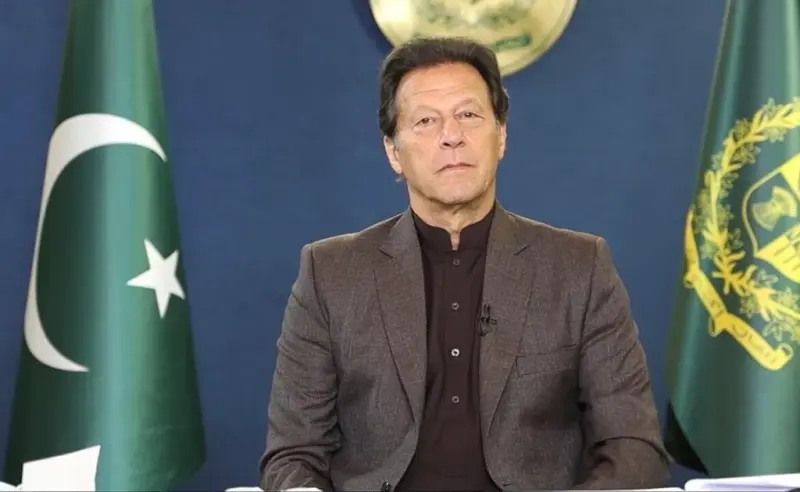

Cricket Australia reverses entry denial for fan wearing Imran Khan T-shirt, calling issue humanitarian and clarifying stance on political expressions in cricket venues.
A controversy at one of Australia's premier domestic cricket events has sparked debate over freedom of expression in sports venues after a fan was initially denied entry for wearing a T-shirt supporting Imran Khan. The incident, which took place during the final of the Sheffield Shield, prompted swift intervention from Cricket Australia.
The governing body later overturned the decision, allowing the fan entry and framing the issue as a humanitarian concern rather than a political one. The episode has since ignited discussions around the intersection of sport, politics and individual rights within stadium environments.
Incident At Sheffield Shield Final Sparks Controversy
The controversy unfolded on the opening day of the Sheffield Shield final between South Australia and Victoria. A fan, identified as Luke Brown, arrived at the venue wearing a T-shirt with the message "Free Imran Khan."
Security personnel at the stadium reportedly stopped him from entering, citing concerns that the slogan constituted a political statement. He was asked to either cover the message or remove the T-shirt before being allowed entry.
This decision was based on standard venue regulations, which often restrict overt political messaging to maintain neutrality and avoid potential disruptions. However, the incident quickly gained attention, raising questions about how such rules are interpreted and enforced.
Luke Brown later expressed surprise at the situation, stating that while the staff were polite and professional, he disagreed with the decision. He argued that the issue should be viewed through a broader lens rather than being categorised strictly as political expression.
Cricket Australia Steps In And Reverses Decision
Following widespread attention and discussion within the cricketing community, Cricket Australia reviewed the incident and took a different stance.
In an official statement, the board acknowledged the concerns raised and clarified that the fan would be allowed entry. The organisation described the situation surrounding Imran Khan as a "humanitarian issue," suggesting that the message on the T-shirt did not fall strictly within the realm of political advocacy.
This decision highlights a nuanced approach by Cricket Australia, balancing its policies on political neutrality with sensitivity to broader humanitarian concerns.
While the governing body maintained that the initial action by security staff was taken in line with existing guidelines, it emphasised the importance of context in such situations.
The reversal also reflects the organisation's responsiveness to public sentiment and its willingness to reassess decisions when necessary.
Humanitarian Angle Changes Narrative
One of the most significant aspects of this incident is the framing of the issue as humanitarian rather than political. Concerns regarding Imran Khan's health and treatment while in custody have been widely discussed in international circles.
By recognising these concerns, Cricket Australia effectively shifted the narrative, allowing for greater flexibility in interpreting its policies.
This distinction is important because sports bodies often operate under strict guidelines to avoid political controversies. However, humanitarian issues can sometimes transcend these boundaries, requiring a more balanced and empathetic approach.
The decision suggests that cricket authorities are increasingly aware of the complex global context in which the sport operates.
Debate Over Politics In Sports Venues
The incident has reignited a long-standing debate about the role of political expression in sports. Stadiums are traditionally seen as neutral spaces where fans come together to celebrate the game, regardless of their backgrounds or beliefs.
However, in an increasingly interconnected world, it is becoming more difficult to separate sport from broader social and political issues.
Supporters argue that individuals should have the right to express their views, especially on matters they consider important. Critics, on the other hand, believe that allowing political messaging could lead to divisions and disrupt the spirit of the game.
Cricket Australia's handling of this case reflects the challenges faced by sporting bodies in navigating these competing perspectives.
Fan Reaction And Public Response
Luke Brown, the fan at the centre of the controversy, maintained that he understood the complexities involved but felt that the initial decision was not justified.
He pointed out that blanket rules, while easier to enforce, may not always lead to fair outcomes. His comments highlight the importance of context and discretion in decision-making processes.
The incident also generated significant discussion among cricket fans and commentators, many of whom supported Cricket Australia's eventual decision.
For some, the reversal was seen as a positive step towards acknowledging individual rights within the framework of sporting regulations.
Others, however, expressed concern that such decisions could set a precedent, potentially leading to more frequent disputes over what constitutes acceptable expression in stadiums.
Broader Implications For Cricket Governance
This episode underscores the evolving role of cricket governing bodies in addressing issues that extend beyond the field.
As cricket continues to grow globally, organisations like Cricket Australia must navigate a complex landscape that includes cultural, political and social considerations.
The ability to respond effectively to such situations will be crucial in maintaining the integrity and inclusivity of the sport.
The incident also highlights the importance of clear communication and consistent policy enforcement. While flexibility is necessary, it must be balanced with transparency to ensure fairness.
Imran Khan's Continued Global Relevance
The mention of Imran Khan in this context reflects his enduring influence, not only as a former cricketer but also as a political figure.
Having led Pakistan to a historic World Cup victory and later served as Prime Minister, Khan remains a prominent and often polarising figure on the global stage.
His situation continues to attract attention from supporters and critics alike, making it a sensitive topic in various international forums, including sports.
The fact that his name sparked such a debate at a cricket event underscores the deep connections between sport and national identity.
Balancing Neutrality And Expression
For Cricket Australia, the challenge lies in maintaining neutrality while respecting individual freedoms.
The organisation's decision to allow the fan entry demonstrates an attempt to strike this balance, recognising that rigid enforcement of rules may not always be appropriate.
At the same time, it reinforces the need for guidelines that can adapt to different scenarios without compromising the core values of the sport.
This balancing act is likely to become increasingly important as global events continue to influence the world of cricket.
Conclusion
The incident involving a fan denied entry over an Imran Khan T-shirt and Cricket Australia's subsequent intervention highlights the complexities of modern sports governance.
What began as a routine enforcement of venue rules quickly evolved into a broader discussion about humanitarian concerns, freedom of expression and the role of politics in sport.
By reversing its decision, Cricket Australia has set an example of flexibility and responsiveness, while also acknowledging the need for sensitivity in handling such issues.
As cricket continues to evolve, similar situations are likely to arise, making it essential for governing bodies to navigate these challenges with clarity, fairness and empathy.