




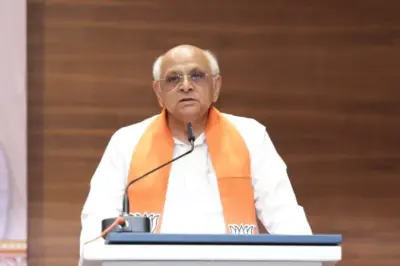

The Gujarat government is preparing to unveil its much-anticipated Industrial Policy 2026, a strategic framework aimed at accelerating the state's economic growth, strengthening its position as India's manufacturing powerhouse, and attracting fresh domestic and global investments.
The policy, scheduled to be launched by Chief Minister Bhupendra Patel at Mahatma Mandir in Gandhinagar, is expected to outline an ambitious roadmap focused on industrial expansion, technological innovation, employment generation, and ease of doing business.
Coming at a time when states across India are competing aggressively for investments in manufacturing, electronics, renewable energy, semiconductors, logistics, and advanced technologies, the new policy is expected to reinforce Gujarat’s reputation as one of the country’s most business-friendly destinations. Government officials have indicated that the framework will build upon decades of industrial success while adapting to emerging economic trends and global supply chain shifts.
The announcement has generated significant interest among investors, industrial associations, multinational corporations, and small and medium enterprises, all of whom are closely watching the incentives and reforms that the new policy may introduce.
New Policy Aims to Shape Gujarat's Next Phase of Industrial Growth
For decades, Gujarat has been at the forefront of India’s industrial development, driven by proactive governance, modern infrastructure, robust connectivity, and investor-friendly regulations. The state has consistently ranked among the leading destinations for manufacturing investments, supported by world-class ports, highways, industrial corridors, and special economic zones.
The Industrial Policy 2026 seeks to build on these strengths by providing a comprehensive vision for the coming years. According to official statements, the framework is expected to promote sustainable industrialisation, encourage adoption of advanced technologies, improve productivity, and create a supportive ecosystem for businesses of all sizes.
Officials believe that the policy will not merely focus on attracting capital investment but also emphasize long-term competitiveness through innovation, research, skill development, and digital transformation.
The government’s objective is to position Gujarat as a preferred destination for both traditional industries and next-generation sectors that will define the future of manufacturing and services.
Focus on Ease of Doing Business and Investor Confidence
One of the central pillars of the new industrial policy is expected to be the continued enhancement of ease of doing business.
Over the years, Gujarat has earned recognition for streamlined approval mechanisms, simplified regulatory processes, and proactive engagement with investors. The upcoming framework is likely to introduce additional measures aimed at reducing compliance burdens, accelerating project clearances, and facilitating faster implementation of industrial ventures.
Simplified procedures can significantly reduce operational delays and improve investor confidence, making the state even more attractive for large-scale projects.
Government officials are also expected to highlight digitisation of approvals, transparent governance systems, and integrated support services that enable businesses to establish and expand operations with minimal administrative hurdles.
Such reforms are particularly important as global companies increasingly seek efficient destinations for manufacturing diversification and supply chain resilience.
Strong Push for Advanced Manufacturing and Technology Adoption
The Industrial Policy 2026 is expected to encourage industries to embrace advanced manufacturing technologies and digital transformation.
Automation, artificial intelligence, robotics, smart factories, and data-driven production systems are becoming central to industrial competitiveness worldwide. Gujarat’s new framework may provide incentives for enterprises investing in these technologies while promoting modernization across existing industrial clusters.
Advanced manufacturing not only improves productivity but also enhances product quality, reduces operational costs, and enables industries to compete effectively in international markets.
The policy is also expected to encourage investments in emerging sectors including electronics manufacturing, clean energy technologies, precision engineering, electric mobility, and high-value industrial production.
Such initiatives align with India’s broader objective of strengthening domestic manufacturing capabilities and reducing dependence on imports in strategic sectors.
MSMEs Expected to Receive Significant Support
Micro, small, and medium enterprises remain the backbone of Gujarat’s industrial ecosystem, contributing substantially to employment generation, exports, and local economic development.
Recognizing their importance, the new policy is expected to include targeted measures supporting MSMEs through financial incentives, infrastructure assistance, technology upgrades, skill development, and easier access to markets.
Smaller businesses often face challenges related to capital availability, digital adoption, and regulatory compliance. Tailored policy support can help these enterprises expand operations, improve competitiveness, and integrate into larger supply chains.
Industry experts believe that strengthening MSMEs is essential not only for balanced economic growth but also for fostering entrepreneurship across urban and rural regions.
By encouraging innovation among smaller enterprises, Gujarat aims to create a more resilient and diversified industrial base capable of adapting to changing global market conditions.
Introduction of 'Ultra Mega' Industries Could Redefine Investment Landscape
Among the most anticipated features of the Industrial Policy 2026 is the reported introduction of a new category known as “Ultra Mega” industries.
According to draft details reported by various media outlets, enterprises investing at least ₹10,000 crore and generating employment for a minimum of 3,000 people may qualify under this category.
If formally adopted, the initiative could become one of the policy’s flagship provisions, encouraging exceptionally large industrial projects capable of transforming regional economies.
Such investments often create multiplier effects by stimulating ancillary industries, logistics networks, supplier ecosystems, infrastructure development, and local employment opportunities.
The proposed category reflects Gujarat’s ambition to compete globally for capital-intensive manufacturing projects and position itself as a destination for mega-scale industrial investments.
Employment Generation Remains a Core Objective
Beyond investment figures, employment creation is expected to remain one of the policy’s most important priorities.
Large manufacturing facilities, industrial parks, and technology-driven enterprises generate direct jobs while supporting numerous indirect employment opportunities across transportation, construction, maintenance, services, and supply chains.
Government officials are expected to emphasize skill development initiatives that prepare workers for modern manufacturing requirements, ensuring that local talent benefits from industrial expansion.
Partnerships between industry and educational institutions may also receive greater attention, helping bridge workforce skill gaps and improving employability among young professionals.
A focus on employment aligns with broader economic goals of inclusive growth and rising household incomes.
Gujarat's Infrastructure Advantage Continues to Drive Growth
One of Gujarat’s strongest competitive advantages remains its infrastructure network.
The state boasts major ports handling international trade, extensive highway connectivity, industrial corridors, freight systems, and well-developed logistics facilities that support manufacturing and exports.
These advantages reduce transportation costs, improve supply chain efficiency, and enable businesses to access domestic and overseas markets more effectively.
The Industrial Policy 2026 is expected to leverage these existing strengths while encouraging further investments in industrial infrastructure, warehousing, logistics hubs, and integrated manufacturing ecosystems.
Reliable infrastructure continues to be a decisive factor for investors evaluating long-term expansion opportunities.
Attracting Global Capital in a Competitive Environment
Competition among Indian states to attract industrial investment has intensified in recent years, with governments offering incentives tailored to strategic sectors and multinational corporations.
Against this backdrop, Gujarat’s latest policy is designed to reinforce investor confidence and maintain the state’s leadership position.
International companies increasingly seek politically stable, infrastructure-rich locations with predictable regulations and efficient governance. Gujarat’s reputation in these areas has contributed significantly to its success in attracting foreign direct investment.
The new framework may further strengthen partnerships with global manufacturers by providing sector-specific incentives and encouraging innovation-driven collaboration.
Such investments have the potential to generate exports, improve technology transfer, and integrate local industries into international value chains.
Sustainable and Future-Oriented Industrial Development
Modern industrial policies increasingly emphasize sustainability alongside economic expansion, and Gujarat’s upcoming framework is expected to reflect this trend.
Cleaner production technologies, energy efficiency, responsible resource management, and environmentally conscious manufacturing practices are likely to receive greater policy attention.
Promoting sustainable industrialisation supports long-term competitiveness while helping businesses adapt to evolving environmental standards and global investor expectations.
In parallel, innovation ecosystems involving research institutions, startups, incubators, and private industry could receive additional encouragement under the policy.
Such collaborations may accelerate commercialization of new technologies and strengthen Gujarat’s role in knowledge-driven economic development.
A Blueprint for Gujarat's Next Economic Chapter
The unveiling of Gujarat’s Industrial Policy 2026 represents more than a routine administrative exercise. It signals the state’s intention to remain at the forefront of India’s industrial transformation by combining infrastructure, governance, technology, investment promotion, and workforce development into a unified strategy.
With proposals expected to support advanced manufacturing, empower MSMEs, encourage large-scale investments, and improve ease of doing business, the policy has the potential to shape Gujarat’s economic trajectory for years to come.
As businesses, investors, and industry leaders examine the final provisions, attention will focus on how effectively the framework translates ambitious objectives into measurable economic outcomes.
If implemented successfully, the Industrial Policy 2026 could reinforce Gujarat’s status as one of India’s premier investment destinations while creating new opportunities for industrial expansion, employment generation, innovation, and sustainable growth in an increasingly competitive global economy.