
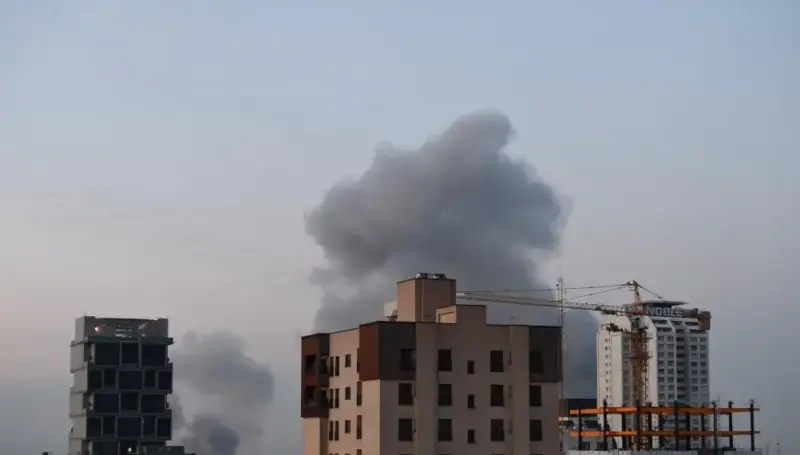

A dramatic rescue operation deep inside Iranian territory has underscored both the risks of modern aerial warfare and the extraordinary capabilities of US special forces.
After an American F-15E Strike Eagle was shot down, one of its crew members survived for over 36 hours in hostile terrain before being extracted in what Donald Trump described as the most daring search and rescue mission in US history. The operation, marked by intense gunfire, deception tactics, and rapid military coordination, reflects the growing volatility in West Asia and raises serious questions about the trajectory of US-Iran tensions.
The sequence of events began when the F-15E aircraft was brought down during the ongoing conflict, marking a rare and significant moment in the confrontation. Both crew members ejected safely, but while the pilot was recovered within hours, the weapons systems officer found himself isolated, injured, and surrounded by hostile forces. What followed was a test of endurance, training, and strategic ingenuity that would ultimately define the mission.
Survival, Evasion, and Intelligence Warfare in Hostile Terrain
The stranded officer's survival in the mountainous region of Kohgiluyeh and Boyer-Ahmad province highlights the critical importance of SERE training, a program designed to prepare military personnel for worst-case scenarios. Injured during his parachute landing, the officer relied on survival instincts and tactical awareness to evade capture. Armed with only a pistol, he navigated rugged terrain, constantly aware that Iranian forces were actively searching for him.
The involvement of the Islamic Revolutionary Guard Corps intensified the stakes. With a reported reward for his capture, the search effort by Iranian forces was both aggressive and relentless. The geographical challenges of the region-remote, mountainous, and sparsely populated-added another layer of complexity, making detection difficult for both sides.
In response, the Central Intelligence Agency played a pivotal role in shaping the outcome. By disseminating misleading information suggesting that the US had already located the officer, the agency successfully diverted Iranian attention. This strategic deception bought valuable time and reduced pressure on the stranded airman.
Simultaneously, advanced surveillance and tracking technologies were deployed to pinpoint his exact location. Once confirmed, the intelligence was relayed to the Pentagon and decision-makers in Washington, triggering immediate action. The integration of human resilience and technological precision became the cornerstone of the mission's success.
A High-Risk Extraction Amid Escalating Conflict Dynamics
The rescue operation itself was a display of overwhelming military coordination and firepower. Dozens of US aircraft were deployed to secure the extraction zone, with fighter jets conducting strikes to prevent Iranian forces from closing in. The presence of heavy gunfire during the mission underscores just how close the operation came to potential disaster.
Despite the risks, US special forces managed to reach the injured officer and extract him safely. The fact that all personnel involved returned without casualties further highlights the level of planning and execution behind the mission. However, the operation was not without complications. Two transport aircraft intended for extraction malfunctioned at a remote location, forcing the US to deploy additional planes under already dangerous conditions.
In a decisive move, the US military destroyed the stranded aircraft to prevent them from falling into Iranian hands. This action reflects standard military protocol but also underscores the high stakes involved, where even equipment can become a strategic liability if captured.
The scale of the operation was significant, reportedly involving hundreds of special operations troops and multiple layers of support. The rescued officer was eventually transported to Kuwait for medical treatment, where he is expected to recover from his injuries.
Trump's characterization of the mission as unprecedented also stems from its timing. According to his statements, this rescue followed another successful extraction of a pilot just a day earlier, a detail that had been deliberately kept confidential to protect the second mission. The claim that two such operations were executed successfully within such a short span adds to the narrative of operational excellence, though it also raises questions about the intensity of ongoing engagements in the region.
At a broader level, the incident marks a significant escalation in the conflict. The downing of the F-15E Strike Eagle represents a rare instance of a US fighter jet being shot down in this confrontation, challenging assumptions about air superiority. While Trump emphasized American dominance in Iranian airspace, the very fact that such an incident occurred suggests a more contested and unpredictable environment.
The episode also illustrates how modern warfare extends beyond direct combat. Information warfare, technological surveillance, and rapid-response capabilities are now as critical as traditional military strength. The ability to locate, protect, and extract personnel under such conditions speaks to a level of preparedness that few nations possess.
Yet, the risks remain profound. Operations of this nature carry the potential for escalation, particularly when conducted within the territory of a rival state. The presence of US forces on Iranian soil, even for a limited objective, adds a new dimension to an already volatile situation. Each such mission not only achieves immediate tactical goals but also shapes the broader strategic landscape, influencing perceptions, alliances, and future engagements.