
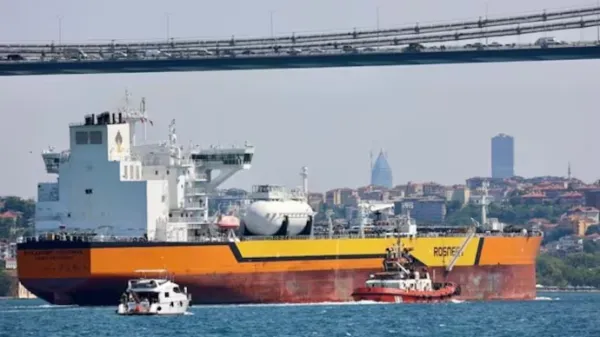

India witnessed a sharp rise in crude oil imports from Russia during March 2026, driven by disruptions in traditional supply routes and the need to secure stable and affordable energy sources.
The shift comes at a time when global energy markets are facing volatility due to geopolitical tensions, particularly in West Asia, which have impacted oil flows through critical routes such as the Strait of Hormuz. As one of the world's largest oil importers, India has responded by recalibrating its sourcing strategy, with Russian crude once again emerging as a key component of its energy mix.
Data indicates that India's imports of Russian crude surged significantly during March, with estimates suggesting an increase of nearly 90 percent compared to February levels. This dramatic rise reflects a broader shift in India's oil procurement strategy, as refiners turned to Russian supplies to offset declining availability from Middle Eastern producers. The increase also highlights the flexibility of Indian refiners in adapting to changing global market conditions.
Global supply disruptions and geopolitics drive shift toward Russian crude
The surge in Russian oil imports is closely linked to disruptions in global supply chains, particularly those affecting shipments from the Middle East. The ongoing geopolitical tensions and conflict in the region have led to reduced oil flows through the Strait of Hormuz, a critical transit route for global energy supplies. As a result, countries heavily dependent on Middle Eastern oil, including India, have been compelled to explore alternative sources.
Russian crude has become an attractive option due to its competitive pricing and availability in the spot market. Industry reports indicate that Indian refiners have been actively increasing purchases of Russian oil as sanctions-related uncertainties have eased and supply from other regions has become less reliable. This shift underscores the importance of cost considerations in India's energy strategy, as well as the need to ensure uninterrupted supply.
In addition to pricing advantages, logistical factors have also played a role. Russian oil shipments have been rerouted through alternative maritime routes, enabling continued supply despite geopolitical challenges. This adaptability has allowed India to maintain stable import volumes even as global markets experience disruptions.
Import composition changes as Middle East supplies decline sharply
The increase in Russian imports has been accompanied by a noticeable decline in oil shipments from traditional suppliers in the Middle East. Reports suggest that imports from countries such as Iraq, Saudi Arabia, and the United Arab Emirates dropped significantly during the same period. In some cases, disruptions were severe enough to reduce supplies to near-zero levels, forcing Indian refiners to rely more heavily on alternative sources.
Overall, India's total crude imports declined slightly in March, but the composition of imports changed dramatically. Russian oil accounted for a much larger share of the total, effectively compensating for reduced availability from other regions. This shift highlights the dynamic nature of global energy trade, where supply disruptions in one region can lead to rapid adjustments in sourcing patterns.
India's position as a major buyer of Russian energy has also strengthened. In March 2026, the country emerged as one of the top importers of Russian fossil fuels, with crude oil forming the majority of these purchases. This development reflects the deepening energy ties between the two countries, even as global geopolitical dynamics continue to evolve.
Strategic, economic and policy implications of rising imports
The surge in Russian oil imports carries significant strategic and economic implications for India. From an energy security perspective, diversifying supply sources reduces dependence on any single region and enhances resilience against disruptions. By increasing imports from Russia, India is mitigating risks associated with geopolitical instability in the Middle East.
Economically, the availability of discounted Russian crude helps manage import costs and reduce pressure on domestic fuel prices. This is particularly important in a context where global oil prices are rising due to supply constraints and increased demand. Lower input costs for refineries can translate into more stable fuel prices for consumers, supporting economic stability.
However, the shift also presents challenges. India must navigate complex geopolitical considerations, including sanctions regimes and international relations. While the easing of sanctions-related concerns has facilitated increased imports, future developments could impact trade flows and policy decisions.
The trend also reflects broader changes in global energy markets, where traditional supply chains are being reconfigured in response to geopolitical events. Countries are increasingly adopting flexible and diversified sourcing strategies to cope with uncertainty and volatility.
India's approach to energy procurement in March 2026 demonstrates a pragmatic response to evolving global conditions. By leveraging available opportunities and adapting to disruptions, the country has ensured continuity in energy supply while maintaining cost efficiency.
The rise in Russian oil imports is likely to continue in the near term, as global supply challenges persist and demand remains strong. Analysts expect Indian refiners to maintain high levels of Russian crude purchases, particularly if pricing advantages and supply reliability continue.