




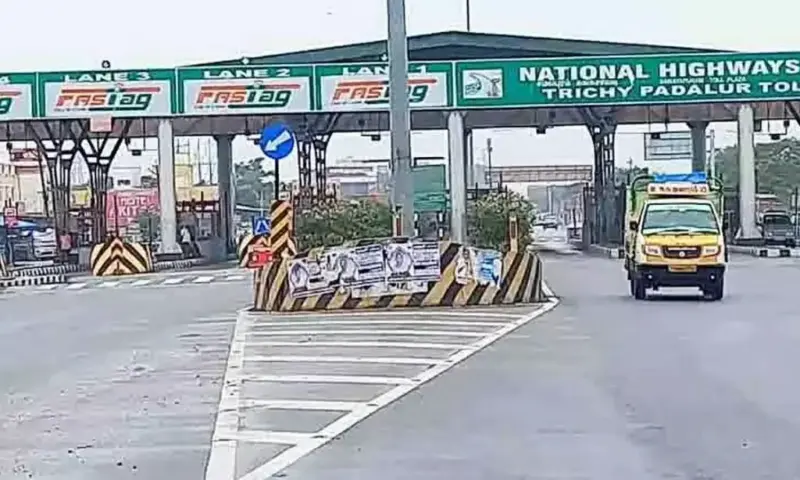

India will implement a fully cashless toll collection system across national highways from April 10, 2026, mandating the use of FASTag and UPI for all payments.
the move aims to streamline traffic flow, reduce congestion, and enhance transparency by eliminating cash transactions at toll plazas, marking a major step in the country's digital infrastructure push.
India is set to undergo a sweeping transformation in highway travel as the government enforces a complete ban on cash payments at toll plazas starting April 10, 2026. this shift marks a decisive move toward a fully digital toll collection system, where commuters will rely exclusively on FASTag and UPI for payments. the reform is not merely a technological upgrade but a structural overhaul aimed at reducing congestion, increasing efficiency, and strengthening transparency in toll operations. with thousands of vehicles crossing toll plazas daily, the transition represents one of the most ambitious steps in India's ongoing digital infrastructure revolution.
The decision by the ministry of road transport and highways signals the end of an era where cash transactions dominated toll plazas, often leading to long queues, disputes, and inefficiencies. the new system mandates electronic payment methods, positioning FASTag as the primary mode while allowing UPI as a secondary option under specific conditions. this policy aligns with India's broader push toward digital payments and smart transportation systems, reflecting the government's intention to modernize infrastructure while improving user experience on national highways.
A decisive shift toward seamless mobility and digital governance
The move to eliminate cash payments at toll plazas is rooted in the need to address long-standing inefficiencies in highway travel. toll booths have historically been bottlenecks, causing delays that ripple across logistics networks and daily commuting patterns. by mandating digital payments, authorities aim to enable uninterrupted vehicle movement, significantly reducing wait times and fuel consumption.
FASTag, an RFID-based electronic toll collection system, plays a central role in this transformation. it allows toll charges to be automatically deducted from a prepaid or linked bank account, enabling vehicles to pass through toll plazas without stopping. over the years, FASTag adoption has expanded rapidly, with millions of transactions recorded daily, demonstrating both scalability and public acceptance of digital tolling systems.
The inclusion of UPI as a fallback option ensures that vehicles without a functional FASTag are not entirely barred from highways. however, this flexibility comes at a cost. users opting for UPI payments in the absence of a valid FASTag are required to pay 1.25 times the applicable toll fee, effectively incentivizing the use of FASTag as the primary method. this pricing mechanism is designed to discourage non-compliance while maintaining a safety net for travelers.
Beyond convenience, the policy is also a step toward greater transparency and accountability. digital transactions reduce the scope for human error and corruption, ensuring accurate toll collection and better revenue tracking. with toll collections projected to reach significant levels annually, the transition to a cashless system is expected to strengthen financial governance within the highway infrastructure ecosystem.
The reform also complements the government's broader digital economy agenda, which includes initiatives promoting online payments across sectors. by integrating toll payments into this ecosystem, authorities aim to normalize digital transactions even further, making them an integral part of everyday life for millions of citizens.
Challenges, penalties, and the road ahead for commuters and authorities
While the shift to a cashless toll system promises efficiency, it also introduces new challenges that commuters and authorities must navigate. one of the primary concerns is the readiness of infrastructure and users for a fully digital system. technical glitches, network issues, and inadequate awareness could potentially disrupt the initial phase of implementation, especially in high-traffic corridors.
Recent experiences from early adopters of fully digital toll systems indicate that while the benefits are clear, execution remains critical. commuters have reported frustrations related to technical failures and penalty charges, highlighting the need for robust backend systems and responsive grievance redressal mechanisms.
The penalty framework under the new rules is particularly stringent. vehicles without a valid FASTag are allowed to pass but must pay a higher toll through UPI. in cases where drivers refuse to pay digitally, authorities have the power to deny entry or issue notices for unpaid tolls. if these dues are not cleared within a specified period, penalties may escalate, reinforcing compliance through financial deterrence.
Additionally, the government is moving toward eliminating older practices such as toll exemptions based on identity card display, further standardizing the system. this step ensures that all users are subject to the same rules, reducing ambiguity and misuse. the introduction of FASTag annual passes also offers a practical solution for frequent travelers, allowing a fixed number of toll crossings for a one-time fee, thereby simplifying the payment process for regular users.
Another significant aspect of the reform is its potential to pave the way for future innovations such as barrier-free tolling systems. technologies like GPS-based toll collection and multi-lane free-flow systems are already being explored, which could eventually eliminate the need for physical toll plazas altogether. such advancements would represent the next phase of India's highway modernization journey, building on the foundation established by the current digital shift.
However, the success of this transformation depends on widespread awareness and adoption. authorities must ensure that all vehicle owners are equipped with functional FASTags and understand the new rules. public outreach campaigns, user-friendly systems, and reliable infrastructure will be essential in minimizing disruptions and maximizing the benefits of the policy.
The transition also raises questions about inclusivity, particularly for users who may not be fully comfortable with digital payments. ensuring accessibility and providing adequate support mechanisms will be crucial in making the system equitable and user-friendly.