




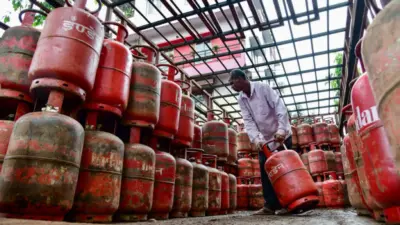

India successfully navigated a turbulent period in the global energy market by rapidly diversifying its liquefied petroleum gas (LPG) import sources during the West Asia conflict.
As geopolitical tensions disrupted traditional supply chains and pushed international LPG prices sharply higher, India turned to new suppliers including the United States, Iran, Argentina, Chile, France, and the Netherlands to ensure uninterrupted availability of cooking gas across the country.
The strategic shift in sourcing helped India reduce its dependence on West Asian producers at a critical moment when regional instability threatened global energy security. At the same time, state-owned oil marketing companies absorbed a significant portion of rising import costs, ensuring that domestic households were protected from the full impact of soaring international prices.
Before the conflict erupted in West Asia, India relied heavily on the region for its LPG requirements. Nearly 90 percent of the country's LPG imports originated from West Asian nations, making India particularly vulnerable to any disruption in shipping routes, production facilities, or regional trade networks. The outbreak of hostilities and the resulting uncertainty over maritime security raised concerns about supply continuity and price volatility.
Recognising these risks, Indian energy planners and importers moved quickly to diversify procurement channels. The most significant increase came from the United States, which emerged as a major supplier within a matter of months. According to a report cited by PTI and prepared by Crisil, the US share in India's LPG imports rose dramatically from just 8 percent in February 2026 to approximately 33 percent by April 2026.
This sharp increase reflects the growing importance of US energy exports in global markets and highlights India’s ability to adapt quickly to changing geopolitical circumstances. American LPG supplies provided an alternative source of energy at a time when uncertainty surrounding the Gulf region threatened traditional supply arrangements.
Another notable development was Iran's return to India's LPG import basket. Despite years of fluctuating trade relations and international sanctions-related challenges, Iran accounted for nearly 6 percent of India’s LPG imports in April 2026. The inclusion of Iranian supplies added another layer of flexibility to India’s procurement strategy and helped diversify the country's import portfolio.
Beyond the US and Iran, India also sourced LPG from a broader range of countries including Argentina, Chile, France, and the Netherlands. These purchases demonstrated the government’s willingness to explore non-traditional supply routes to protect domestic energy security. While these alternative sources ensured continuity of supply, they also introduced additional logistical complexities due to longer transportation distances and higher freight costs.
The diversification strategy came at a time when global LPG markets were experiencing extraordinary pressure. The conflict in West Asia disrupted normal trading patterns and heightened fears of supply shortages. Shipping companies faced increased insurance costs, freight rates rose significantly, and traders built risk premiums into prices amid uncertainty about the security of critical maritime routes.
One of the most important benchmarks for LPG pricing in India is the Saudi Aramco Contract Price, which serves as a key reference point for imported LPG cargoes. According to the Crisil report, this benchmark surged by approximately 46 percent between February and June 2026. The increase reflected not only supply concerns but also elevated transportation and logistics costs resulting from regional instability.
Ordinarily, such a dramatic rise in international prices would have resulted in a substantial increase in domestic cooking gas rates. However, Indian consumers experienced a much smaller increase due to government policy and intervention by state-owned fuel retailers.
The price of a standard 14.2-kilogram domestic LPG cylinder in Delhi increased by only around 10 percent during the February-to-June period. This rise was significantly lower than the increase witnessed in global benchmark prices, providing considerable relief to millions of households that rely on LPG for daily cooking needs.
Commercial consumers, however, faced a different reality. The price of a 19-kilogram commercial LPG cylinder rose by more than 79 percent over the same period. Since commercial pricing is more closely linked to market conditions, restaurants, hotels, food vendors, and industrial users experienced the full impact of rising international prices.
The divergence between domestic and commercial LPG pricing highlights the government's priority of protecting household consumers from inflationary pressures. While businesses and industrial users had to absorb higher costs, domestic consumers benefited from price moderation despite unprecedented volatility in global markets.
The conflict nevertheless had a noticeable impact on overall LPG demand across India. Consumption declined from approximately 3.2 million tonnes in February to around 2.47 million tonnes in April. The drop reflected both supply challenges and changing consumption patterns as higher prices affected purchasing decisions.
Industrial and commercial sectors recorded the sharpest decline in consumption. Unlike residential consumers, businesses tend to respond quickly to price increases by reducing usage, improving efficiency, or switching to alternative fuels where possible. As a result, demand contraction was more pronounced among market-linked consumers than among households.
A major consequence of keeping domestic LPG prices relatively stable was the growing financial burden on oil marketing companies. Since procurement costs increased much faster than retail selling prices, fuel retailers were forced to absorb substantial losses on every domestic cylinder sold.
According to the report, under-recoveries on domestic LPG cylinders in Delhi rose to approximately ₹651 per cylinder in May 2026. These under-recoveries represent the difference between the actual cost of supplying LPG and the price charged to consumers.
The cumulative impact on public sector oil marketing companies was enormous. Between March and May 2026, total losses borne by fuel retailers were estimated at nearly ₹22,000 crore. These losses underscore the scale of support provided to consumers during a period of extraordinary market disruption.
Industry experts note that while such interventions help maintain affordability in the short term, they also create financial stress for energy companies. Sustained periods of high under-recoveries can affect company profitability and may eventually require policy adjustments if global prices remain elevated for extended periods.
Looking ahead, market analysts expect some relief for both consumers and energy companies as geopolitical tensions begin to ease. The gradual reduction in hostilities across West Asia and the possibility of key maritime routes returning to normal operations have improved sentiment in global energy markets.
Particular attention remains focused on the Strait of Hormuz, one of the world’s most important energy transit corridors. Any improvement in shipping conditions through the region could significantly reduce transportation costs and ease concerns about supply disruptions.
Analysts believe that if trade routes remain open and geopolitical risks continue to decline, global LPG prices could soften in the coming months. Lower benchmark prices would reduce pressure on India’s import bill and help narrow the losses currently being absorbed by oil marketing companies.
India’s response to the crisis has been widely viewed as an example of strategic energy management. By rapidly expanding its supplier base and reducing dependence on a single region, the country demonstrated resilience in the face of one of the most challenging periods for global energy markets in recent years.
The episode also highlights the growing importance of energy diversification in an increasingly uncertain geopolitical environment. As international conflicts continue to influence commodity markets, countries that maintain flexible sourcing strategies are likely to be better positioned to manage future disruptions.
For India, the successful management of LPG supplies during the West Asia conflict has reinforced the value of diversified imports, strategic planning, and consumer protection measures. While challenges remain, the country’s ability to secure supplies from multiple regions helped prevent severe shortages and shielded millions of households from the full impact of global price shocks.
As energy markets stabilize and geopolitical tensions gradually ease, policymakers will continue monitoring global developments while ensuring that India’s LPG supply chain remains resilient, affordable, and capable of meeting the needs of one of the world’s largest consumer markets.