




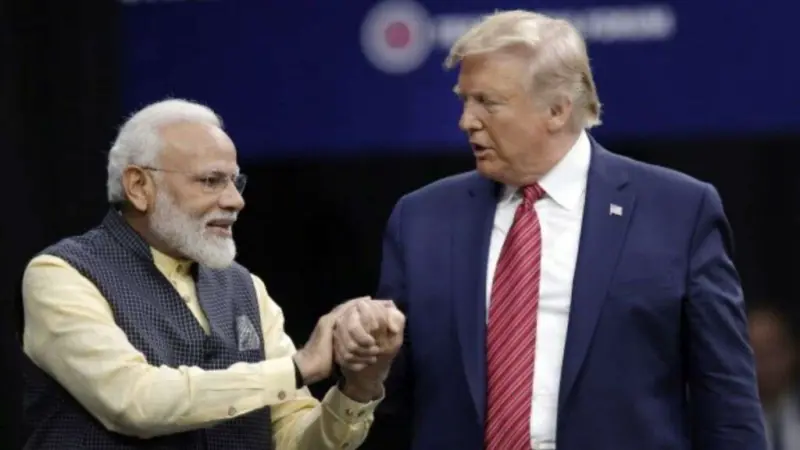

India and the United States are entering a crucial phase in their ongoing trade negotiations as chief negotiators from both countries begin a fresh round of discussions aimed at finalizing the remaining details of a long-awaited bilateral trade agreement.
The latest talks, scheduled to continue over three days in New Delhi, are expected to focus on resolving the final outstanding issues before an interim trade arrangement can be formally concluded.
The renewed negotiations come at a significant moment in India-US economic relations, with both nations seeking to deepen commercial engagement while navigating evolving global trade challenges. Commerce Minister Piyush Goyal recently described the remaining issues as the "commas and full stops" of the agreement, indicating that most major areas of negotiation have already been addressed and that discussions are now centered on final refinements.
The American delegation is being led by chief negotiator Brendan Lynch, while India’s side is headed by Darpan Jain, Additional Secretary in the Department of Commerce. The discussions are expected to cover a wide range of trade-related issues, including market access, customs facilitation, investment promotion, non-tariff barriers, and broader economic cooperation.
The current round of negotiations follows an understanding reached earlier this year when both countries agreed to pursue a comprehensive bilateral trade framework. Since then, officials on both sides have continued working toward a mutually beneficial arrangement designed to strengthen economic ties between two of the world’s largest democracies.
The trade discussions have gained additional importance following developments in the United States involving tariff-related investigations. After the US Supreme Court struck down former President Donald Trump’s broad reciprocal tariff measures, the Office of the United States Trade Representative initiated investigations under Section 301 of the Trade Act into several countries, including India.
These investigations focus on issues such as alleged forced labor concerns and excess production capacity. If countries are found to have violated relevant provisions, additional penalty tariffs could potentially be imposed on exports. Indian officials are therefore seeking clarity and safeguards within the ongoing negotiations to ensure that future trade relations remain stable and predictable.
New Delhi has consistently maintained that many of the concerns raised by the investigations do not accurately reflect India’s trade practices and has emphasized the importance of resolving differences through dialogue rather than punitive measures. Indian negotiators are expected to use the current discussions to seek relief from any future tariff-related actions while advancing broader trade cooperation.
The proposed Bilateral Trade Agreement is expected to go beyond traditional tariff negotiations and address several modern aspects of economic engagement. Areas under discussion include improving market access for businesses, simplifying customs procedures, reducing non-tariff barriers, encouraging investment flows, strengthening supply chains, and enhancing economic security cooperation.
Officials familiar with the negotiations believe that both countries recognize the strategic value of stronger economic ties. As global supply chains continue to evolve and geopolitical uncertainties affect international commerce, India and the United States have increasingly viewed each other as important economic partners.
The United States remains one of India’s largest trading partners, while India continues to emerge as a critical market for American goods, services, technology, and investment. Bilateral trade between the two countries has expanded significantly over the past decade, covering sectors ranging from information technology and pharmaceuticals to defense, manufacturing, energy, and agriculture.
The latest negotiations are also taking place against the backdrop of broader strategic cooperation between New Delhi and Washington. Over recent years, the two countries have strengthened collaboration in areas including defense, technology, infrastructure, semiconductors, clean energy, and Indo-Pacific security.
Trade experts argue that a successful bilateral agreement could provide fresh momentum to these broader strategic partnerships. Improved market access and regulatory cooperation could encourage businesses in both countries to increase investments, create jobs, and expand cross-border commercial activities.
The US Embassy in New Delhi has reiterated that both governments are committed to reaching an agreement that is durable, mutually beneficial, and sustainable over the long term. This emphasis reflects the desire of both sides to establish a framework capable of supporting future economic growth while addressing concerns from industry stakeholders.
Business groups in both countries have welcomed progress toward a trade agreement, noting that greater certainty in trade rules could help companies plan investments and expand operations more confidently. Industry representatives have long advocated for reduced trade barriers and clearer regulatory frameworks to facilitate smoother commercial exchanges.
While optimism remains high, negotiators still face the challenge of reconciling differences on several sensitive issues. Trade agreements often require balancing domestic economic priorities with international commitments, making final negotiations particularly complex even when broad consensus exists.
Observers note that the phrase "commas and full stops" used by Commerce Minister Piyush Goyal reflects the advanced stage of the talks rather than suggesting that the remaining issues are insignificant. In major trade agreements, even minor wording changes can carry substantial legal and economic implications.
The outcome of the current round of discussions could therefore prove decisive in determining the timeline for announcing an interim agreement and advancing negotiations toward a more comprehensive Bilateral Trade Agreement in the future.
As officials from both countries continue discussions in New Delhi, expectations are growing that meaningful progress can be achieved. A successful outcome would not only strengthen economic ties between India and the United States but also send a positive signal to global markets about the commitment of both nations to expanding trade and investment cooperation.
With bilateral trade already reaching record levels and strategic relations continuing to deepen, the ongoing negotiations represent an important opportunity to shape the next chapter of one of the world’s most significant economic partnerships.