
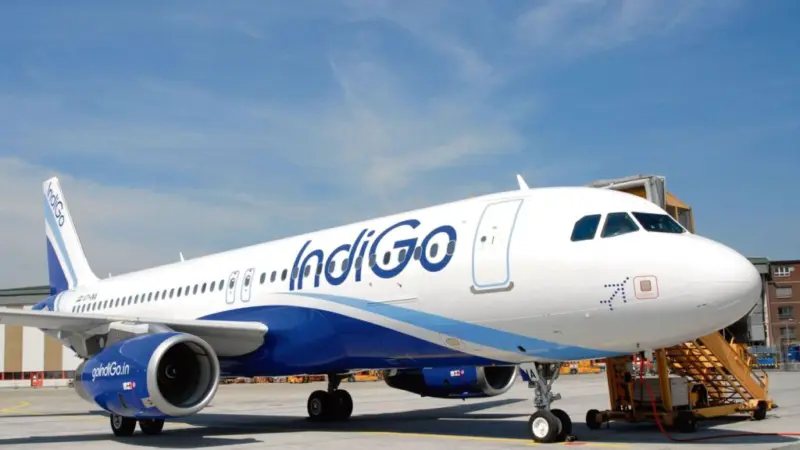

India's rapidly growing aviation industry recently came under renewed scrutiny after the government revealed that IndiGo currently maintains the lowest pilot-to-aircraft ratio among major domestic airlines.
The data was shared in Parliament by Minister of State for Civil Aviation Murlidhar Mohol, who explained that the airline has an average of 7.6 pilots per aircraft. This figure is notably lower than the staffing ratios maintained by other major Indian airlines and has raised questions about operational planning and workforce management within the country's largest aviation company. The revelation comes at a time when India's aviation market is expanding rapidly, passenger numbers are rising steadily, and airlines are increasing their fleet sizes to accommodate growing travel demand.
Pilot-to-Aircraft Ratio and Operational Challenges
The pilot-to-aircraft ratio is an important metric in the aviation industry because it reflects how well an airline can manage its flight schedules, crew rotations, and operational requirements. A typical commercial aircraft operates several flights in a single day, often across different routes and time zones. Pilots must follow strict duty-time limits and mandatory rest periods as defined by aviation safety regulations. As a result, airlines assign multiple pilots to each aircraft to ensure that flight operations can continue smoothly without violating safety rules.
According to the government's data, IndiGo operates with an average of 7.6 pilots per aircraft, which effectively means that the airline has roughly eight pilots available for every plane in its fleet. While this number may appear sufficient at first glance, it is significantly lower compared with the ratios maintained by other airlines in India. A higher pilot-to-aircraft ratio generally provides operational flexibility. Airlines with more pilots per aircraft can manage disruptions more easily, handle last-minute schedule changes, and maintain reliable flight operations even when unexpected situations arise.
The data presented in Parliament shows that other domestic airlines maintain higher pilot ratios. SpiceJet has the highest ratio at 9.4 pilots per aircraft, while Akasa Air follows with 9.33 pilots per aircraft. Air India maintains a ratio of 9.1 pilots per aircraft, and its subsidiary Air India Express operates with about 8.8 pilots per aircraft. When compared with these figures, IndiGo's staffing structure appears leaner.
Industry experts say that while a lower pilot ratio may help reduce operating costs, it can also increase pressure on available pilots, especially during peak travel seasons or unexpected disruptions. Airlines must maintain a delicate balance between cost efficiency and operational reliability. If the number of pilots is insufficient relative to the fleet size, delays or cancellations may occur because there are not enough qualified crew members available to operate flights.
The issue becomes even more important as India's aviation sector continues to expand. Passenger traffic has increased significantly over the past decade, and airlines are adding new aircraft to meet demand. IndiGo itself has placed massive aircraft orders with Airbus as part of its expansion strategy, aiming to strengthen both domestic and international operations in the coming years. However, fleet expansion also requires a proportional increase in trained pilots and operational staff.
Flight Disruptions and Regulatory Action
Concerns about IndiGo's staffing structure intensified following major operational disruptions that occurred in December 2025. During that period, thousands of flights were affected across India, causing widespread inconvenience to passengers. Airports across the country witnessed delays and cancellations, leaving many travelers stranded.
The disruptions affected nearly 300000 passengers and drew the attention of the Directorate General of Civil Aviation, India's aviation regulator. After reviewing the circumstances surrounding the disruptions, the regulator concluded that operational planning issues played a role in the airline's difficulties.
As a result, the DGCA imposed a penalty of ₹22.20 crore on IndiGo, one of the largest fines imposed on an airline in India in recent years. The penalty highlighted the seriousness with which regulators viewed the situation and underscored the importance of effective crew management and operational planning in aviation.
The incident also occurred during a period of leadership change at the airline. IndiGo's chief executive officer Pieter Elbers stepped down from his position on 10 March. Elbers had joined the airline in 2022 after a long career in global aviation, including leadership roles at KLM Royal Dutch Airlines. While the airline stated that his resignation was due to personal reasons, the timing of the departure attracted attention because it followed months of scrutiny over operational disruptions.
The December disruptions served as a reminder of the complexities involved in managing large airline networks. Airlines must coordinate aircraft availability, pilot schedules, maintenance requirements, airport slots, and weather conditions simultaneously. Even small disruptions in one area can cascade into larger operational problems if contingency plans are insufficient.
IndiGo Employs More Than 5200 Pilots
Despite having the lowest pilot-to-aircraft ratio, IndiGo still employs the largest number of pilots in India's aviation sector. According to the government's data, the airline currently has about 5200 pilots on its payroll.
Among these pilots, 970 are women, reflecting the growing participation of women in the aviation industry. India has one of the highest percentages of female pilots in the world, and airlines have increasingly encouraged greater gender diversity in cockpit roles.
Other airlines employ smaller pilot workforces overall. Air India has 3123 pilots, including 508 women pilots. Air India Express employs 1820 pilots, including 234 women. Akasa Air has 761 pilots with 76 women pilots, while SpiceJet employs 375 pilots including 58 women pilots.
The data also revealed the number of foreign pilots employed by Indian airlines. Air India Express currently has the highest number of expatriate pilots with 48 foreign pilots working for the airline. IndiGo employs 29 foreign pilots, while other airlines rely primarily on Indian pilots.
Foreign pilots are sometimes hired when airlines expand rapidly or require experienced pilots trained to operate specific aircraft types. However, aviation experts expect that the number of Indian pilots will continue to grow as new training academies expand pilot training capacity in the country.
Rapid Growth of India's Aviation Market
India is widely considered one of the fastest-growing aviation markets in the world. Rising incomes, increasing urbanization, and expanding airport infrastructure have contributed to a sharp rise in domestic air travel.
Airlines have responded to this demand by expanding their fleets and launching new routes. IndiGo, in particular, has been aggressive in its growth strategy. The airline has placed large aircraft orders and aims to strengthen its international presence by connecting more Indian cities with destinations across Asia, Europe, and the Middle East.
However, rapid growth also brings operational challenges. Airlines must ensure that they have sufficient pilots, engineers, cabin crew, and ground staff to support expanding operations. Training new pilots can take several years and requires significant investment.
Industry experts believe that airlines must focus not only on fleet expansion but also on workforce planning. Adequate staffing is essential to maintain safety standards, operational reliability, and passenger confidence.
Toll Collection on National Highways Crosses ₹61000 Crore
During the same parliamentary session, the government also shared data related to infrastructure development. Union Minister for Road Transport and Highways Nitin Gadkari informed Parliament that toll collection on national highways has crossed ₹61000 crore.
According to official figures, toll revenue has increased significantly over the past five years due to expanding highway networks and rising traffic volumes.
The data shows the following growth in toll collection:
2020-21: ₹27926.67 crore
2021-22: ₹33928.66 crore
2022-23: ₹48032.40 crore
2023-24: ₹55882.12 crore
2024-25: ₹61408.15 crore
The government explained that toll rates are linked to inflation, which means they are periodically adjusted. The expansion of national highways and expressways across India has also contributed to higher toll revenues.
Around 9000 Indians Currently in Iran
The government also informed Parliament that approximately 9000 Indian citizens are currently living in Iran. These include students, businesspersons, factory workers, sailors, pilgrims, and fishermen.
Minister of State for External Affairs Pabitra Margherita told the Rajya Sabha that the Indian embassy in Tehran has advised all Indian citizens to remain cautious and stay informed about the evolving situation in the region.
In response to rising tensions in West Asia, the Ministry of External Affairs has established a special control room in New Delhi to monitor developments and assist Indian nationals if required. Emergency helpline numbers and email support services have also been launched.
The government stated that it is prepared to assist Indian citizens who may wish to return to India if the situation deteriorates.
Growing Focus on Aviation Workforce Planning
The discussion surrounding IndiGo's pilot-to-aircraft ratio highlights the broader challenges facing India's aviation sector as it continues to expand. Airlines must carefully plan staffing levels, maintain efficient operational systems, and ensure that passenger services remain reliable.
Regulators and policymakers are likely to continue monitoring airline staffing structures to ensure that rapid growth does not compromise safety or operational stability.
As India's aviation industry moves into its next phase of expansion, workforce planning and operational resilience will remain key priorities for airlines, regulators, and policymakers alike.