
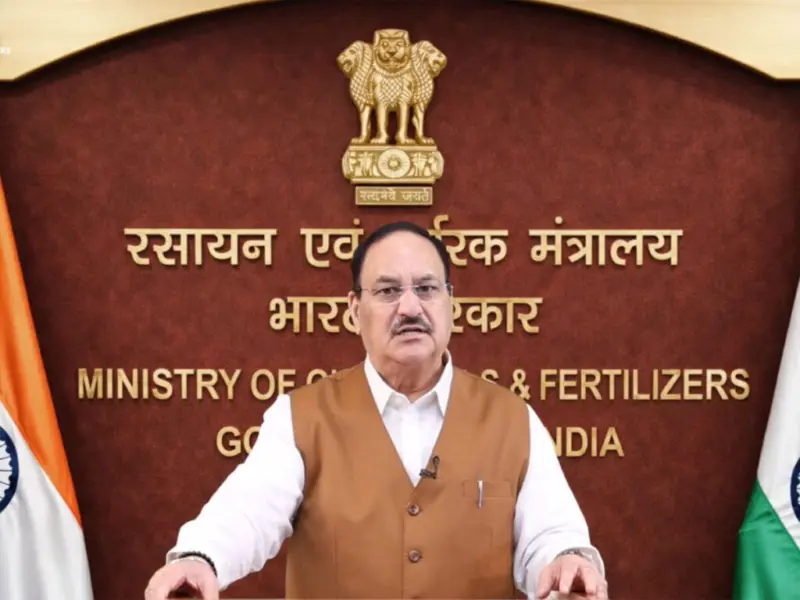

J. P. Nadda will inaugurate the 10th National Summit on Public Health Innovations in Chandigarh, bringing together policymakers and health experts to showcase impactful healthcare practices.
The Union Ministry of Health and Family Welfare, Government of India, is set to organise the 10th National Summit on Good and Replicable Practices and Innovations in Public Health Systems in Chandigarh from April 30 to May 1, 2026. The summit is one of the flagship initiatives of the ministry aimed at strengthening India's public healthcare ecosystem by promoting innovation, collaboration, and knowledge sharing among states and union territories.
The event will be inaugurated by Union Health Minister J. P. Nadda in the presence of Haryana Chief Minister Nayab Singh Saini and State Health Minister Arti Singh Rao. The gathering will include senior policymakers, healthcare administrators, and experts from across the country, making it one of the most significant platforms for public health discussions in India.
A Platform for Innovation in Public Health
The National Summit has been designed as a platform to showcase innovative, scalable, and impactful practices adopted by different states and union territories to address public health challenges. Over the years, India's healthcare system has undergone significant transformation, driven by both policy initiatives and grassroots innovations.
This summit aims to capture these innovations and present them in a structured manner so that they can be replicated across regions. It focuses on solutions that are evidence-based, outcome-oriented, and capable of delivering measurable improvements in healthcare delivery.
States and union territories will present their successful interventions in areas such as disease control, maternal and child health, digital health solutions, and healthcare infrastructure development. These presentations will highlight how local challenges can be addressed through creative and efficient approaches.
Participation from Key Stakeholders
The summit will witness participation from a wide range of stakeholders, including Additional Chief Secretaries, Principal Secretaries (Health), Mission Directors, and senior officials associated with the National Health Mission. Representatives from key institutions such as the National Health Systems Resource Centre and Regional Resource Centre-North East will also be present.
This diverse participation ensures that the summit becomes a comprehensive forum for discussion, bringing together perspectives from different levels of governance. It also facilitates collaboration between states, enabling them to learn from each other's experiences and adopt best practices.
The involvement of senior officials underscores the importance of the summit in shaping policy decisions and guiding the future direction of India's healthcare system.
### **Encouraging Cross-Learning and Replication**
One of the core objectives of the National Summit is to promote cross-learning among states and union territories. By sharing successful models and strategies, the summit enables regions to adopt solutions that have already been tested and proven effective.
This approach not only saves time and resources but also ensures that best practices are scaled up efficiently. For example, a successful healthcare intervention in one state can be adapted and implemented in another, leading to improved outcomes at a national level.
The summit also emphasizes the importance of documentation. By recording these innovations and practices, the Ministry aims to create a repository of knowledge that can serve as a reference for future initiatives.
Focus on Technology and Service Delivery
In recent years, technology has played a crucial role in transforming healthcare delivery. Digital health platforms, telemedicine, data analytics, and mobile health applications have significantly improved access to healthcare services, especially in remote areas.
The summit will highlight technological innovations that have enhanced service delivery and patient outcomes. These include initiatives that leverage digital tools to improve diagnostics, monitoring, and treatment.
At the same time, the focus remains on strengthening traditional healthcare systems, ensuring that infrastructure, workforce, and service delivery mechanisms are robust and efficient.
A Decade of Public Health Innovation
Since its inception in 2013, the National Summit has grown into a key platform for promoting innovation in public health. Over the years, it has brought together states and union territories to share their experiences and showcase their achievements.
The 9th edition of the summit was held in Puri in early 2025, where several innovative practices were presented and recognized. These included initiatives aimed at improving healthcare access, reducing disease burden, and enhancing the quality of services.
The 10th edition marks a significant milestone, reflecting a decade of continuous efforts to strengthen India's healthcare system through collaboration and innovation.
Addressing Diverse Public Health Challenges
India's public health landscape is characterized by diversity, with each region facing unique challenges. From communicable diseases to non-communicable conditions, from urban healthcare issues to rural accessibility, the range of challenges is vast.
The summit provides an opportunity to address these challenges by identifying solutions that are adaptable to different contexts. It encourages states to think beyond conventional approaches and explore innovative strategies that can deliver better outcomes.
By focusing on practical and scalable solutions, the summit aims to bridge gaps in healthcare delivery and ensure that quality services are accessible to all.
Strengthening the National Health Mission
The National Health Mission plays a central role in India's healthcare system, focusing on improving access to quality healthcare services, especially in rural and underserved areas. The summit aligns with the mission's objectives by promoting innovations that enhance service delivery and efficiency.
The participation of officials associated with the National Health Mission ensures that the insights and recommendations from the summit are integrated into ongoing programs and policies.
This alignment helps in translating ideas into action, ensuring that the benefits of innovation reach the ground level.
Future Outlook and Policy Impact
The outcomes of the summit are expected to influence future healthcare policies and strategies. By identifying successful models and best practices, policymakers can design interventions that are more effective and sustainable.
The summit also provides a platform for discussing emerging trends and challenges in public health. Topics such as pandemic preparedness, healthcare financing, and the integration of technology into healthcare systems are likely to be key areas of focus.
As India continues to strengthen its healthcare infrastructure, such platforms play a crucial role in shaping the direction of policy and ensuring that the system remains responsive to changing needs.
Conclusion
The 10th National Summit on Public Health Innovations represents a significant step in India's journey toward a stronger and more resilient healthcare system. By bringing together stakeholders from across the country, it fosters collaboration, encourages innovation, and promotes the sharing of knowledge.
With a focus on scalable solutions, technological advancements, and improved service delivery, the summit is expected to contribute to better health outcomes and enhanced quality of care.
As the country moves forward, initiatives like this will continue to play a vital role in addressing public health challenges and building a healthcare system that is inclusive, efficient, and future-ready.