
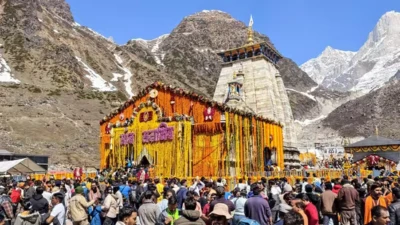

The revered Kedarnath Temple officially opened its doors on April 22, marking the beginning of the 2026 pilgrimage season. Located in the Himalayas of Uttarakhand, the shrine witnessed a large influx of devotees who arrived to participate in the first darshan of the season.
The opening ceremony was conducted with full Vedic rituals and chanting, setting a spiritual tone for one of India's most significant religious journeys.
The inauguration was led by Pushkar Singh Dhami, who extended greetings to pilgrims and expressed hope that the journey would be auspicious for all. The event marked a key milestone in the annual Char Dham Yatra, which draws lakhs of devotees every year to the Himalayan shrines.
Grand Rituals and Spiritual Fervour Mark Opening
The opening of Kedarnath Temple followed centuries-old traditions, beginning with elaborate rituals and the chanting of Vedic mantras. Priests performed sacred ceremonies in the early morning hours before the temple gates were opened to devotees at 8:00 AM.
The arrival of the 'Doli' carrying the idol of Lord Kedarnath from its winter abode at Omkareshwar Temple added to the spiritual significance of the occasion. The ceremonial procession, known as the Panchmukhi palanquin, had commenced days earlier, passing through various locations before reaching Kedarnath.
Devotees lined up in large numbers despite the cold weather, eager to offer prayers at the shrine. Many described the experience as deeply spiritual, highlighting the emotional connection associated with the pilgrimage.
The temple premises were adorned with approximately 51 quintals of multi-coloured flowers sourced from across India and abroad. The intricate decoration enhanced the visual appeal of the ancient stone structure, creating a grand and divine atmosphere for the opening ceremony.
Members of the Badrinath-Kedarnath Temple Committee oversaw the preparations, ensuring that the temple was ready to स्वागत devotees with both spiritual and aesthetic excellence.
Tight Security and New Restrictions in Place
Authorities implemented extensive security arrangements to ensure the smooth conduct of the pilgrimage. Niharika Tomar confirmed that additional personnel had been deployed across the region, and surveillance measures had been strengthened.
In a notable move, the use of mobile phones, drones, and cameras for videography within the temple premises has been strictly prohibited this year. Officials stated that the decision was taken to maintain the sanctity of the shrine and manage crowd movement more effectively.
Pilgrims have been advised to follow guidelines issued by authorities, including restrictions on photography and the need to adhere to designated pathways. Security checks have been intensified at multiple points leading to the temple to prevent any untoward incidents.
The administration has also coordinated with various agencies to manage the expected surge in visitors. Crowd control measures, medical facilities, and emergency response systems have been put in place to handle the large influx of devotees.
Weather Challenges and Advisory for Pilgrims
Despite the festive and spiritual atmosphere, weather conditions remain a concern for visitors. Kedarnath, situated at a high altitude, continues to experience near-freezing temperatures due to recent snowfall.
Authorities have urged pilgrims to carry heavy woollen clothing and essential supplies to cope with the harsh climate. The terrain leading to the temple can be challenging, particularly for elderly visitors, making preparation crucial for a safe journey.
Weather forecasts indicate fluctuating conditions, and pilgrims are being advised to stay updated with official announcements. Rescue teams and support services have been deployed along the route to assist those in need.
Economic Boost and Local Engagement
The opening of the Kedarnath pilgrimage season is expected to provide a significant boost to the local economy. Businesses related to tourism, including hotels, transport services, and local vendors, have begun to witness increased activity.
Residents of nearby areas have welcomed the influx of pilgrims, viewing it as an opportunity to revive livelihoods dependent on seasonal tourism. The administration has also emphasized sustainable practices to ensure that the increased footfall does not adversely impact the fragile Himalayan ecosystem.
Efforts have been made to improve infrastructure, including better roads, sanitation facilities, and accommodation options. These developments aim to enhance the overall experience for pilgrims while ensuring environmental conservation.
Significance of Char Dham Yatra
The Char Dham Yatra holds immense religious importance in Hindu tradition. It includes visits to four sacred shrines-Yamunotri, Gangotri, Kedarnath, and Badrinath-each representing different aspects of spiritual belief.
The journey to Kedarnath is considered particularly significant due to its association with Lord Shiva. Pilgrims undertake the Yatra as an act of devotion, seeking blessings and spiritual fulfillment.
The commencement of the 2026 season has reignited the spirit of pilgrimage, with thousands embarking on the journey despite challenges. The opening of Kedarnath Temple serves as a reminder of enduring faith and the cultural heritage that continues to draw people to the Himalayas.
As the season progresses, authorities will continue to monitor conditions and implement measures to ensure the safety and well-being of all visitors.