
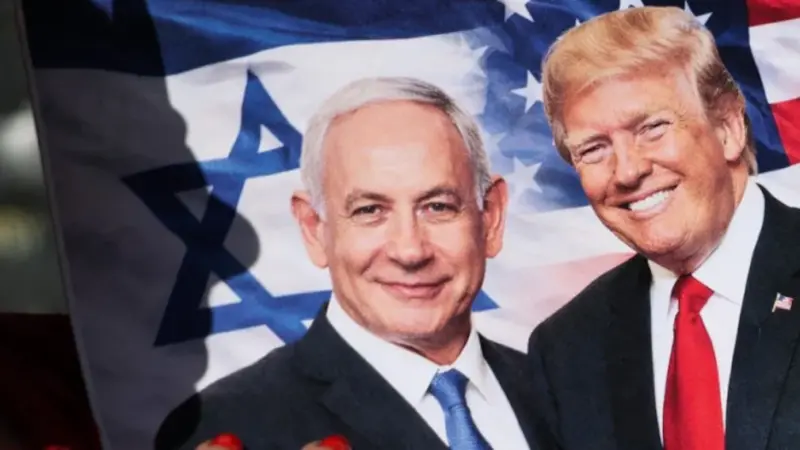

Israeli Prime Minister Benjamin Netanyahu has held high-level discussions with officials from the administration of former US President Donald Trump amid rapidly advancing negotiations between the United States and Iran aimed at ending the ongoing West Asia conflict and reopening the strategically vital Strait of Hormuz.
According to reports, the meeting was organised to help Israel better understand the latest developments surrounding the proposed 14-point Memorandum of Understanding (MoU) currently under discussion between Washington and Tehran. Netanyahu later stated that he and Trump shared a common objective regarding Iran's nuclear programme, specifically dismantling Tehran's uranium enrichment capabilities.
The diplomatic developments come as signs of a possible ceasefire between the United States and Iran continue to emerge after months of escalating military tensions, maritime confrontations and global economic disruptions linked to instability in the Strait of Hormuz. Reports suggest that Tehran may agree to a ceasefire framework within 48 hours, potentially paving the way for broader nuclear negotiations and sanctions discussions.
International markets reacted positively to the developments, with crude oil prices witnessing a sharp decline and stock markets rallying worldwide amid hopes that a diplomatic resolution could stabilise global energy supply chains. Brent crude reportedly dropped nearly 6% following reports that Washington believed it was close to reaching an agreement with Iran.
The proposed agreement, though not yet finalised, is reportedly the most advanced diplomatic framework reached between the two sides since the conflict intensified. Negotiations are being facilitated through intermediaries including Pakistan, while cities such as Islamabad and Geneva are being considered as possible venues for future talks.
Despite signs of diplomatic progress, tensions remain high across the region. Israeli military Chief of Staff Eyal Zamir warned that Israel had prepared "a series of targets" in Iran if hostilities resume. He also confirmed ongoing military coordination between Israel and the United States.
Proposed US-Iran Agreement Includes Ceasefire and Nuclear Restrictions
Reports surrounding the draft 14-point agreement indicate that the proposed framework includes several major commitments from both Washington and Tehran. The first stage would involve a formal declaration ending hostilities, followed by a 30-day period of detailed negotiations covering regional security and nuclear issues.
The negotiations are expected to focus on reopening the Strait of Hormuz, easing US sanctions on Iran, regulating Iran's nuclear programme and restoring stability to regional shipping lanes. Reports also suggest that Iran may temporarily halt portions of its uranium enrichment programme in exchange for gradual sanctions relief and the release of frozen Iranian financial assets.
According to details emerging from diplomatic discussions, the draft agreement could include provisions related to:
- Immediate ceasefire implementation
- Restoration of maritime navigation through the Strait of Hormuz
- Temporary freeze on Iran's nuclear programme
- Expanded inspection powers for international agencies
- Release of frozen Iranian funds
- Gradual easing of economic sanctions
- Restrictions on high-level uranium enrichment
- Future negotiations on regional security arrangements
However, disagreements reportedly remain over the duration of any nuclear programme restrictions. Iranian negotiators are said to have proposed a five-year moratorium on parts of the programme, while US negotiators initially sought restrictions lasting up to twenty years. Discussions are now focused on a possible compromise period between twelve and fifteen years.
The Trump administration has simultaneously maintained pressure on Tehran. Trump warned in a Truth Social post that if negotiations fail, military operations could resume "at a much higher level and intensity" than before.
Iranian officials, meanwhile, have insisted that any negotiations must occur in "good faith." Iranian Foreign Ministry spokesperson Esmaeil Baghaei stated that negotiations could not involve coercion, deception or unilateral dictation.
Strait of Hormuz Crisis Continues to Impact Global Economy
The Strait of Hormuz remains central to the ongoing crisis because nearly one-fifth of global oil supplies pass through the narrow maritime route connecting the Persian Gulf to international shipping lanes. Since the conflict escalated, multiple attacks on cargo vessels and shipping disruptions have triggered severe volatility in global energy markets.
According to maritime security agencies, at least 26 direct attacks on ships have occurred in the region since the conflict intensified. Several incidents involving cargo vessels, drone activity and suspected projectiles have further heightened international concern regarding freedom of navigation in the area.
The United Kingdom Maritime Trade Operations agency reported that a cargo vessel identified as CMA CGM SAN ANTONIO was struck by an unknown projectile while transiting the Strait of Hormuz. French shipping company CMA CGM later confirmed damage to the vessel and injuries among crew members.
Iran's Revolutionary Guard Corps Navy stated that safe and stable maritime passage through the Strait would be ensured once "aggressor threats" were neutralised and revised maritime protocols implemented.
The economic consequences of the conflict have extended far beyond the Middle East. Airlines, shipping companies and energy markets globally have faced mounting pressure due to rising fuel costs and uncertainty regarding oil supply routes.
German airline Lufthansa warned that prolonged instability in the region posed risks to aviation fuel availability and broader financial performance. Norwegian energy giant Equinor stated that disruptions in global oil and gas markets could continue for at least six months even if peace is restored immediately.
Saudi Arabia has also reportedly witnessed a sharp budget deficit due to falling oil exports and regional instability linked to the Hormuz crisis.
China, Pakistan and Regional Powers Intensify Diplomatic Engagement
As negotiations progress, regional and global powers have stepped up diplomatic efforts aimed at preventing further escalation. China has strongly advocated an immediate ceasefire and reopening of the Strait of Hormuz, while simultaneously defending Iran's right to peaceful nuclear energy.
Chinese Foreign Minister Wang Yi held discussions in Beijing with Iranian Foreign Minister Abbas Araghchi focusing on regional stability, maritime security and diplomatic negotiations.
Pakistan has also emerged as a key intermediary in the negotiations. Prime Minister Shehbaz Sharif praised Trump's temporary suspension of "Project Freedom," the US naval mission aimed at evacuating vessels from the Strait of Hormuz. Sharif stated that the pause could help advance regional peace and reconciliation.
Trump confirmed that the decision to pause the operation was partly influenced by Pakistan's mediation efforts.
At the same time, military tensions remain active in other parts of the region. Israeli air strikes in Lebanon reportedly killed several civilians, while clashes involving Hezbollah and Israeli forces continued along southern Lebanese areas.
Iran additionally warned neighbouring countries, including the UAE, against allowing their territory to be used by US or Israeli military forces.
Global Attention Focused on Potential Diplomatic Breakthrough
The current negotiations are being closely watched by governments, financial institutions and energy markets worldwide because a successful agreement could dramatically reduce geopolitical risk and restore stability to one of the world's most critical energy corridors.
The proposed ceasefire and diplomatic framework would represent one of the most significant geopolitical breakthroughs in West Asia in recent years if finalised successfully.
However, analysts caution that major disagreements still remain regarding nuclear restrictions, sanctions relief and regional security arrangements. Any collapse in negotiations could quickly reignite military escalation and trigger renewed instability in global energy markets.
For now, optimism surrounding the potential agreement has improved investor sentiment and lowered oil prices, while diplomatic engagement involving Israel, the United States, Iran, China and Pakistan continues at an intense pace.
As discussions advance, the world remains focused on whether the emerging US-Iran framework can successfully transform months of military confrontation into a broader pathway toward regional de-escalation and long-term diplomatic engagement.