
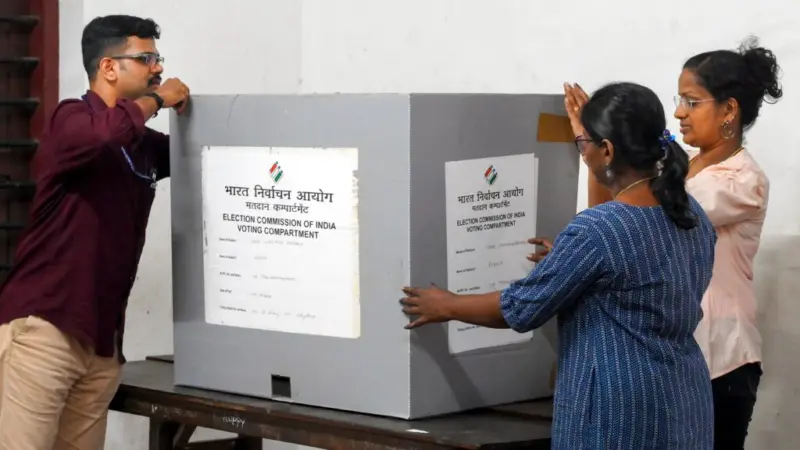

India's democratic pulse is once again being tested as millions of citizens step out to vote in the 2026 assembly elections across Assam, Kerala, and Puducherry.
Among them, a striking demographic stands out-over ten lakh first-time voters who are participating in the electoral process for the very first time. This infusion of young and newly registered voters is not just a statistical milestone but a reflection of a deeper political awakening among India's youth. As polling unfolds across 296 constituencies in these regions, the presence of these new voters introduces fresh expectations, evolving political priorities, and a renewed sense of accountability for parties and candidates alike. The elections, conducted in a single phase, involve more than 5.3 crore eligible voters, underscoring the scale and significance of this democratic exercise.
youth participation reshapes political narratives and voter priorities
The participation of over ten lakh first-time voters marks a transformative shift in the electoral landscape, especially in a country where youth constitute a substantial portion of the population. These voters, many of whom are casting their ballots for the first time, are entering the political arena with distinct expectations shaped by education, digital awareness, and exposure to national and global issues. Unlike traditional voting patterns often influenced by identity politics or long-standing loyalties, this new demographic is increasingly driven by governance, employment opportunities, education reforms, and technological progress.
In states like Kerala, where political awareness has historically been high, the addition of new voters strengthens an already vibrant democratic culture. Recent electoral roll revisions have also contributed to the inclusion of a significant number of young voters, reinforcing the state's reputation for active civic participation. Meanwhile, in Assam, the political discourse often revolves around identity, migration, and regional development, making the role of first-time voters even more crucial in shaping the future trajectory of governance. Puducherry, though smaller in size, presents a unique political battleground where close contests amplify the importance of every single vote, especially those cast by new entrants into the electoral system.
The emergence of this young voter base is also closely tied to the increasing penetration of digital platforms and social media, which have transformed how political information is consumed and debated. First-time voters are more likely to engage with political content online, participate in discussions, and form opinions based on a wide range of sources. This shift challenges traditional campaign strategies and compels political parties to adapt by focusing on transparency, direct communication, and issue-based campaigning.
Moreover, the presence of first-time voters injects a sense of unpredictability into the elections. Political parties, which often rely on established vote banks, now face the challenge of appealing to a demographic that is less bound by historical affiliations. This creates a more competitive environment where performance, credibility, and vision take precedence over rhetoric. The youth vote thus becomes a decisive factor, capable of influencing outcomes in closely contested constituencies and potentially altering the balance of power in these regions.
High stakes electoral battle across diverse regions with evolving political dynamics
The 2026 assembly elections in Assam, Kerala, and Puducherry are not just routine political exercises but high-stakes contests that could have broader implications for India's political landscape. With 140 seats in Kerala, 126 in Assam, and 30 in Puducherry, the elections cover a diverse range of political contexts, each with its own unique challenges and narratives.
Kerala's election is particularly significant as the ruling Left Democratic Front seeks to retain power amid strong opposition from the United Democratic Front. The state's political environment is characterized by intense ideological battles, high voter awareness, and a focus on development and welfare policies. The inclusion of new voters adds another layer of complexity, as their preferences could influence the continuity or change in governance.
In Assam, the electoral contest is shaped by issues such as regional identity, economic development, and governance under the incumbent leadership. The state has witnessed dynamic political shifts over the years, and the current election is expected to be closely watched for indications of public sentiment. Early voter turnout figures suggest active participation, reflecting the importance of the election for the state's future direction.
Puducherry presents a different scenario, with a relatively smaller electorate but equally intense political competition. The contest here often hinges on alliances, local leadership, and development agendas. The presence of first-time voters in such a compact electoral space can have a disproportionately large impact, making their participation particularly significant.
Across all three regions, the logistical scale of the elections is immense, with thousands of polling stations, extensive security arrangements, and the deployment of electronic voting machines to ensure a smooth and fair process. The Election Commission's efforts to facilitate participation, including voter awareness campaigns and streamlined procedures, have contributed to the high level of engagement observed during these elections.
The broader significance of these elections lies in their potential to influence national political narratives. While they are state-level contests, the outcomes are often interpreted as indicators of public sentiment towards major political parties and alliances. The participation of a large number of first-time voters adds a new dimension to this analysis, as it reflects the aspirations and concerns of a generation that will play a crucial role in shaping India's future.