
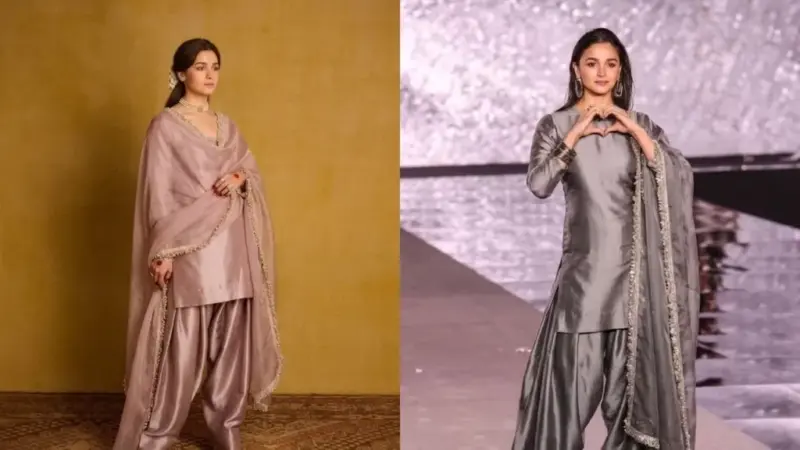

Wajayesha Official sparked controversy after sharing AI-edited images of Alia Bhatt, triggering widespread criticism over digital ethics and unauthorized celebrity use.
A major social media controversy has erupted after a Pakistani clothing label, Wajayesha Official, posted AI-generated images depicting Bollywood actress Alia Bhatt as the face of its latest collection. The images quickly went viral, but were soon identified as digitally manipulated, leading to strong backlash from fans and online users.
The visuals showed Alia Bhatt wearing various silk outfits in different colors, presented in a way that appeared like an official brand collaboration. The post caption suggested that the actress admired the collection and encouraged customers to place orders, further adding to the impression of authenticity.
However, users soon began pointing out irregularities in the images. Observers noticed inconsistencies such as unnatural lighting, distorted facial features, and mismatched textures-clear signs that artificial intelligence tools had been used to alter existing photographs.
As the post gained traction, social media users accused the brand of misleading marketing and unauthorized use of a celebrity's identity. Many criticized the move as an attempt to gain visibility through deceptive practices.
Instead of issuing a formal clarification or removing the content, Wajayesha Official responded casually to user comments. When questioned about possible legal consequences, the brand dismissed concerns and even encouraged users to make the post viral so the actress could notice it.
This response intensified the backlash, with many users calling out the brand for its lack of accountability. While the company admitted that the images were edited, it defended the authenticity of its products, a stance that failed to address the core issue of unauthorized representation.
The controversy has reignited discussions around the ethical use of artificial intelligence in digital marketing. With advanced tools making it easier to create realistic images, the line between genuine and manipulated content is becoming increasingly blurred.
Using a celebrity's likeness without permission raises serious legal and ethical concerns. Public figures like Alia Bhatt have image rights that protect them from unauthorized commercial use. Such actions can lead to legal consequences, especially when used for promotional purposes.
Experts argue that incidents like this undermine trust in digital content. Consumers may struggle to distinguish between real endorsements and fabricated visuals, increasing the risk of misinformation.
Further analysis revealed that the edited images were likely based on publicly available photos of the actress. One widely circulated image appeared to be derived from her appearance at a fashion event, with new outfits digitally superimposed to create the illusion of a photoshoot.
While repurposing public images is not uncommon, using them for commercial promotion without consent crosses ethical boundaries. Celebrities share images for personal or official purposes, not for unauthorized brand endorsements.
The incident quickly became a trending topic, with users expressing mixed reactions. While many condemned the brand's actions, others responded with humor, creating memes and jokes around the situation. Despite the lighter side of the internet's reaction, the underlying concerns remain serious.
From a legal standpoint, such use of AI-generated celebrity images can violate personality rights and intellectual property laws. Brands engaging in such practices risk damaging their reputation and facing potential legal action.
Industry experts emphasize the importance of transparency in digital marketing. Clearly labeling AI-generated content and obtaining proper permissions are essential steps in maintaining credibility.
The controversy also highlights the broader challenges posed by emerging technologies. While AI offers innovative opportunities for content creation, its misuse can have significant consequences for individuals and industries alike.
For businesses, the lesson is clear: ethical practices and authenticity are crucial in building long-term trust with consumers. Short-term gains achieved through misleading tactics can result in lasting reputational damage.
The situation also underscores the need for stronger guidelines and awareness around AI usage. As technology continues to evolve, both creators and consumers must adapt to ensure responsible use.
In conclusion, the backlash against Wajayesha Official reflects growing concerns about the misuse of AI in digital spaces. The incident serves as a reminder that while technology enables creativity, it also demands accountability. Respect for consent, transparency, and authenticity remains essential in the rapidly changing landscape of digital marketing.