




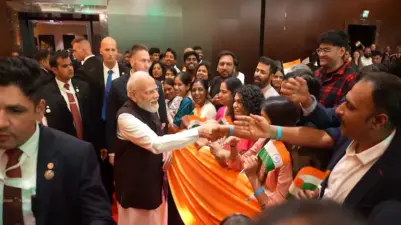

Prime Minister Narendra Modi arrived in Bratislava on Sunday for a landmark two-day visit to Slovakia, becoming the first Indian Prime Minister to travel to the Central European nation since it gained independence in 1993. The historic trip represents a significant milestone in diplomatic relations between New Delhi and Bratislava and is expected to lay the foundation for deeper cooperation across trade, technology, innovation, investment, defence manufacturing, and strategic partnerships.
The visit forms the second leg of Prime Minister Modi's broader European tour, reflecting India's growing engagement with key European partners amid evolving geopolitical and economic realities. During his stay, the Prime Minister is scheduled to hold high-level bilateral meetings with Slovak President Peter Pellegrini and Prime Minister Robert Fico while also interacting with leading business executives and industry representatives.
The significance of the visit extends beyond ceremonial diplomacy. It signals India's intent to strengthen ties with emerging European economies that offer opportunities in advanced manufacturing, mobility solutions, digital technologies, infrastructure, renewable energy, and research collaboration. For Slovakia, engagement with one of the world's fastest-growing major economies presents an opportunity to diversify partnerships and attract greater investment.
Upon his arrival, Prime Minister Modi expressed optimism about the visit and its potential outcomes, stating that it would help deepen bilateral relations and create new avenues of cooperation between the two countries.
Historic Milestone in India-Slovakia Relations
Although India and Slovakia have maintained diplomatic relations for decades, no Indian Prime Minister had previously undertaken an official visit to the country after it became an independent republic in 1993 following the peaceful dissolution of Czechoslovakia.
This makes the current visit historically significant, underscoring the growing importance India places on Central Europe as part of its broader foreign policy outreach.
Diplomatic observers note that India's engagement with Europe has evolved considerably over the past decade. While traditional partnerships with larger economies such as France, Germany, and Italy remain central, New Delhi has increasingly expanded dialogue with countries in Central and Eastern Europe to build diversified economic and strategic partnerships.
The Bratislava visit reflects this approach and demonstrates India's willingness to deepen relations with nations that possess strong industrial capabilities and technological expertise.
Bilateral Talks Focused on Future-Oriented Cooperation
Prime Minister Modi's discussions with President Peter Pellegrini and Prime Minister Robert Fico are expected to cover a wide range of issues affecting bilateral and international cooperation.
Trade and investment are likely to occupy a central place in the negotiations. Slovakia has developed a globally competitive manufacturing ecosystem, particularly in the automobile sector, while India continues to position itself as an attractive destination for international investment under its expanding industrial initiatives.
Technology cooperation is another area expected to receive considerable attention. Both countries have shown interest in digital transformation, artificial intelligence, innovation ecosystems, cybersecurity, and research partnerships. Enhanced collaboration could facilitate joint ventures between companies and research institutions while encouraging academic exchanges.
Infrastructure development and transport modernization may also emerge as important discussion points, especially considering Slovakia's expertise in engineering and industrial production and India's ambitious infrastructure expansion programs.
The meetings are expected to examine opportunities for cooperation in renewable energy, sustainable mobility, green technologies, and advanced manufacturing, aligning with broader global trends toward cleaner economic growth.
Economic Partnership Gains Strategic Importance
The business dimension of the visit is particularly noteworthy. Prime Minister Modi is scheduled to engage directly with Slovak business leaders to encourage stronger commercial ties and investment flows.
India's expanding consumer market, improving logistics infrastructure, and manufacturing incentives make it an attractive destination for foreign investors seeking long-term growth opportunities. At the same time, Indian companies exploring European markets may find Slovakia's strategic location within the continent advantageous for regional operations.
Automobile manufacturing presents one of the most promising areas for bilateral collaboration. Slovakia is widely recognized as a major automotive production hub, while India is rapidly expanding both domestic production and electric mobility initiatives. Joint ventures and technology transfers could create mutual benefits.
Innovation-driven sectors such as semiconductors, electronics manufacturing, robotics, digital services, and research partnerships may also feature prominently in future cooperation frameworks discussed during the visit.
Strengthening India’s Broader European Engagement
The Slovakia visit comes as India continues to expand its strategic footprint across Europe through bilateral partnerships and multilateral engagement.
Recent years have witnessed increased cooperation between India and several European nations in defence, clean energy, supply chains, critical technologies, education, and resilient economic partnerships. The emphasis has shifted toward building comprehensive relationships that extend beyond traditional diplomacy into innovation, investment, and industrial collaboration.
Slovakia occupies a strategically important position within the European Union and offers India another valuable partner in strengthening its engagement with European institutions and regional economic networks.
Observers believe that closer India-Slovakia ties could complement broader India-European Union discussions on trade, connectivity, sustainability, and technological cooperation.
Technology and Innovation at the Core of Discussions
Innovation is expected to be one of the defining themes of Prime Minister Modi's engagement in Slovakia.
India's rapidly expanding startup ecosystem, digital public infrastructure, fintech leadership, and information technology capabilities provide significant opportunities for collaboration with European partners seeking digital transformation.
Similarly, Slovakia's strengths in industrial engineering, precision manufacturing, automation, and applied research create opportunities for knowledge sharing and joint innovation.
Experts suggest that collaborative research initiatives, startup exchanges, university partnerships, and industrial technology projects could emerge from enhanced bilateral engagement.
Such partnerships would not only encourage business investment but also strengthen long-term scientific and educational cooperation between institutions in both countries.
Expanding Trade and Investment Opportunities
Economic cooperation between India and Slovakia remains below its full potential, making the current visit particularly significant for identifying new growth opportunities.
Trade diversification could include machinery, pharmaceuticals, automotive components, information technology services, renewable energy equipment, chemicals, engineering goods, and agricultural technologies.
Indian companies may explore manufacturing partnerships and acquisitions within Slovakia, while Slovak firms could seek greater participation in India’s expanding industrial landscape.
Government-to-government dialogue is expected to encourage private-sector confidence by highlighting policy support for investment and reducing barriers to commercial cooperation.
Business leaders accompanying official delegations often play a key role in translating diplomatic engagements into practical investment projects that generate employment and economic growth.
Strategic Importance Amid Changing Global Dynamics
Prime Minister Modi's visit also takes place against the backdrop of shifting global geopolitical and economic conditions.
Supply chain diversification, energy security, technological resilience, and sustainable industrial development have become increasingly important priorities for countries worldwide.
India has positioned itself as a reliable economic and strategic partner capable of contributing to resilient global supply chains while maintaining constructive relations across multiple regions.
For Slovakia, expanding cooperation with India offers opportunities to strengthen engagement with one of Asia's leading economies while promoting industrial partnerships that can support future competitiveness.
The visit therefore carries significance beyond bilateral relations, reflecting broader trends in international diplomacy and economic realignment.
Symbolism Beyond Diplomacy
Historic visits often carry symbolic value that extends beyond immediate agreements or announcements. Prime Minister Modi's arrival in Bratislava demonstrates India's commitment to engaging partners across Europe regardless of size, emphasizing mutually beneficial cooperation rather than purely transactional diplomacy.
Such high-level visits frequently create momentum for academic exchanges, tourism promotion, cultural cooperation, scientific partnerships, and people-to-people interactions that continue long after official meetings conclude.
For Indian businesses and professionals, strengthened diplomatic ties may create additional opportunities for collaboration across education, technology, manufacturing, healthcare, and innovation sectors.
Similarly, Slovak enterprises may gain greater visibility within one of the world’s fastest-growing major economies.
Outlook for Future Cooperation
Analysts expect the outcomes of the visit to shape India-Slovakia relations for years to come. Even in the absence of major headline-grabbing agreements, the establishment of stronger institutional dialogue and business engagement can produce long-term benefits.
Future cooperation may include expanded investment promotion mechanisms, joint research initiatives, educational exchanges, startup partnerships, industrial collaboration, defence manufacturing discussions, and enhanced trade facilitation measures.
The visit also reinforces India’s broader strategy of cultivating diverse partnerships throughout Europe while supporting economic modernization and technological advancement through international collaboration.
As global competition increasingly centers on innovation, resilient supply chains, and sustainable development, partnerships between countries such as India and Slovakia could become increasingly valuable.
Prime Minister Modi's historic arrival in Bratislava therefore represents more than a diplomatic milestone. It marks the beginning of a potentially transformative phase in bilateral relations built on shared economic interests, technological cooperation, and strategic engagement. With meetings involving President Peter Pellegrini, Prime Minister Robert Fico, and leading business representatives, the visit has the potential to unlock new opportunities that strengthen ties between the two nations and contribute to a broader vision of India's growing partnership with Europe.