





Top Indian Companies Lose Over Rs 1 Lakh Crore Amid Volatile Global Market Conditions
Indian stock markets witnessed another turbulent trading week as four of the country's most valuable listed companies together lost more than Rs 1 lakh crore in market valuation amid growing global uncertainty, geopolitical tensions and volatile investor sentiment.
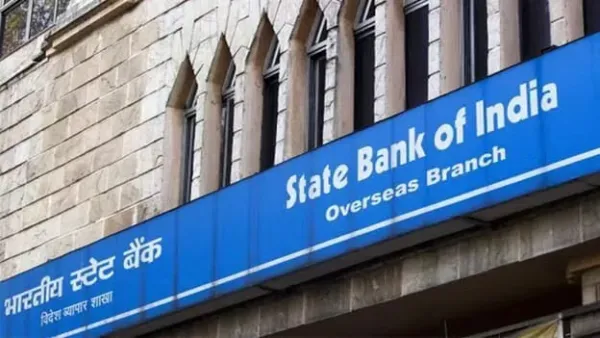
Among the biggest casualties of the week was State Bank of India, which recorded the sharpest erosion in market capitalisation as investors turned cautious due to escalating instability in West Asia and concerns over global economic conditions.
Despite benchmark indices managing to end the week in positive territory, underlying market sentiment remained fragile with heavy intraday volatility across sectors including banking, information technology, telecom and infrastructure.
The Bombay Stock Exchange Sensex closed the week with gains of 414.69 points, rising 0.53 percent, while the National Stock Exchange Nifty advanced by 178.6 points or 0.74 percent. However, these headline gains failed to reflect the broader nervousness dominating investor behaviour during the trading sessions.
According to market analysts, the primary trigger behind the volatility was the growing geopolitical crisis in West Asia involving rising tensions between the United States and Iran. Fears regarding crude oil supply disruptions, uncertainty in maritime trade routes and concerns over global inflationary pressures continued to influence trading activity throughout the week.
Among the top companies affected, State Bank of India emerged as the biggest loser in terms of market value erosion. The country's largest public sector lender witnessed a decline of Rs 44,722.34 crore in market capitalisation, bringing its total valuation down to Rs 9,41,107.62 crore.
Banking sector stocks remained under pressure because investors feared that higher global crude oil prices and inflationary risks could eventually impact borrowing costs, consumer demand and overall economic activity. Rising uncertainty in international markets also led to cautious institutional positioning in financial sector stocks.
Analysts noted that public sector banks were particularly vulnerable to profit booking after strong rallies witnessed earlier in the year. Investors appeared increasingly defensive amid concerns regarding future global growth and possible volatility in foreign institutional investment flows.
Telecom major Bharti Airtel also witnessed a significant decline in market valuation during the week. The company lost Rs 31,167.1 crore in market capitalisation, reducing its overall valuation to Rs 11,18,055.03 crore.
Market experts believe investors booked profits in telecom stocks amid concerns regarding future capital expenditure requirements and rising operating costs. Increased uncertainty in broader markets also reduced aggressive buying interest in large cap telecom shares.
Information technology giant Tata Consultancy Services also faced heavy selling pressure as its market valuation declined by Rs 28,456.26 crore to Rs 8,66,477.69 crore.
The global technology sector remained volatile due to concerns about slowing corporate spending, weaker international demand and fears of economic slowdown in major Western economies. IT companies dependent on overseas revenue exposure experienced heightened pressure as investors adopted a risk averse approach.
Engineering and infrastructure leader Larsen & Toubro also recorded losses during the week. The company's market capitalisation declined by Rs 5,371.84 crore, taking its valuation to Rs 5,46,621.21 crore.
Infrastructure and industrial sector stocks traded cautiously because investors remained uncertain regarding future commodity prices, energy costs and execution expenses for large scale projects.
While several major companies witnessed declines, some firms managed to register gains in market valuation and partially offset the overall losses among India's most valuable companies.
Private banking leader HDFC Bank emerged as one of the strongest gainers during the week. The bank added Rs 15,425.09 crore to its market capitalisation, taking its total valuation to Rs 12,02,699.26 crore.
Strong investor confidence in private sector banking fundamentals, consistent earnings performance and stable asset quality outlook helped support buying interest in HDFC Bank shares despite broader market volatility.
Financial services giant Bajaj Finance also posted healthy gains. The company added Rs 11,486.89 crore in valuation, pushing its market capitalisation to Rs 5,94,610.02 crore.
Analysts pointed toward continued optimism regarding retail lending growth, consumer financing demand and strong business expansion within the financial services sector as key reasons behind the gains.
Consumer goods major Hindustan Unilever also benefited from defensive investor positioning during volatile market conditions. The company added Rs 8,763.97 crore in market value, taking its overall valuation to Rs 5,37,562.98 crore.
Investors typically shift toward defensive sectors such as fast moving consumer goods during uncertain periods because these businesses generally maintain stable earnings and demand patterns even during economic turbulence.
India's most valuable company, Reliance Industries, also recorded gains during the week. The conglomerate added Rs 6,563.28 crore in market capitalisation and retained its top position with a valuation of Rs 19,42,866.58 crore.
Reliance continued benefiting from investor confidence in its diversified business structure spanning energy, telecom, retail and digital services.
Insurance giant Life Insurance Corporation of India also witnessed positive movement as its market capitalisation increased by Rs 2,751.37 crore to Rs 5,07,549.44 crore.
Meanwhile, ICICI Bank posted moderate gains of Rs 1,694.61 crore, taking its total market value to Rs 9,06,675.39 crore.
According to market observers, Indian equities continue to remain heavily influenced by global macroeconomic developments, especially those connected to crude oil prices, geopolitical risks and international monetary policy expectations.
The ongoing tensions in West Asia have intensified fears regarding energy supply disruptions through key maritime routes including the Strait of Hormuz. Since India imports a large share of its crude oil requirements, any sustained increase in global oil prices directly impacts inflation, transportation costs and corporate profitability.
Foreign Portfolio Investors also maintained a cautious approach during the week. While domestic institutional investors continued providing support to the markets, global uncertainty and fluctuating currency conditions limited aggressive foreign inflows.
Technology, banking and telecom stocks experienced sharper volatility as investors shifted toward safer and more defensive investment themes. Consumer goods, insurance and select financial stocks attracted relatively stable buying interest due to stronger earnings visibility.
Despite the recent turbulence, analysts believe Indian equities continue to display resilience compared to several international markets because of strong domestic economic fundamentals, expanding consumption demand and government led infrastructure investment.
India's long term growth outlook remains attractive for institutional investors, particularly due to the country's growing middle class, manufacturing expansion and digital economy growth.
However, experts caution that short term volatility is likely to remain elevated as global markets continue reacting to geopolitical developments, energy price fluctuations and central bank policy signals from major economies.
The ranking among India's most valuable listed companies remained broadly unchanged during the week despite fluctuations in market capitalisation. Reliance Industries retained its leadership position followed by HDFC Bank, Bharti Airtel, State Bank of India, ICICI Bank, Tata Consultancy Services, Bajaj Finance, Larsen & Toubro, Hindustan Unilever and Life Insurance Corporation of India.
Market participants are now closely monitoring crude oil prices, global diplomatic developments, inflation data and future interest rate expectations for clues regarding the next phase of market direction.
Analysts believe the coming weeks could remain highly sensitive because any escalation in international tensions or sharp rise in energy prices may further increase pressure on equities globally.
At the same time, domestic investors continue to view Indian markets positively from a long term perspective because of the country's economic growth potential, policy stability and rising corporate earnings across multiple sectors.
For now, however, volatility remains the defining feature of market sentiment as investors navigate one of the most uncertain global economic environments in recent years