




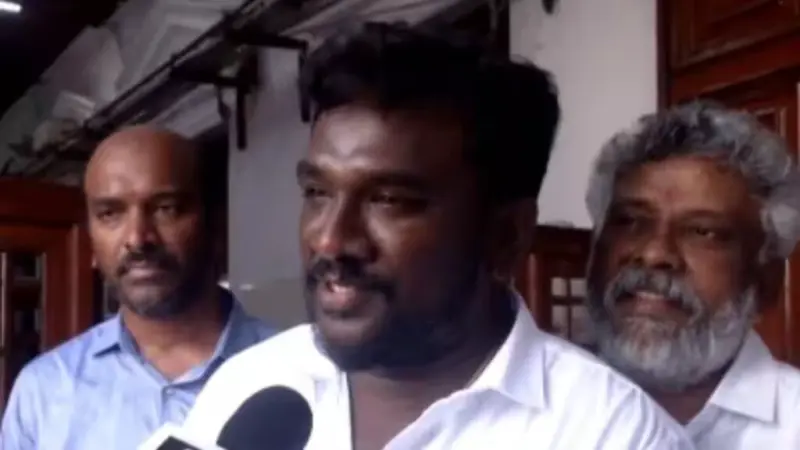

The Supreme Court of India is set to hear on May 13 a crucial petition filed by R. Sreenivasa Sethupathi challenging a Madras High Court order that restrains him from participating in the upcoming trust vote in the Tamil Nadu Legislative Assembly.
The urgent hearing comes just hours before the scheduled floor test of the Tamilaga Vettri Kazhagam government, adding a significant legal dimension to an already politically charged situation in the state.
The case has emerged from a petition filed by DMK leader K.R. Periakaruppan, who had contested against Sethupathi and lost by a margin of just one vote. Acting on the petition, the Madras High Court passed an interim order restraining Sethupathi from voting in the confidence motion scheduled in the state assembly within 24 hours. The ruling immediately triggered legal and political consequences, as the MLA's vote could potentially influence the narrow balance of power in the assembly.
Supreme Court Grants Urgent Listing of Appeal
Chief Justice of India Surya Kant agreed to list Sethupathi's appeal for urgent hearing on May 13 after senior advocate A.M. Singhvi and advocate Yash S. Vijay mentioned the matter before the court. The legal team argued that the Madras High Court order had a direct and immediate impact on legislative functioning and democratic representation, warranting urgent intervention by the apex court.
The Supreme Court's decision to hear the matter just hours before the floor test has intensified political attention on the case, as the outcome could affect the voting strength of the ruling coalition during the trust vote.
Legal experts note that the timing of the case is particularly significant because even a single MLA's vote can alter the majority equation in a closely contested assembly, especially given the already narrow margins between competing political blocs.
Background of the Dispute and High Court Order
The controversy stems from a legal challenge initiated by DMK candidate K.R. Periakaruppan, who narrowly lost the assembly election to Sethupathi by just one vote. The petitioner raised concerns regarding the validity of the election outcome and sought judicial intervention.
Based on the petition, the Madras High Court issued an interim order restricting Sethupathi from participating in the trust vote scheduled in the Tamil Nadu Assembly. The court's directive was intended to maintain legal clarity while the underlying dispute remains under consideration.
The order effectively prevents the TVK MLA from exercising his legislative right in the upcoming confidence motion, thereby reducing the numerical strength of the ruling Tamilaga Vettri Kazhagam government at a critical moment.
The decision has triggered a debate over the balance between judicial intervention and legislative independence, particularly in matters involving floor tests and confidence motions.
Political Impact on Tamil Nadu Floor Test
The timing of the legal intervention has added a new layer of uncertainty to the already high-stakes floor test facing the TVK government. Chief Minister C. Joseph Vijay is preparing to face the trust vote amid shifting political alliances, internal party dynamics, and opposition fragmentation.
With the ruling coalition claiming a narrow majority, the exclusion of even a single MLA such as Sethupathi could have a significant impact on the final numbers. Political analysts suggest that the margin of victory or defeat in the floor test may depend on such closely contested legal and political factors.
The opposition, meanwhile, has been closely monitoring the legal proceedings, as any reduction in the ruling party's voting strength could improve its chances during the confidence motion.
Legal and Constitutional Questions
The case has also raised important constitutional questions regarding the extent of judicial authority in restricting elected representatives from participating in legislative proceedings. While courts have intervened in electoral disputes and disqualification matters in the past, the timing of such restrictions ahead of a floor test is being closely scrutinized.
Legal experts point out that the principle of separation of powers requires careful balancing when judicial orders intersect with legislative functions. The Supreme Court's upcoming hearing is therefore expected to address not only the specific case of Sethupathi but also broader questions about electoral disputes and legislative participation rights.
The urgency of the matter reflects the potential impact of judicial decisions on real-time political outcomes, especially in tightly balanced assemblies.
Stakes for the TVK Government
For the Tamilaga Vettri Kazhagam government, the Supreme Court hearing represents a critical legal variable in an already tense political environment. The administration is attempting to secure majority support in the floor test, and every vote carries significant weight.
Chief Minister C. Joseph Vijay's coalition has been working to maintain unity among its supporting MLAs, especially in light of opposition pressure and internal factional dynamics. The addition or removal of even a single vote could determine the outcome of the trust motion.
As a result, the Supreme Court's decision is being closely watched not only by legal experts but also by political stakeholders across the state.
Broader Political Implications
The case has underscored the increasing intersection of law and politics in contemporary electoral systems, where legal challenges can directly influence legislative outcomes. The timing of court interventions, especially ahead of critical votes such as floor tests, often amplifies political uncertainty.
In Tamil Nadu, where coalition politics and narrow majorities are common, such legal disputes can have amplified consequences. The current situation involving Sethupathi highlights how individual electoral disputes can escalate into state-level political developments.
The Supreme Court's ruling is expected to set an important precedent for future cases involving MLA participation rights during confidence motions.
As Tamil Nadu prepares for a decisive floor test, the Supreme Court's urgent hearing on MLA R. Sreenivasa Sethupathi's plea has added a significant legal dimension to an already intense political scenario. The outcome of the case could influence the balance of power in the assembly and potentially affect the stability of the Tamilaga Vettri Kazhagam government led by Chief Minister C. Joseph Vijay.
With the hearing scheduled just hours before the trust vote, the intersection of judicial review and legislative procedure has placed both legal and political systems under close national scrutiny. The final decision will not only impact the immediate floor test but may also shape future jurisprudence on electoral disputes and legislative rights in India.