
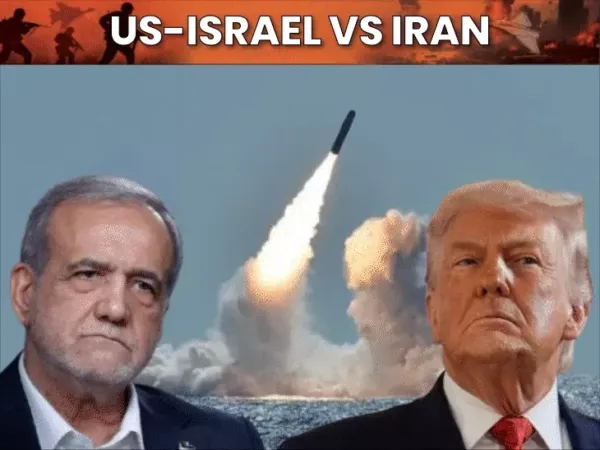

The global diplomatic landscape has grown increasingly tense as Donald Trump announced that a United States delegation would travel to Islamabad for a fresh round of peace negotiations linked to the ongoing West Asia conflict.
The development comes at a time when the fragile ceasefire between Washington and Iran is under severe strain, raising doubts about the prospects for meaningful dialogue.
Rising Diplomatic Friction Over Talks
According to multiple media reports, key American officials including Steve Witkoff and Jared Kushner were expected to participate in the negotiations. Earlier speculation also suggested the involvement of JD Vance, although his visit was later ruled out due to security concerns.
Despite these preparations, Iran has signaled strong reluctance to engage. Reports citing Iranian sources indicate that Tehran has rejected participation in the second round of talks, pointing to what it describes as excessive demands from Washington, shifting negotiation positions, and contradictions in US policy. The ongoing naval blockade imposed by the United States has further complicated matters, with Iran viewing it as a direct violation of the ceasefire agreement.
Iranian Foreign Ministry spokesperson Esmail Baghaei strongly criticized the blockade, calling it unlawful and accusing the US of collective punishment against Iranian civilians. Tehran has framed the blockade as a breach of international law, citing provisions under the UN Charter.
Strait of Hormuz Flashpoint Intensifies Crisis
Tensions have sharply escalated in the strategically vital Strait of Hormuz, a key artery for global oil shipments. Iran has repeatedly closed and reopened the strait amid the ongoing conflict, with the latest developments indicating a renewed shutdown. Iranian forces have warned that any vessel attempting to pass through without authorization could be targeted.
Reports have confirmed firing incidents involving multiple vessels, including two Indian ships, highlighting the risks faced by international maritime traffic. While no casualties were reported, the incidents have raised serious concerns about the safety of global shipping routes. India has responded diplomatically by summoning its ambassador and lodging a protest.
Meanwhile, Trump has accused Iran of violating the ceasefire by opening fire on foreign vessels, including a French and a British ship. He described Iran's actions as provocative while defending the US naval blockade as a necessary pressure tactic to secure a favorable agreement. The US administration has maintained that the blockade will continue until a deal is reached.
The shutdown of the Strait of Hormuz has had immediate economic repercussions. With nearly 20 percent of the world's oil passing through this corridor, disruptions have triggered a global supply crisis. In response, the United States has released millions of barrels of oil from its strategic reserves to stabilize markets.
Uncertainty Over Negotiations and Regional Stability
Conflicting reports have emerged regarding Iran's participation in the proposed talks in Islamabad. While some sources suggest that an Iranian delegation could still arrive, others insist that no decision has been made as long as the blockade remains in place. This uncertainty underscores the fragile nature of diplomatic efforts in the region.
At the same time, Pakistan has ramped up security in Islamabad in anticipation of potential high-level talks. Authorities have deployed additional police and surveillance measures across sensitive locations, reflecting concerns over both diplomatic sensitivity and security threats.
The broader regional context remains volatile. Israel's military activities in Lebanon, rising casualties in Gaza, and warnings from global leaders about escalating tensions have added layers of complexity to the situation. Calls for restraint and dialogue have intensified, with international stakeholders urging all sides to prioritize diplomacy over confrontation.
Despite the heightened tensions, some US officials have expressed cautious optimism that a deal could still be within reach. However, with both sides entrenched in their positions and mutual accusations of ceasefire violations continuing, the path to resolution appears uncertain.