
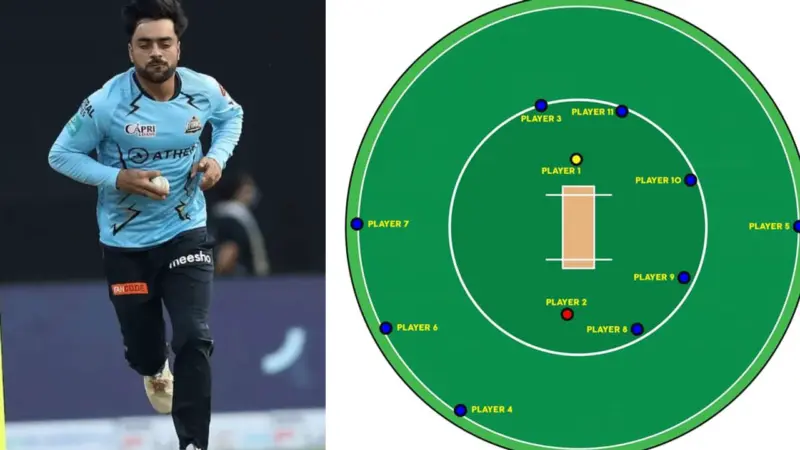

Leg spinners are said to be born rather than made. Leggies are also known as wrist spinners as they utilize their wrists to create additional revolutions on the ball, causing it to turn or return to the batter.
They are a rare breed in the world of spinners, and having a leg spinner on your squad is an added advantage because most countries struggle against wrist spinners, as others in the same category are worryingly lacking in their country.
Shane Warne and Anil Kumble are two leg spinners regarded as among the best of the contemporary generation. Many young spinners are on the scene, but it's been a long time since the world saw someone nearly as talented as the two.
All of the unmatched fame that comes with being a leg spinner entails the expense of having the perfect field placements. Leg spinners apply their strategies and theories while bowling at a batsman like they would develop a wicket. Shane Warne was a maestro of this game. A leg spinner prefers an aggressive field with fielders swarming around the batter. This is not feasible in a limited-overs match since batters will swing their bat; applying the 'attack is the best defense strategy.
Here are some of the most typically used field setups wrist spinners use to set up a batter and be economical. While they rarely get to bowl in the powerplay, here are some examples of them bowling once the constraints are relaxed.
Leg spinner bowling in the middle overs (11-40) of a One-day match.
During those overs, leg spinners enjoy bowling, as they are more likely to provide breakthroughs for their teams.
To begin with, leg spinners enjoy attacking with a fielder up, and with the ball primarily turning away from a right-hander, they would have a slip and mid-off up. Off-side would include a point, cover (a constant position for all bowlers), and sweeper cover. A short third man is inside the ring on the leg side region, and the remaining three are on the boundary, deep square leg, deep mid-wicket, and long on.
On rare occasions, an extra fielder may be utilized within the ring to limit singles and entice the batter into playing a misleading shot that may result in a wicket. Most field setups are determined by the batsman and other factors such as the wicket, score, and so on.
As a visual representation, here it is.
The slip fielder would be pulled back to short third man for a southpaw, and the field would remain the same. But, in rare instances, the only feasible change would be to have four fielders on the ring as the ball returns to the left-hander. Nonetheless, this is the norm.
As a visual representation, here it is.
Leg spinner bowling in the middle overs of a T20 game.
Leggies have a greater impact bowling in shorter versions of the game because hitters don't have as much time to settle in due to the limited amount of maximum overs. Outside the ring, there is the option of having five fielders. A conservative captain would spread out the fielders, reducing boundaries. Long on, long off, deep mid-wicket, deep square leg, and sweeper cover would be the five fielders' positions. The rest would be on the cover, point, short third man, and fine leg.
As a visual representation, here it is.
If a wicket-taking bowler like Rashid Khan or Imran Tahir bowled, the captain would counter with a slip fielder.
Leg spinner bowling in a test match.
A leg spinner bowling in a test match has become an odd sight these days. The number of wrist spinners bowling in tests has scarcely come down as most of them are either preserved for the shorter format or dropped to make room for an allrounder that bowls finger spin.
In a test match, there would be no leg slip for a right-hander as he'd be flanked by three close-in fielders. A slip, a silly point, and a short leg. When a right-hander throws the ball away, the offside zone is triggered. In test matches, the captain would establish a cover point and a backward point, and a slice shot or an attempt to play the ball away from a right-hander would land precisely there.
Up would be a mid-on and mid-off, as well as a short third man and a deep square leg.
As a visual representation, here it is.
A left-handed bowler's only alternative would be to bowl with a slip instead of a short third man.
And if they are bowling to a number 11 batter, all nine fielders will be besieging him.
FAQ
Q. How to set a field for a leg spinner? A. Setting a field for a leg spinner depends on the batter and match situation, but a common attacking field includes: Slip (for edges) Short leg or leg slip (for close catches) Cover and extra cover (for drives) Mid-wicket and square leg (for leg-side shots) Deep mid-wicket or long-on (for big hits) Q. Is 6 fielders allowed on the leg side? A. No, according to cricket laws, you cannot have more than 5 fielders on the leg side at any time. This rule prevents negative bowling tactics and ensures fair play in the game governed by International Cricket Council. Q. What is the best length for a leg spinner? A. The ideal length for a leg spinner is usually just short of a full length, pitching on or outside off stump and turning towards leg stump. Too full → easy to drive Too short → easy to cut or pull Perfect length → forces the batter to come forward and creates chances for edges or mis-hits